Connected vehicle diagnostic alerts identify potential system anomalies, but they cannot pinpoint exact component failures. Remote app notifications and dashboard codes only flag out-of-range signals—often triggered by sub-zero voltage drops, line noise, or wiring harness corrosion. Physical testing using digital oscilloscopes, back-probing multimeters, and bi-directional scanners is required to isolate root cause issues before replacing parts.
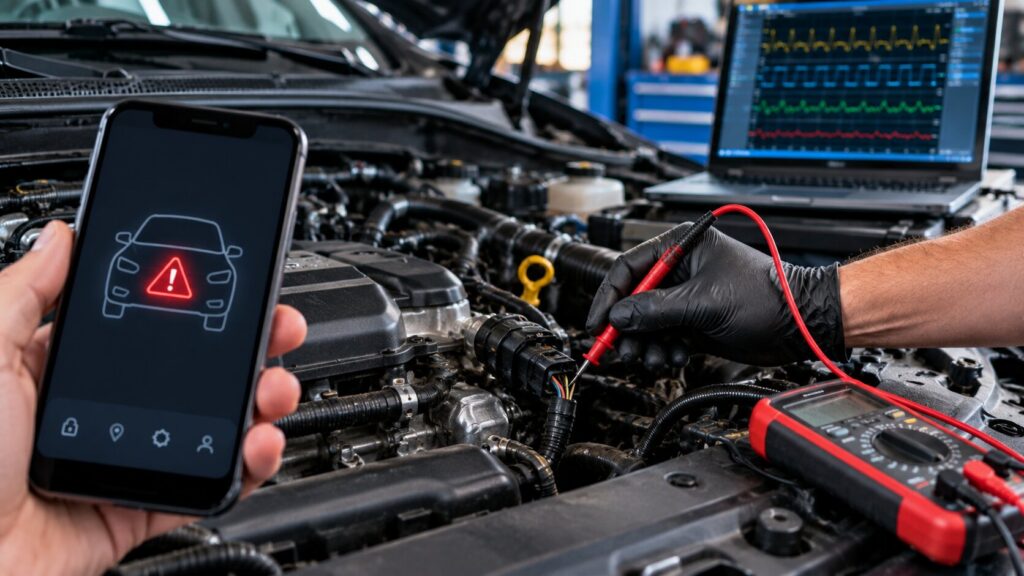
Connected vehicle systems send diagnostic alerts directly to your phone the second a sensor detects an anomaly, but an illuminated check engine light on Shoreline Drive still requires hands-on shop testing. Dashboard warnings and mobile app notifications only tell you which system reported an out-of-range signal, not which specific physical component failed.
I frequently see Lake Minnetonka drivers assume a digital code points to an immediate part replacement, which often results in wasted money on perfectly good sensors. Professional verification uses physical measurements and live telemetry data to determine whether a fault stems from an active sensor, damaged wiring, or an underlying mechanical problem.
Why Remote Telemetry Misses Ground-Level Failures
Modern connected vehicles stream telemetry data to cloud servers when signal voltages breach factory thresholds. However, remote software cannot differentiate between a dead sensor and a minor terminal pin error. Along Shoreline Drive and Lake Minnetonka, high humidity combined with rapid freeze-thaw cycles causes moisture intrusion inside sealed sensor connectors. High electrical resistance alters signal waveforms before they ever reach the ECM.
When a 5V reference circuit drops down to 2.1V due to green oxidation at the connector pin, the vehicle computer logs a sensor fault. Slapping a new sensor onto a corroded harness will not clear the issue.
The 3-Step Verification Process
I run a hands-on physical verification protocol on every flagged alert before unboxing any replacement component.
Pull Freeze-Frame Data and History Trouble Codes
Pull active, pending, and history trouble codes (such as P0300 misfires or P0171 lean codes). Examine freeze-frame parameters—specifically engine RPM, coolant temperature, fuel trim percentages, and battery bus voltage—to see if the fault occurred during a cold start or at highway speeds.
Analyze Live Waveform Signals on an Oscilloscope
Back-probe the signal wire at the sensor plug using a digital oscilloscope. Compare real-time voltage patterns against OEM baseline graphs. An O2 sensor signal should sweep cleanly between 0.1V and 0.9V; flatlines or erratic noise spikes indicate harness degradation or oil contamination rather than a failed element.
Perform Load and Voltage Drop Circuit Testing
Place the circuit under load and measure voltage drop across the power and ground feeds using a digital multimeter. Anything greater than a 0.2V drop across a ground junction points directly to corroded ground straps—frequently damaged by winter salt spray off County Road 15—rather than a faulty computer module.
Regional Triggers on Lake Minnetonka Commutes
Minnesota’s extreme weather patterns frequently trigger phantom codes that misdirect standard diagnostic apps. We see these local failure modes trigger false alerts regularly:
- Short Commutes on Shoreline Drive: Short trips under 10 minutes prevent crankcase oil from exceeding 180°F. Moisture fails to evaporate, creating milky emulsion buildup that fouls PCV valves and triggers false lean codes.
- County Road 15 Salt Contamination: Liquid magnesium chloride penetrates lower chassis wiring looms, corroding the primary engine ground strap and dropping starter/charging system reference voltages.
- Sub-Zero Battery Voltage Dips: Cold soak temperatures below 0°F reduce available battery Cold Cranking Amps (CCA), causing system voltage to sag below 10.5V during cranking and tripping ghost codes across multiple modules.
Don’t Let Ignored Warnings Lead to Severe Engine Damage
Don’t let a phantom dashboard code trick you into replacing parts you don’t actually need. If your connected app is throwing alerts, our technicians can run a physical verification to find the true root cause. We use the same factory-level tooling as the dealerships—like BMW ISTA and Mercedes XENTRY—to provide straightforward, MAP-approved answers without the corporate pressure.
If you need a second opinion on a diagnostic warning, we are here to help. You can drop your vehicle off at Certified Auto Repair (4700 Shoreline Drive, Spring Park, MN 55384), grab one of our free loaner cars, and let us trace the physical fault while you go about your day.
Frequently Asked Questions
Did my check engine light come on if my car feels completely fine?
Yes, early emissions and air-fuel balance faults trigger warning lights long before drivability degrades. The engine control computer detects minor signal drifts—like a 5% shift in long-term fuel trims—to protect catalytic converters before you feel engine misfires or rough idling.
Can a mobile diagnostic app tell me exactly which part needs replacement?
No. Mobile diagnostic apps only display generic diagnostic trouble codes (DTCs) logged by the computer. They cannot perform physical voltage-drop tests, inspect terminal pins, or measure vacuum pressure to confirm whether the failure stems from the sensor, wiring harness, or a mechanical leak.
What should I do if my connected vehicle app sends an urgent alert?
Check your instrument cluster for a flashing check engine light or high temperature warning. If the light is solid and the vehicle runs normally, schedule a hands-on scope and multimeter test to verify the circuit before buying replacement parts.
How does cold weather trigger false diagnostic alerts in Minnetonka?
Sub-zero temperatures lower battery voltage during engine cranking, while thermal contraction loosens worn wiring pin tension. These temporary voltage drops fall below module operating thresholds, logging temporary low-voltage codes even on fully functional components.