Mark Pfleghaar

With over 30 years in the automotive industry, Mark is a Certified Auto Repair Master and State-licensed Emissions Technician. He is known for honest service, technical expertise, and a passion for educating drivers on proper vehicle maintenance and repair transparency in Spring Park, Minnesota.

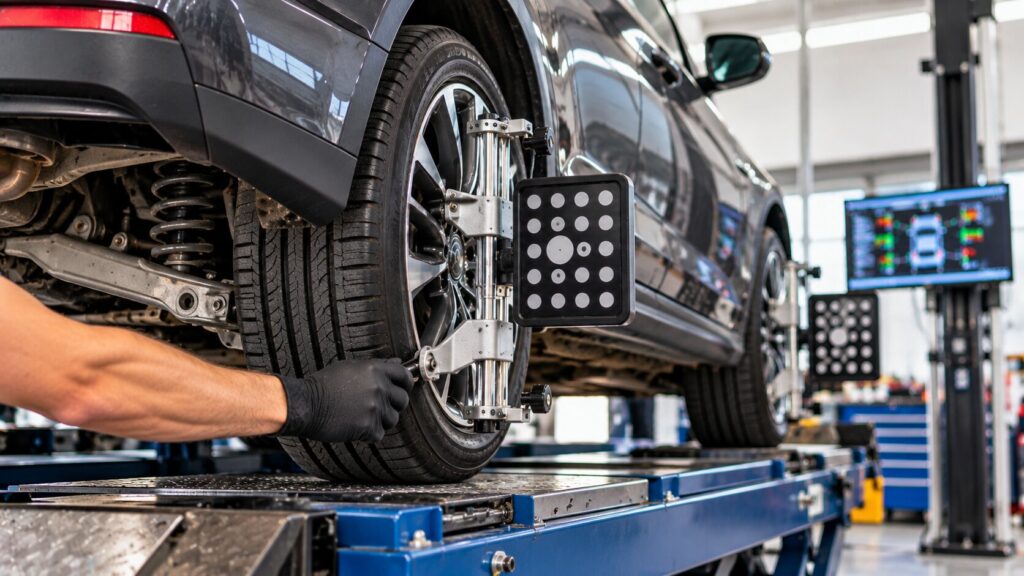
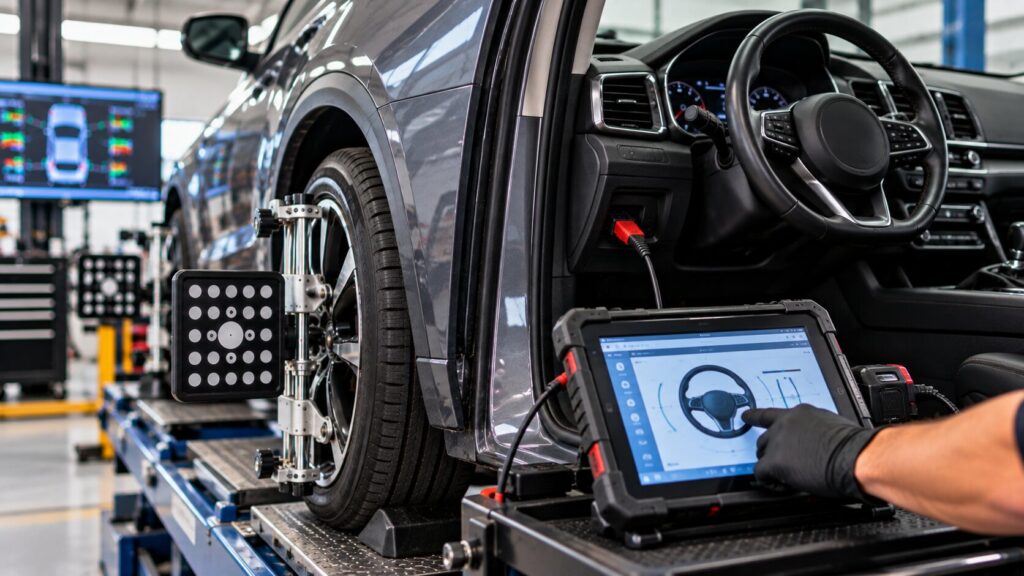
Technician diagnosing sensor faults after a vehicle software update using factory-level diagnostic equipment in Spring Park, MN

How Software Updates Change Vehicle Sensor Behavior

When your vehicle receives a software update or module reflash, the Engine Control Module (ECM) often tightens the acceptable voltage ranges for aging sensors. This digital-to-physical mismatch is a leading cause of post-update check engine lights. Our technicians use factory-level tools to clear adaptation memory, execute sensor relearns, or match revised hardware to new software […]

How Software Updates Change Vehicle Sensor Behavior Read More »

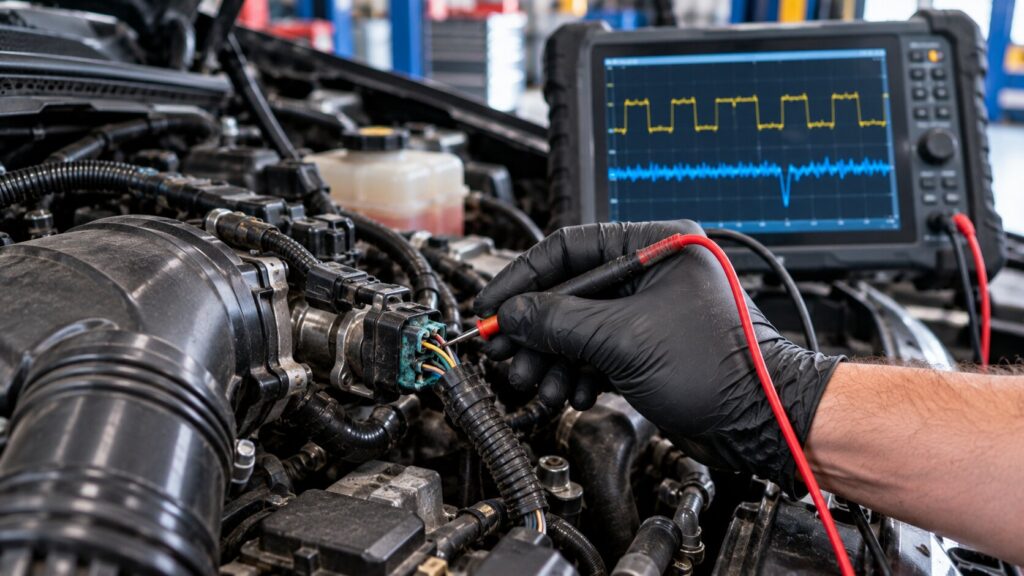
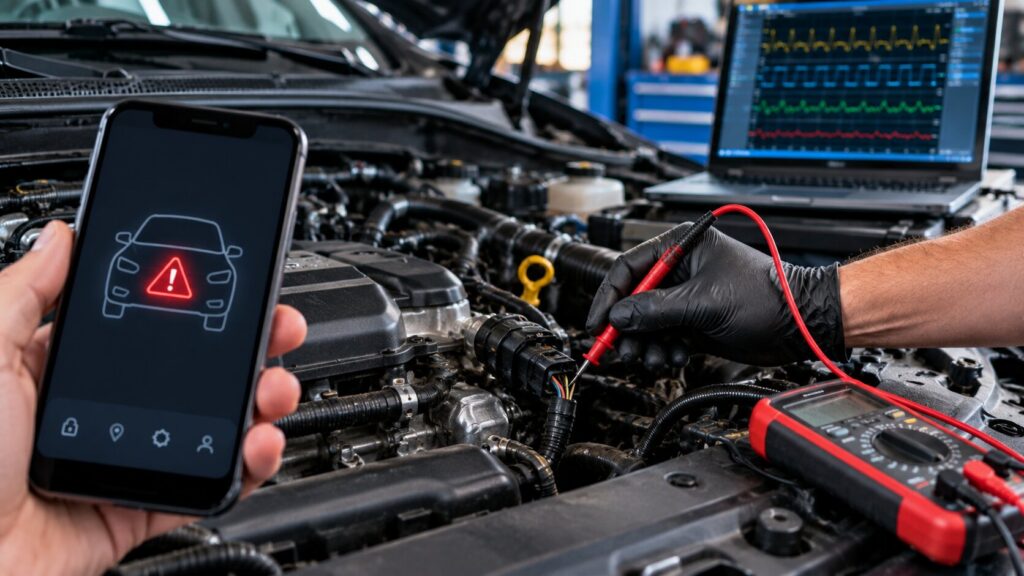
Connected vehicle diagnostic alert verified with hands-on oscilloscope and multimeter testing in Spring Park, MN

Connected Vehicle Diagnostic Alerts Need Hands-On Verification in Spring Park

Connected vehicle diagnostic alerts identify potential system anomalies, but they cannot pinpoint exact component failures. Remote app notifications and dashboard codes only flag out-of-range signals—often triggered by sub-zero voltage drops, line noise, or wiring harness corrosion. Physical testing using digital oscilloscopes, back-probing multimeters, and bi-directional scanners is required to isolate root cause issues before replacing

Connected Vehicle Diagnostic Alerts Need Hands-On Verification in Spring Park Read More »

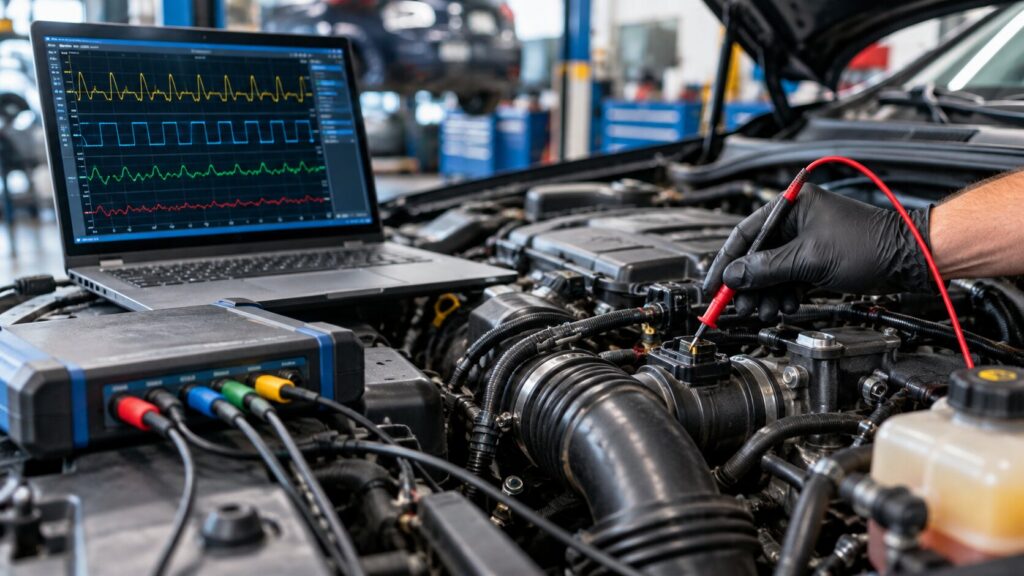
Technician performing predictive vehicle maintenance diagnostics using PicoScope waveform analysis on an engine sensor in Spring Park, MN

Master Predictive Vehicle Maintenance Diagnostics for Peak Performance

Predictive vehicle maintenance diagnostics identifies component fatigue before a check engine light triggers. By tracking live sensor data, voltage trends, and fuel trims via factory-level equipment, technicians detect sluggish sensors and minor faults early. Routine diagnostic monitoring prevents sudden breakdowns, improves fuel economy, and protects expensive engine parts from costly secondary damage. When your check

Master Predictive Vehicle Maintenance Diagnostics for Peak Performance Read More »

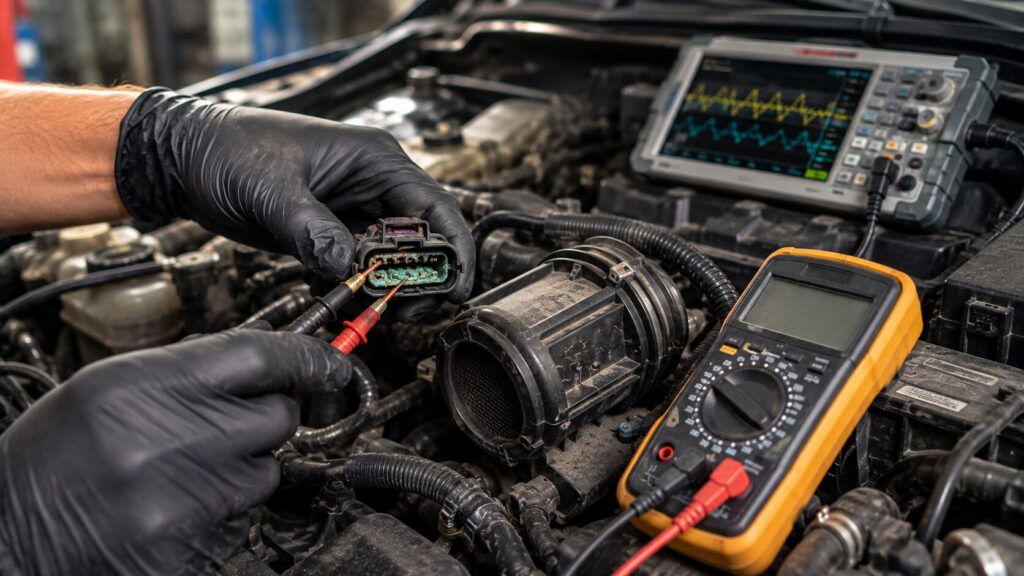
Technician testing a corroded vehicle sensor connector with a multimeter in Spring Park, MN

What Your Car Says About Vehicle Sensor Systems

Cold weather and road salt frequently cause electrical corrosion inside a vehicle’s mass airflow sensor harness, disrupting low-voltage signals to the powertrain control module. This triggers default rich fuel trims, dashboard warning lights, and engine surging. Advanced diagnostics using oscilloscopes and multimeters pinpoint these hidden resistance drops, preventing costly and unnecessary harness replacements. When your

What Your Car Says About Vehicle Sensor Systems Read More »

Technician testing an oxygen sensor and wiring on a high-mileage car in Spring Park, MN

High Mileage Car Sensor Failure Symptoms to Watch For

High mileage car sensor failure symptoms primarily present as poor gas mileage, rough idling, engine hesitation during acceleration, and an active check engine light. As your car passes 100,000 miles, heated oxygen sensors slow down, and mass air flow sensors get dirty from oil vapor. These aging parts send wrong electrical signals to your car’s

High Mileage Car Sensor Failure Symptoms to Watch For Read More »

Technician performing an intake smoke test to diagnose P0171 and P0174 lean codes in Spring Park, MN

Fixing High-Mileage Sensor Faults Before Minnesota Winters

Freezing temperatures, road salt, and moisture trigger check engine lights by cracking aging sensors and corroding wiring in high-mileage vehicles. Sub-zero cold increases electrical resistance, drops battery voltage, and fractures internal components. A professional diagnostic test isolates voltage drops and sensor heater failures before unburned fuel damages your catalytic converter. What We See in the

Fixing High-Mileage Sensor Faults Before Minnesota Winters Read More »

Technician testing a wiring harness with a multimeter and oscilloscope for multiple sensor codes and check engine light problems

Why Multiple Sensor Codes Trigger Your Check Engine Light

Dealing with multiple sensor codes and a check engine light can feel overwhelming, but it rarely means several parts failed at once. Usually, a shared electrical wire or computer network issue triggers the whole chain reaction. Professional diagnostic testing pinpoints the exact electrical root cause, protecting your vehicle from unnecessary part replacements. Why Your Dashboard

Why Multiple Sensor Codes Trigger Your Check Engine Light Read More »

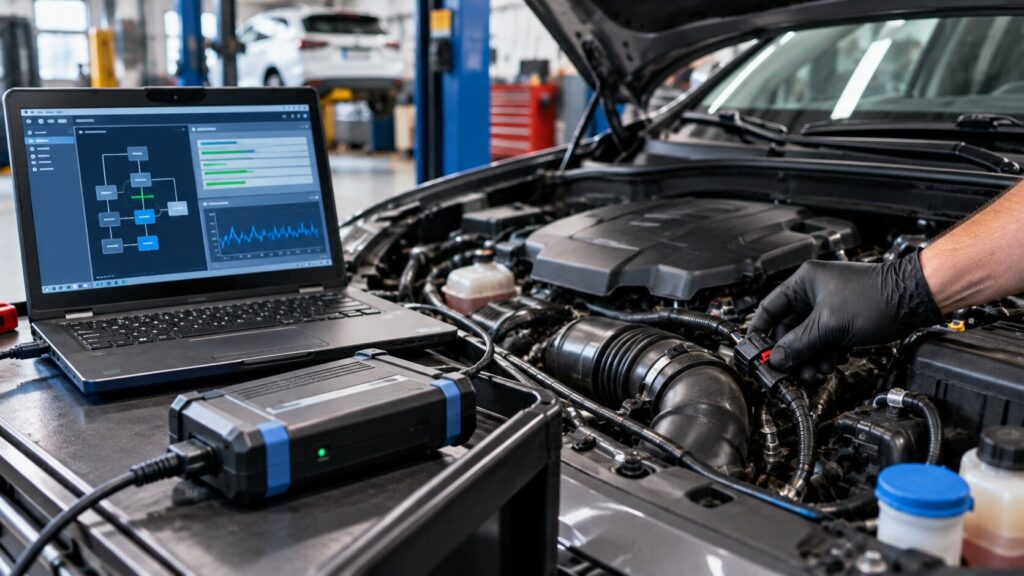
Technician using a diagnostic scan tool to diagnose check engine light sensor problems in Spring Park, MN

Check Engine Light Symptoms and Causes Explained

Experiencing engine hesitation or rough idling on your daily commute often points to underlying check engine light symptoms and causes. Local temperature shifts and moisture frequently compromise sensitive components like mass airflow and oxygen sensors. Catching these electrical and mechanical failures early protects your engine and prevents costly converter damage. Navigating Dashboard Warnings Along Lake

Check Engine Light Symptoms and Causes Explained Read More »

Technician testing an overheating alternator after detecting a burning smell in Spring Park, MN

Why You Should Never Ignore a Burning Smell from Your Alternator

An alternator burning smell means your stator windings are cooking from salt-induced corrosion and heavy winter electrical loads. If you catch that melted-varnish smell early, a quick multimeter check for voltage drop across the main charging cable will tell you if the stator is cooking before it leaves you dead in a snowbank. Thick road

Why You Should Never Ignore a Burning Smell from Your Alternator Read More »

Technician testing alternator AC ripple causing false dashboard warning lights in Spring Park, MN

How Alternator Voltage Problems Trigger False Dash Lights

A failing alternator triggers false dashboard warnings by leaking AC voltage—known as AC ripple—into the vehicle’s DC electrical system. This “electrical noise” corrupts 5-volt sensor signals, causing the PCM to log ghost codes. In Minnesota’s salt-heavy climate, internal diode bridge corrosion is the primary cause of this signal interference. When an alternator stops maintaining a

How Alternator Voltage Problems Trigger False Dash Lights Read More »