October 2026

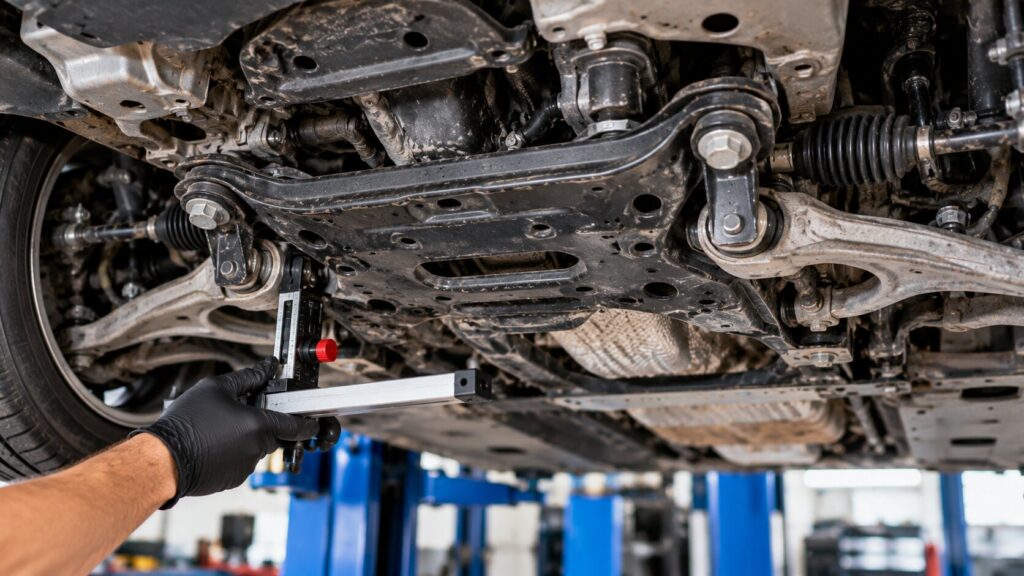
Mechanic inspecting vehicle subframe mounting points with a precision measuring tool to diagnose subframe alignment problems and suspension geometry issues.

How Subframe Alignment Problems Distort Suspension Geometry

A shifted subframe alters suspension geometry beyond standard adjustment limits, causing persistent steering pull and severe tire wear. Hard road impacts displace the frame along its mounting holes. Technicians must use specialized laser measuring equipment to loosen hardware, center the frame back to factory specs, and restore true vehicle tracking. Shifted subframe mounting points on […]

How Subframe Alignment Problems Distort Suspension Geometry Read More »
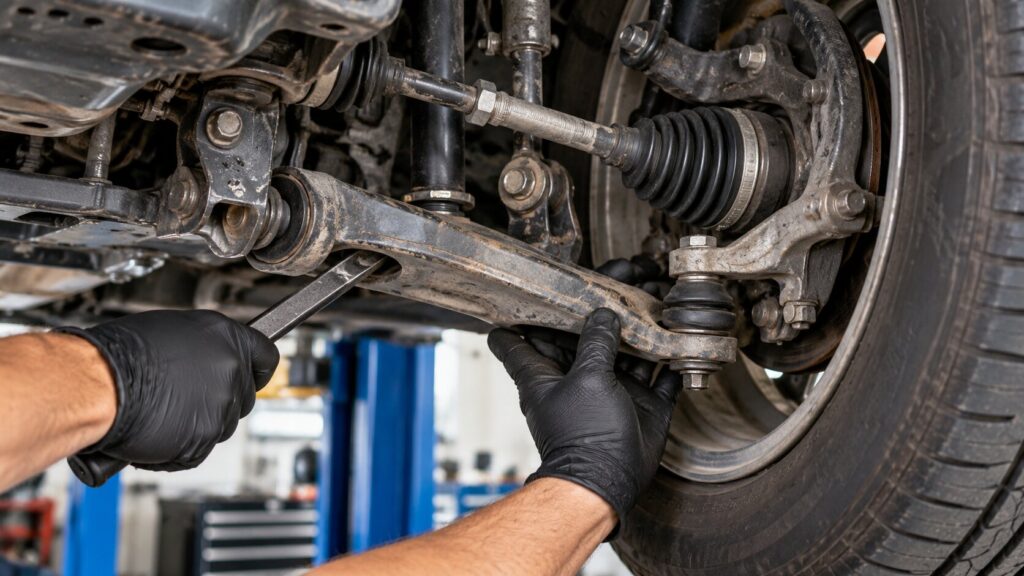
Mechanic inspecting lower control arm, ball joint, and suspension bushings for bent or worn parts before wheel alignment.

Finding Bent Suspension Parts Before Your Wheel Alignment

Inspecting suspension components before a wheel alignment prevents setting angles on bent control arms, loose tie rods, or worn bushings. Damaged parts prevent adjustments from holding, leading to rapid tire wear and off-center steering. Replacing compromised components first ensures accurate alignment, restores precise vehicle handling, and protects your tires. Aligning wheels on top of bent

Finding Bent Suspension Parts Before Your Wheel Alignment Read More »

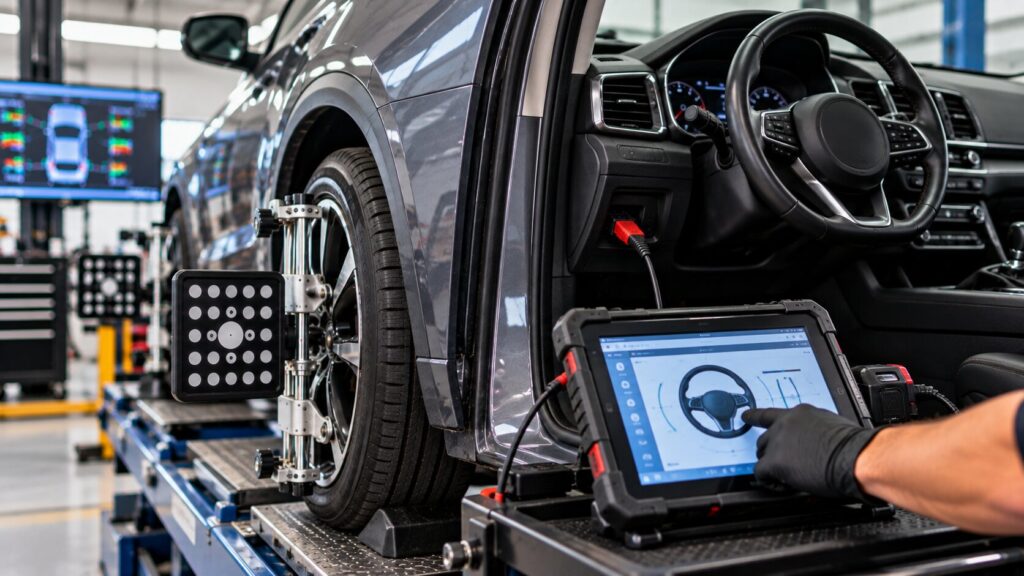
Steering angle sensor calibration after computerized wheel alignment in Spring Park MN

Why Steering Angle Calibration Matters After Wheel Alignment

Modern vehicles require a steering angle reset after alignment to sync physical wheel position with onboard safety computers. Without recalibrating the steering angle sensor, systems like stability control receive inaccurate directional data, causing unwanted braking, traction warnings, or disabled driver-assist features. Proper digital calibration ensures full safety system accuracy. When our tires hit deep potholes

Why Steering Angle Calibration Matters After Wheel Alignment Read More »