High-mileage chassis components face continuous mechanical stress that gradually skews your tire angles long before you notice a pull at the steering wheel. Older vehicles require wheel alignment checks every 6,000 miles or twice yearly. Regular visual inspections catch early component drift caused by worn bushings, sagged springs, and corroded tie rods, extending tire life and maintaining smooth handling.
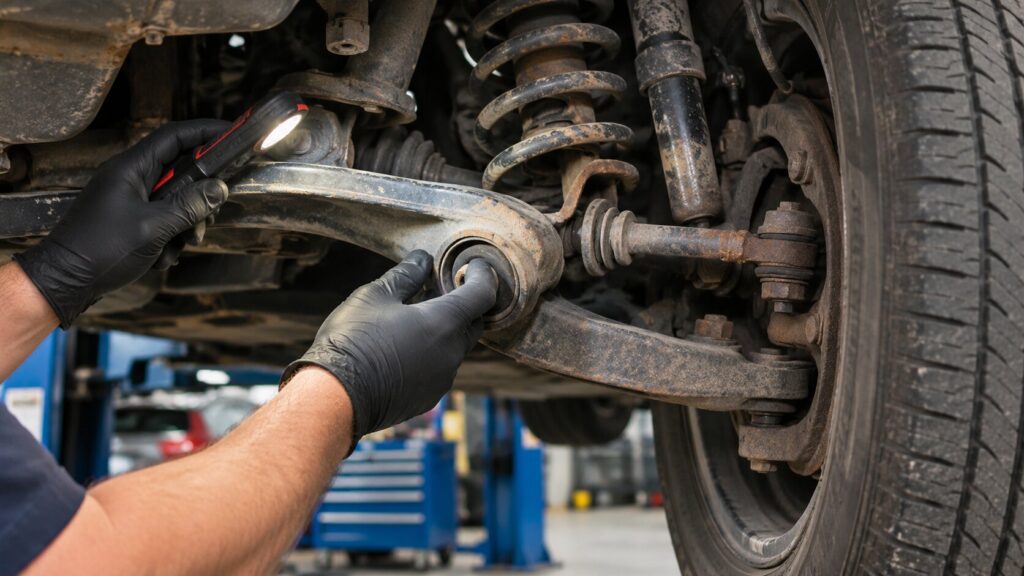
While brand-new vehicles can successfully hold factory alignment angles for years, aging daily drivers suffer from compounding geometry shifts across multiple pivot points. As a vehicle ages, structural wear inherently alters how the chassis sits on the road and how the wheels react to steering input. Catching these mechanical changes early stops accelerated tire scrubbing and keeps your vehicle tracking true down the highway.
Why Older Suspension Components Shift Wheel Alignment Faster
As vehicles age, factory rubber control arm bushings naturally dry out, crack, and lose their original elasticity under load. This flexibility allows heavy suspension arms to deflect significantly further than intended while driving over uneven road surfaces or taking tight corners. When these aging bushings fail to hold components firmly, critical toe and camber angles actively shift during normal driving operation, causing the tires to scrub sideways against the pavement.
Simultaneously, heavy steel coil springs sag gradually over tens of thousands of miles, actively lowering the overall resting ride height of the chassis. A lower ride height directly alters the camber angle, physically pushing the tops of the tires inward. When the ride height drops just half an inch, negative camber often increases enough to cause severe, rapid inner shoulder wear that quickly ruins tread.
Environmental Stressors and Driving Habits That Accelerate Wear
Driving over severe road imperfections continuously impacts delicate steering components and violently forces factory adjustment cams out of their strict positions. Salt, freezing moisture, and slush along regional roadways around Shoreline Drive in Spring Park aggressively accelerate deep rust on exposed tie rod threads and subframe mounting hardware. This chemical corrosion permanently locks vital hardware in place, turning a simple steering adjustment into a highly complex repair if left unchecked.
Frequent short trips over rough local pavement subject aging ball joints to continuous, heavy lateral forces. Over time, these repeated small impacts widen internal tolerances and heavily alter caster stability. Carrying heavy loads or pulling utility trailers puts additional weight on already sagged rear springs, exacerbating the alignment drift and forcing the front wheels to work significantly harder to keep the car straight.
Common Signs Your Classic or High-Mileage Car Needs Alignment
- The steering wheel remains off-center while traveling straight on a flat, level road.
- The vehicle drifts or pulls continuously toward one side when you loosen your grip slightly.
- Front or rear tires show rapid tread wear on the inner or outer edges.
- You notice a squealing sound from the tires while making routine turns at low speeds.
Shop Inspection Note: If your steering wheel vibrates alongside pulling, the issue often stems from uneven tire wear patterns or bent suspension arms rather than simple alignment drift.
Diagnostic Alignment Process
Performing an alignment on a car with loose ball joints or deteriorated bushings provides only a temporary fix. As soon as the vehicle hits a bump, the worn components shift and knock the wheels completely out of specification again.
- Visual Component Inspection: Finding the physical play. Our diagnostic process begins with a manual check of every steering link, ball joint, and rubber bushing using pry bars to measure physical deflection under heavy load.
- Computerized Target Mounting: Mapping the geometry. We mount our high-definition alignment targets to all four wheels to measure active camber, caster, and toe angles in real time against original factory tolerances.
- Hardware Corrosion Mitigation: Fighting winter corrosion. If adjustment hardware is seized from winter road salt, we apply targeted heat and penetrating lubricant to free the components safely without galling the threads.
- Precision Correction and Testing: Restoring factory tracking. We correct the suspension geometry back to optimal angles and perform a strict road test to verify straight tracking and proper steering wheel centering.
When to Schedule Alignment Inspections Based on Age and Mileage
| Vehicle Age & Condition | Recommended Inspection Interval | Primary Focus Area |
| 5 to 10 Years Old (Original Parts) | Every 12,000 miles or once a year | Tie rod wear and front toe alignment |
| 10+ Years Old (High Mileage) | Every 6,000 miles or twice a year | Bushing deflection, spring sag, and camber |
| Restored / Seasonally Driven | Annually before seasonal storage | Tire flat-spotting and steering box play |
Protect Your Steering System and Tires
Postponing alignment checks on an older car rapidly leads to ruined tires, compromised emergency handling, and highly unnecessary strain on delicate steering gearboxes. Our team brings deep practical experience to identifying subtle suspension wear and restoring precise, safe handling to high-mileage daily drivers.
Visit Certified Auto Repair at 4700 Shoreline Drive, Spring Park, MN 55384, or browse our services online to schedule your complete suspension and alignment check.
Frequently Asked Questions
Can you align a car with worn suspension parts?
No, performing an alignment on a car with loose ball joints or deteriorated bushings provides only a temporary fix. As soon as the vehicle hits a bump, the worn components shift and knock the wheels out of specification again. We recommend replacing severely worn suspension parts before performing a final alignment.
How often should an older car get a wheel alignment?
Older vehicles should be inspected every 6,000 miles or twice annually, ideally alongside routine tire rotations. High-mileage suspension parts loosen up faster under daily driving stresses, meaning small alignment errors compound quickly into major edge-wear patterns if left unchecked.
Why does my older car pull even after a fresh alignment?
If your car pulls after an alignment, worn lower control arm bushings may be flexing under braking or acceleration forces. Radial tire pull caused by uneven tread wear patterns can also simulate an alignment issue. A thorough test drive and tire rotation help isolate structural wear from alignment angles.
Do rear wheels on older cars need alignment adjustments?
Yes, many older vehicles feature adjustable rear camber or toe angles, while others utilize rigid rear axles that require specialized shims. If the rear thrust angle is out of spec, the vehicle will dog-track and force you to turn the steering wheel to drive straight. Checking all four wheels ensures the vehicle tracks properly.