Mounting new tires without testing wheel alignment risks rapid, uneven tread wear from uncorrected suspension angles. Daily driving and harsh road conditions subtly alter steering geometry, causing fresh tread to scrub against the pavement. Verifying alignment during tire installation protects your tire warranty, extends tread life, and ensures smooth handling.
Putting a set of brand-new tires on your vehicle without verifying suspension alignment leaves fresh rubber highly susceptible to accelerated wear within just a few thousand miles. We routinely see local commuters travel across the Lake Minnetonka causeway or tackle rutted winter paths on County Road 15 in Spring Park, where subtle chassis impacts silently shift wheel angles away from factory specs.
Unseen Suspension Stressors Preceding Your New Tire Installation
Suspension hardware naturally shifts out of alignment over time due to everyday road contact, curb nudges, deep potholes, and seasonal freeze-thaw cycles. Subtle wear on rubber bushings, aging struts, or minor bends in steering arms shift your toe, camber, and caster without triggering an immediate pull to one side.
Because these changes happen incrementally, most drivers adapt to the deteriorating handling without realizing it. However, the math is unforgiving: a toe misalignment offset by a mere 1/16th of an inch forces your tire to drag sideways by nearly 28 feet for every single mile traveled, continuously grinding down fresh tread compound.
Physical Mechanics of How Misalignment Scuffs Away Fresh Tread
When tire footprints fail to track parallel to the road surface, tread blocks rub harshly against asphalt instead of rolling freely. Understanding the three primary alignment angles explains why new tires degrade so quickly when geometry is ignored:
- Toe Misalignment: This refers to whether your tires point inward or outward when viewed from above. Severe toe misalignment drags the rubber laterally across the roadway, forming sharp, saw-toothed diagonal ridges known as feathering.
- Improper Camber: This is the inward or outward tilt of the tire when viewed from the front. Improper camber places excess vehicle weight directly onto the inner or outer shoulder, stripping away rubber along one edge while leaving the remaining tread virtually untouched.
- Caster Issues: While caster primarily affects steering stability and cornering rather than rapid tread wear, a bad caster angle can make the steering wheel feel heavy or cause the vehicle to wander, compromising your safety on wet or icy roads.
Why ADAS Calibration Matters During Alignment
For modern cars, an alignment is no longer just a mechanical adjustment; it is a digital calibration. Most vehicles manufactured in the last decade are equipped with Advanced Driver Assistance Systems (ADAS), which rely on forward-facing cameras and sensors mounted to the windshield and bumper.
These safety systems—including lane departure warnings, adaptive cruise control, and automatic emergency braking—are calibrated based on the vehicle’s thrust angle and steering geometry. When we adjust your physical wheel alignment, those digital sensors must also be recalibrated to ensure your car’s computer correctly understands where the vehicle is pointed. Installing new tires and tweaking the alignment without addressing ADAS leaves your vehicle’s safety features dangerously out of sync with the physical wheels.
Visual and Tactile Warnings of Misaligned Suspension Geometry
Before you replace your current tires, inspect them. The way your old tires wore down is the exact blueprint of how your new tires will degrade if the alignment is ignored. Look for these signs:
- Feathered tread edges: Running your fingers over the tread blocks reveals a sharp, uneven ridge feeling when sliding your hand in one direction.
- Off-center steering wheel: Your vehicle travels straight down Shoreline Drive, yet the center logo on your steering wheel sits slightly turned.
- Unbalanced shoulder wear: One side of your tire displays noticeably less tread depth compared to the main center grooves.
- Vehicle drift or pull: The car continuously wanders toward the shoulder or oncoming lane when you briefly ease your grip on the wheel.
Key Differences Between Wheel Balancing and Alignment Testing
Wheel balancing and wheel alignment address two completely separate mechanical conditions on your vehicle. Balancing distributes weight evenly across the wheel and tire unit to stop high-speed vibrations in the steering column and seat. Alignment service focuses on adjusting the mechanical linkages linking your suspension to the frame, ensuring all four wheels remain pointed true and square to the road.
How Specialized Alignment Equipment Safeguards Your Tread Warranty
Premium tires often come with impressive mileage warranties, sometimes guaranteeing 60,000 miles or more. However, tire manufacturers regularly reject treadwear claims if inspection shows premature damage caused by ignored alignment errors or uneven scrubbing.
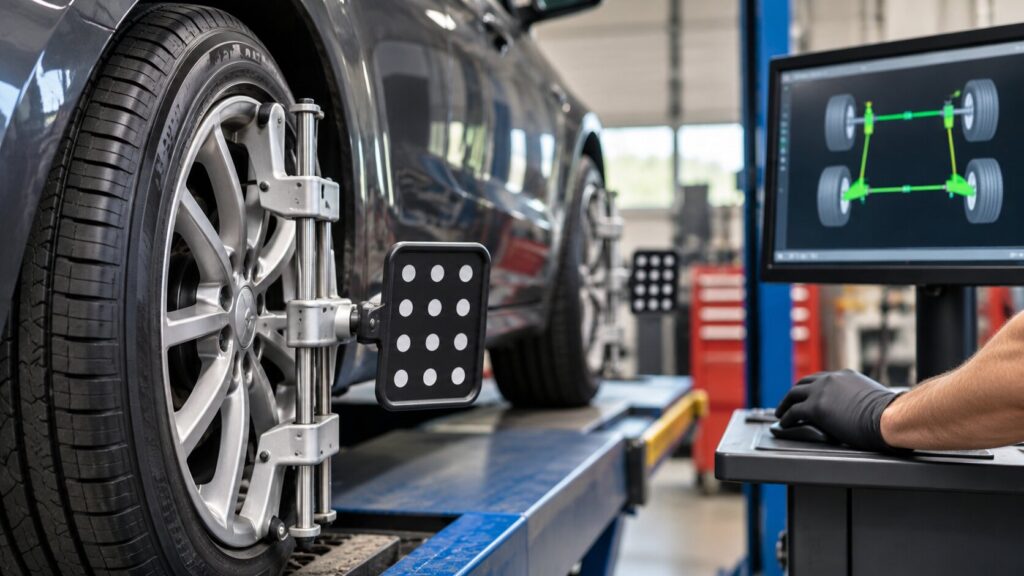
We utilize computerized optical measurement systems to evaluate your suspension geometry down to minute fractions of a degree. Documenting proper alignment angles at the exact time of tire mounting provides proof of proactive maintenance. This simple step keeps you in compliance with manufacturer terms, safeguards your warranty coverage, and maximizes your return on investment.
Protect Your New Tires and Maximize Tread Life
Installing fresh tires without inspecting your wheel alignment risks destroying hundreds of dollars worth of usable tread prematurely. Our technicians utilize optical alignment equipment to verify that your vehicle tracks straight, rolls efficiently, and handles harsh local road conditions with ease. Reserve your tire installation and alignment inspection today through Certified Auto Repair at 4700 Shoreline Drive, Spring Park, MN 55384 to keep your vehicle performing reliably.
Frequently Asked Questions
Do I need an alignment every single time I buy new tires?
No, it is not strictly mandatory, but we strongly recommend an alignment test whenever you buy new rubber. Existing alignment errors immediately begin wearing down fresh tread, even if your old tires appeared fine to the naked eye. Verifying suspension angles ensures your new tires achieve their full mileage rating.
Can bad alignment cause new tires to make noise?
Yes, misaligned tires wear unevenly and create irregular tread surface patterns like cupping or feathering. As these uneven tread blocks meet the road, they create a noticeable humming, thumping, or growling noise at highway speeds. Correcting the alignment early prevents these noisy wear patterns from setting in permanently.
How long does a standard alignment check take during tire installation?
A standard computerized alignment check takes 30 to 45 minutes during your tire service. Our technicians mount optical targets on your wheels, scan current geometric angles, and adjust tie rods or camber bolts back to factory limits.
Can alignment issues affect my fuel economy?
Yes, misaligned wheels increase the rolling resistance of your vehicle as the tires drag or scrub against the pavement. This additional friction forces your engine to work harder to maintain speed, noticeably lowering your overall gas mileage over time. Correcting the alignment reduces drag and helps restore optimal fuel efficiency.