Failing variable camshaft timing solenoids trigger check engine warnings during cold commutes on Shoreline Drive. Oil sludge clogs microscopic mesh screens, causing erratic idle and power loss. Advanced live data scanning and physical inspections accurately identify these N52 and N55 timing faults, restoring engine performance and preventing costly secondary mechanical damage before failure occurs.
Failing variable camshaft timing solenoids trigger persistent check engine warnings on BMW N52 and N55 powerplants during cold-soaked morning commutes down Shoreline Drive. If these actuators fail to manage oil pressure, the computer can no longer time the engine properly, resulting in an unsteady idle, hesitation, and slow acceleration. Addressing these timing anomalies early prevents accelerated wear on the timing chain assembly and stops secondary mechanical degradation inside the cylinder head.
Understanding BMW Variable Camshaft Timing Design
BMW variable timing relies on hydraulic pressure directed through oil solenoids to dynamically shift the intake and exhaust camshafts relative to the crankshaft. During my inspections, oil moves through fine screens inside the solenoid to push pistons and adjust timing right away. This non-stop tuning maximizes power output and reduces exhaust emissions everywhere you drive.
Freezing winter temperatures in Minnesota make engine oil thick overnight, forcing the pump to push heavy fluid through tiny holes the next morning. When engine oil contains microscopic particulate, varnish, or combustion blow-by deposits, sludge bridges across the fine solenoid mesh filters. The failure point involves internal spool valve binding and electromagnetic coil fatigue. Instead of sliding smoothly, debris gets stuck in the plunger, throwing your camshaft timing off and turning on the dashboard warning light.
Recognizing Early Diagnostic Trouble Codes and Symptoms
Catching lumpy idles or active fault codes early prevents total VANOS seizure and warped cylinder heads. When drivers bring vehicles to me, the most common indicators manifest during cold starts and low-speed driving.
- Cold Start Idle Fluctuation: The engine fires up and settles into a lumpy, unstable idle that fluctuates significantly before stabilizing as oil warms.
- Low-End Torque Drop: Acceleration from a stop feels sluggish because the computer defaults camshafts to a safe fallback map.
- Metallic Startup Rattle: A brief ticking noise occurs during the first few seconds of operation as the actuator builds internal hydraulic pressure.
- Active Fault Codes: Diagnostic codes such as 2A82 for the intake side or 2A87 for the exhaust side populate in the computer memory.
Advanced Diagnostic Workflows for Timing Faults
Pinpointing an intermittent timing fault requires more than reading generic trouble codes with a basic tool. When I perform root-cause analysis, I monitor actual versus target camshaft angles in real-time while running active actuation tests.
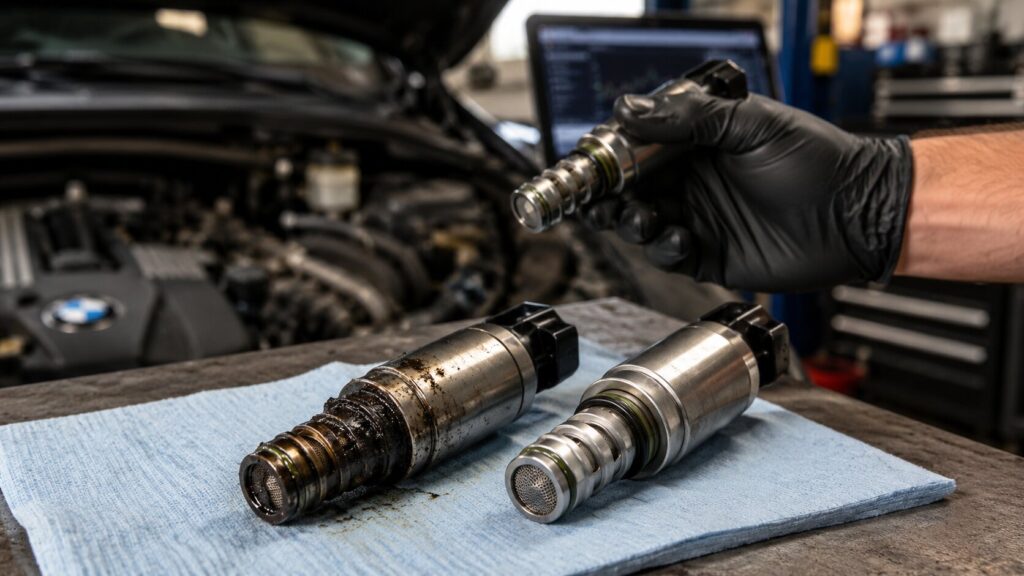
An advanced scanner plugs into the data port to check real-time settings, exposing if the engine computer is fighting to fix delayed timing. I extract the intake and exhaust solenoids to inspect integrated wire mesh screens for carbon clogging, varnish buildup, or sludge bridges.
When I pulled the exhaust solenoid on this N55 after a sub-zero Lake Minnetonka freeze, the inner mesh screen was choked with a solid ring of oxidized sludge, locking the spool valve open and causing the 2A87 code. A special meter tests the internal coil inside the part against factory standards to spot heat damage and electrical shorts that regular code readers miss. If the resistance numbers are off, or if cleaning the tiny screens does not get the oil moving right again, you have to swap out the part.
The Impact of Regional Climate on European Engines
Sub-zero Minnesota cold starts and short trips thicken oil, clogging solenoid mesh filters with carbon sludge. Region-specific weather patterns introduce thermal cycling that accelerates oil degradation and varnish formation inside tight hydraulic galleries. While servicing local vehicles, I see that quick trips stop engines from warming up fully, causing moisture and fuel to build up and dirty the oil.
This compromised fluid rapidly deposits microscopic contaminants onto solenoid filter screens. Maintaining strict oil service intervals using high-grade synthetic lubricants compliant with BMW specifications remains the most effective defense against premature timing wear.
Professional Repair Versus Deferred Maintenance Risks
Ignoring early timing correlation warnings risks severe secondary damages, including accelerated timing chain wear, guide rail fracturing, and permanent camshaft journal scoring that multiplies repair costs. Dealership networks frequently impose bloated backlogs and impersonal treatment when handling complex European diagnostic routines. Choosing independent specialists ensures targeted evaluation, transparent pricing, and rapid turnaround times without corporate delays.
Whether it requires a thorough cleaning or a full replacement, fixing a faulty actuator is the best way to resolve dash codes, bring back your engine’s torque, and keep your timing chain guides safe. If you’re experiencing these issues with your European vehicle, stop by Certified Auto Repair at 4700 Shoreline Drive, Spring Park, MN 55384. We’ll gladly run the diagnostics and get you back on the road safely.
Frequently Asked Questions
Can a dirty oil change interval directly cause a VANOS warning code?
Yes. Overdue oil changes allow varnish and carbon sludge to accumulate on solenoid mesh screens, restricting the hydraulic flow required for proper valve timing.
Will a failing VANOS solenoid cause my car to fail emissions testing?
Yes. Bad engine timing messes up how fuel burns and increases pollution, which turns on the check engine light and causes your car to fail an emissions test.
Do both intake and exhaust solenoids usually fail at the same time?
No. Wear is typically isolated to a single unit depending on usage cycles, though inspecting both is standard practice during diagnostic testing.
Can I drive long distances with an active VANOS fault code?
No. Driving with broken timing forces the computer into a backup mode, lowering your power and opening the door to worse engine damage.