Freezing Spring Park winters, road salt, and temperature changes can place additional demands on Jeep replacement parts. OEM components are designed around factory specifications, while aftermarket options vary in material quality, fitment, and durability. Understanding these differences helps Jeep owners choose the right parts for suspension, electrical, and drivetrain repairs in Minnesota conditions.
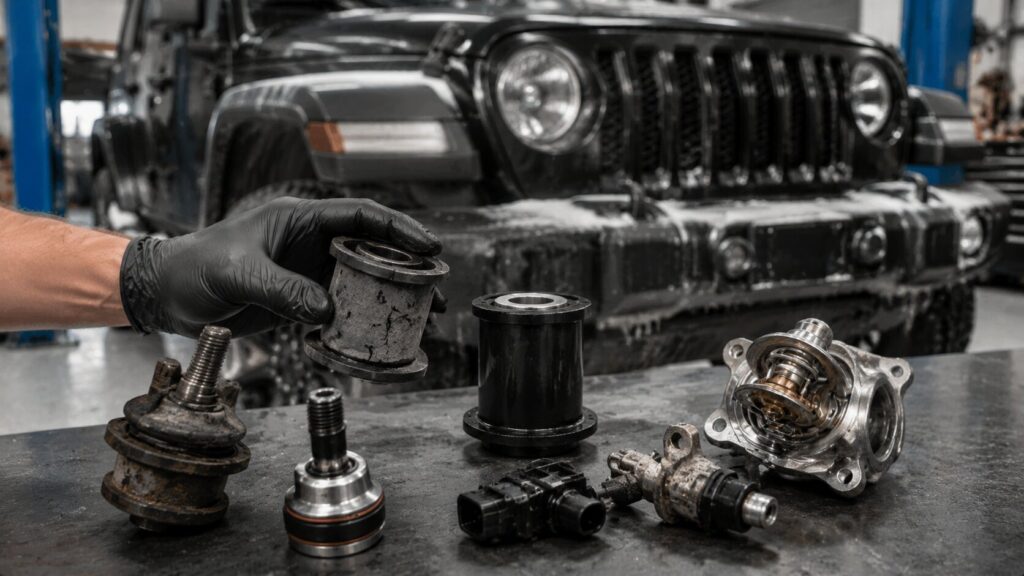
Comparing the Cost of OEM and Aftermarket Jeep Parts
OEM Jeep parts typically have a higher upfront cost because they are engineered around factory specifications and validated for specific vehicle systems. Quality aftermarket components can reduce initial repair costs, but the manufacturer, warranty coverage, and compatibility should be considered carefully. For critical systems like ABS sensors, cooling controls, and drivetrain electronics, choosing the correct component the first time may prevent repeat diagnostic and labor costs.
When Quality Aftermarket Jeep Parts Can Make Sense
Not every Jeep repair requires an OEM replacement. Reputable aftermarket manufacturers produce components that can provide reliable performance when they meet the correct specifications. For certain wear items and non-critical components, the right aftermarket option may offer a practical balance of cost and durability.
The key is matching the part to the vehicle’s requirements, driving conditions, and intended use rather than choosing based only on the lowest price. In Minnesota climates, material quality, fitment, and long-term reliability matter more than whether a part carries an OEM label.
What Happens to Shoreline Drive Commuter Jeeps when Aftermarket Bushings Freeze
A Jeep Grand Cherokee suspension inspection revealed a control arm bushing that had deteriorated beyond normal wear. After removing the component with a hydraulic press, we found cracking and material breakdown consistent with age, usage, and repeated exposure to changing road conditions. Minnesota temperature swings, potholes, and winter road treatments can place additional stress on suspension components, making proper material quality and fitment important.
Standard factory service manuals tell you to check for dry rot or visual cracking every twelve thousand miles, but those corporate manuals are written for temperate test tracks, not a brutal Minnesota winter thaw cycle. They fail to account for how rapidly salt-laden moisture freezes inside the microscopic pores of cheap vulcanized rubber.
How Cold Temperatures Affect Jeep Suspension Materials
Rubber suspension components naturally change behavior as temperatures drop. In Minnesota winters, repeated freezing and thawing cycles, road salt, and rough road conditions can accelerate wear in some materials. The quality of the compound and how well the part fits the vehicle can influence long-term ride comfort, noise levels, and durability.
Is It a Failed Wheel Speed Sensor or Minnesota Road Salt Corrosion
A Wrangler arrived with multiple warning indicators illuminated, including the ABS, stability control, and four-wheel-drive system lights. The initial scan identified a right rear wheel speed sensor fault, but the code alone did not confirm whether the sensor, wiring, connector, or hub assembly was the source of the problem. We performed additional electrical testing at the sensor circuit to verify signal quality before recommending replacement.
Why Replacement Wheel Speed Sensors Need Proper Compatibility
Jeep safety systems depend on accurate wheel speed information from sensors throughout the vehicle. If a replacement sensor does not communicate correctly with the vehicle’s control modules, it may create warning lights or inconsistent system operation. Proper fitment, electrical compatibility, and sealing quality are important factors when selecting replacement components.
How Aftermarket Thermostats Disrupt Jeep Cabin Heating Cycles
The complaints are always identical when the late seasonal chills hit the region. The cabin heater is blowing lukewarm air, the engine takes twenty minutes to move off the cold mark, and the fuel economy has dropped noticeably. During a recent Jeep EcoDiesel inspection, we found the thermostat was not responding correctly to engine temperature changes.
After removing the unit, we identified internal wear that prevented the valve from regulating coolant flow as designed. Comparing the failed component with the correct specification helped confirm that the issue was related to part compatibility and operation rather than a cooling system failure elsewhere.
Why Jeep Cooling Systems Need the Correct Thermostat Design
Many modern Jeep engines use electronically controlled cooling strategies to manage warm-up, fuel efficiency, and operating temperature. Because of this, a replacement thermostat must match the vehicle’s specifications. A component with incorrect calibration or compatibility may affect engine temperature regulation and cabin heating performance.
Advanced Diagnostic Testing & Precision Jeep Repair
Advanced diagnostic equipment allows technicians to evaluate how replacement components communicate with the vehicle before replacing additional parts. This helps determine whether the issue is caused by the component itself, installation concerns, or another system problem.
If your Wrangler is showing ABS, traction control, or drivetrain warnings after Minnesota winter driving, proper diagnosis can help identify whether the issue is the sensor, wiring, installation, or another system concern. Visit Certified Auto Repair at 4700 Shoreline Drive in Spring Park, MN 55384 for a thorough inspection and accurate repair recommendation.
Frequently Asked Questions
How Do OEM and Aftermarket Jeep Suspension Parts Compare in Cold Weather?
OEM parts are designed around the original vehicle specifications, while aftermarket quality varies by manufacturer. Premium aftermarket components can perform well, but material quality and fitment are important factors for Minnesota driving conditions.
Why Do Some Jeep Wheel Speed Sensors Trigger Warning Lights After Replacement?
Some aftermarket sensors may use different shielding and sealing designs, which can affect reliability depending on manufacturer quality.
Why does my Jeep cabin heater take so long to warm up with a non-factory thermostat?
Non-factory thermostats usually rely on basic mechanical wax pellets instead of map-controlled electrical heating elements, causing the valve to open prematurely and preventing the coolant from reaching the optimal operating temperature required to efficiently heat the vehicle interior.
Can road salt exposure cause premature structural failure on aftermarket steering linkages?
Yes. Road salt can accelerate corrosion on any exposed metal component. The level of protection depends on the component design, coating quality, and maintenance practices.
Do original factory parts carry a better warranty for extreme cold weather operational failures?
Yes. OEM replacement parts often include manufacturer-backed warranty coverage, but the exact terms depend on the vehicle manufacturer, part category, and where the component is purchased and installed.