Cold weather lowers tire pressure, stiffens rubber, and thickens power steering fluid, causing vehicle pulling that mimics misalignment without structural frame damage. Correcting cold tire inflation usually resolves temporary drift. Persistent pulling after warming up signals frozen moisture, sticking calipers, or bent suspension components requiring professional alignment.
Sub-zero Minnesota mornings often bring an unexpected driving hazard when your steering wheel suddenly feels like it is fighting against you. On the commute down Shoreline Drive in Spring Park, a vehicle drifting toward the shoulder creates an immediate worry that your suspension geometry is completely ruined. Extreme ambient cold alters tire inflation, tread compound elasticity, and subframe bushings, generating lateral pull symptoms that mimic mechanical misalignment without any structural frame shift.
Cold Air Drops Pressure and Creates Radial Drag
We constantly see tire pressure drop by approximately one pound per square inch for every 10° decrease in ambient outdoor temperature. When a vehicle sits parked overnight in sub-zero Lake Minnetonka winter air, we notice that driver-side and passenger-side tires rarely lose pressure at the exact same rate. Unequal inflation creates mismatched rolling circumferences and varying contact patch sizes across the same axle, forcing the vehicle to pull toward the side with lower pressure.
The physics of rubber elasticity compounds this steering tracking issue as temperatures plummet below freezing. All-season rubber compounds stiffen dramatically in extreme cold, causing temporary flat spots where the tread rested on frozen pavement overnight. Until the tires rotate enough miles to generate internal friction and heat, we find that these rigid flat spots create severe rolling resistance and side-to-side drift that feels identical to a bad alignment.
Mismatched Winter Tires and Frozen Road Micro-Ruts
When we install or service winter tires, we always check for uneven tread depth between left and right positions, which introduces immediate directional instability. Deep winter tread blocks squirm under cornering and braking forces, and any variance in wear height changes how each tire grabs the pavement. Mixing worn snow tires with fresh ones across the same axle alters side-to-side traction levels, causing the car to pull under light acceleration on cold roads.
Snowpack and ice ruts hidden beneath clear road surfaces exert heavy physical feedback on your front tires. Packed snow ridges carved by heavy trucks create sub-surface channels that constantly steer your front wheels away from the center line. Even when asphalt looks completely clear, microscopic ice patches under one side of the vehicle reduce traction, causing the open differential to transfer torque unevenly and pull the steering wheel.
How Cold Temperatures Affect Suspension and Steering Components
In our experience servicing local vehicles, extreme cold alters the physical properties of internal power steering fluid and rubber suspension bushings. Hydraulic steering fluid thickens in sub-zero temperatures, increasing internal system pressure and temporarily delaying valve response inside the steering rack. Suspension control arm bushings stiffen into rigid blocks, preventing normal arm articulation and temporarily binding the front geometry until road vibration warms the rubber.
Corroded alignment cam bolts and tie rod threads are particularly vulnerable to winter road salt exposure in Minnesota. Moisture trapped inside worn ball joints or outer tie rod ends freezes solid overnight, locking the pivot pin in an off-center position. When you drive away, that frozen pivot forces the wheel to track at an angle until vehicle heat melts the internal ice pocket.
Spring Park Shop Floor: Last winter, we had a customer commute down Shoreline Drive complaining of a heavy right-hand pull every morning at -5°F. On the rack, alignment spec was within tolerance (cross-caster under 0.5°). The culprit was moisture trapped inside the right outer tie rod boot that froze overnight, locking the pivot pin at an offset until engine heat melted the ice pocket 15 minutes into the drive.
Simple Tests to Pinpoint Cold Weather Steering Pull
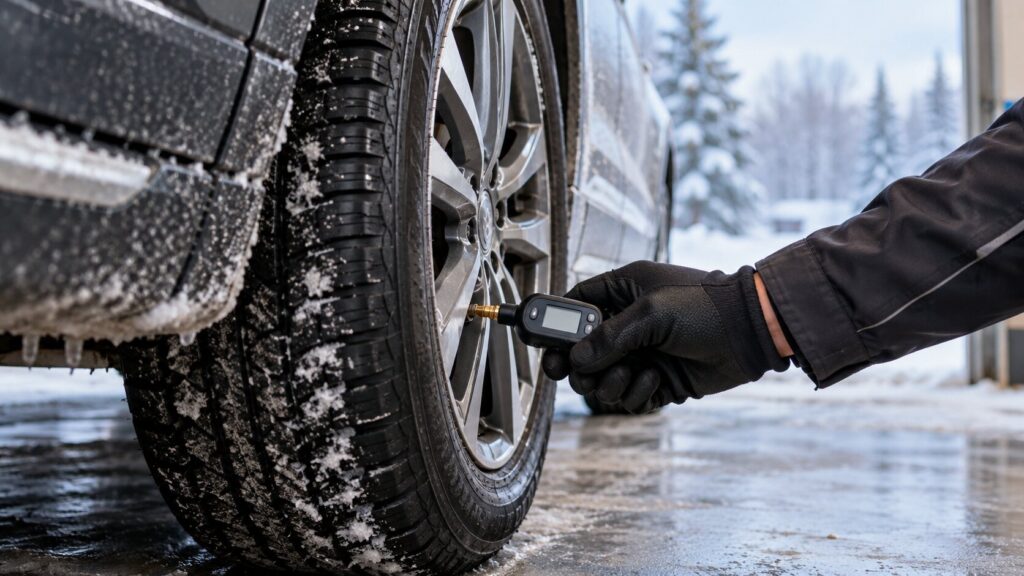
You can run a few quick diagnostic checks in your driveway before booking a mechanical inspection. Check all four tires with an accurate digital gauge first thing in the morning before driving the vehicle. If adjusting all tires to the placard pressure listed on your driver door jamb eliminates the drifting sensation within five miles of driving, ambient temperature pressure loss was the sole culprit.
- Inspect tire sidewalls for uneven wear patterns or hidden tread cupping along the inner shoulders.
- Inflate all four tires to the exact door-jamb specification while the rubber is completely cold.
- Swap the front left and front right tires to see if the pulling direction flips to the opposite side.
- Note whether the vehicle only pulls during the first ten minutes of driving before components warm up.
- Observe if the drift occurs only on specific local roads with steep crowns designed for snow drainage.
If the steering pull persists after correcting cold inflation pressures and driving long enough to warm the tire carcass, your suspension requires technical inspection. Driving continuously on a misaligned suspension accelerated by winter impacts rapidly destroys expensive winter tire tread.
Our Systematic Diagnostic Procedure
We follow a systematic diagnostic procedure on our Hunter HawkEye digital alignment rack to separate temporary weather effects from genuine mechanical steering failures:
- Perform Digital Alignment Sweep: We measure the exact toe, camber, and cross-caster angles against factory tolerances to confirm your structural alignment geometry has not shifted from a pothole impact.
- Inspect Steering Linkage and Bushings: We check the tie rods, ball joints, and control arm bushings for cold-induced binding, frozen boots, or excessive play caused by winter wear.
- Analyze Tire Balance and Radial Force: We run the wheels on our road-force balancer to test for internal belt shifts, severe carcass flat-spotting, or radial force variation exceeding 15 lbs.
- Inspect Brake Caliper Drag: We thoroughly check for frozen caliper slider pins or sticking brake pads that might be dragging on one rotor and pulling the vehicle to one side.
Protecting Your Suspension from Winter Damage
Ignoring a persistent vehicle pull risks severe secondary damage to your steering rack, wheel bearings, and expensive winter tires. A misaligned wheel pushed through frozen slush accelerates tread scrubbing, doubling your stopping distance on icy roads and risking complete loss of control.
Schedule a digital steering inspection with us early to protect your tires and ensure predictable handling through the coldest months. Visit our team at Certified Auto Repair at 4700 Shoreline Drive in Spring Park, MN 55384 for a comprehensive steering evaluation.
Frequently Asked Questions
Can cold weather cause a car to lose alignment?
No. Cold weather alone does not alter metal alignment angles, but freezing conditions create severe road hazards like hidden potholes and frost heaves. Hitting these obstacles while suspension bushings are stiffened by sub-zero air transfers direct impact forces straight to your control arms and tie rods, bending components out of specification.
How do I know if my pull is just a low tire or true misalignment?
A pull caused by cold temperature pressure loss generally resolves once you inflate all tires to their correct door-jamb specification and drive a few miles. Mechanical misalignment causes a continuous drift regardless of tire pressure, often accompanied by a crooked steering wheel spoke when driving straight on a flat road.
Why does my steering wheel pull only during winter mornings?
Overnight parking in extreme cold creates temporary flat spots on stiff tire rubber and thickens power steering fluid. As you drive, tire carcass flex generates internal heat that rounds out the tread, while engine heat warms the steering fluid, restoring normal tracking after ten to fifteen minutes of operation.
Will snow packed inside the wheels make the car pull?
No. Packed snow and ice clinging to the inside rim barrel usually cause severe high-speed wheel vibration rather than a steady directional pull. However, if heavy ice builds up inside the steering knuckles or brake assemblies on one side, it can restrict wheel rotation and cause the vehicle to drift toward that side.