Mounting new tires without fixing underlying suspension misalignment guarantees rapid tread destruction. Factors like toe drift, negative camber, and worn suspension parts physically force your tires to aggressively drag across the road. Resolving uneven tire wear permanently requires identifying this geometry drift and replacing worn steering components before installing fresh rubber.
A brand-new set of tires can wear down to nothing in under 5,000 miles if your wheels do not point straight. Finding out if a bent steering bar from Shoreline Drive or a worn rubber cushion is eating your tread saves you from throwing money away on extra tires. When suspension angles drift off specification, the pavement acts like sandpaper against the rubber on every single drive.
Putting new tires on a car with a crooked wheel setup means those new tires will immediately begin ruining themselves. When your wheel angles move out of place, the tires physically cannot roll smoothly and flatly. Instead, the heavy weight of your car aggressively grinds the rubber sideways against the abrasive road surface.
Understanding the True Cause of Irregular Tread Wear
Putting new tires on a car with crooked wheel setup means those new tires will ruin fast. When your wheel angles move out of place, the tires cannot roll smooth and flat. Instead, the heavy weight of your car grinds the rubber sideways against the road surface.
At our shop near Lake Minnetonka, we see how harsh winter weather makes this worse. Large potholes, icy bumps, and road salt put heavy pressure on steering joints and lower metal arms. Over time, these daily road hits push your wheels out of line, wearing out your tread long before you notice any pull in your hands.
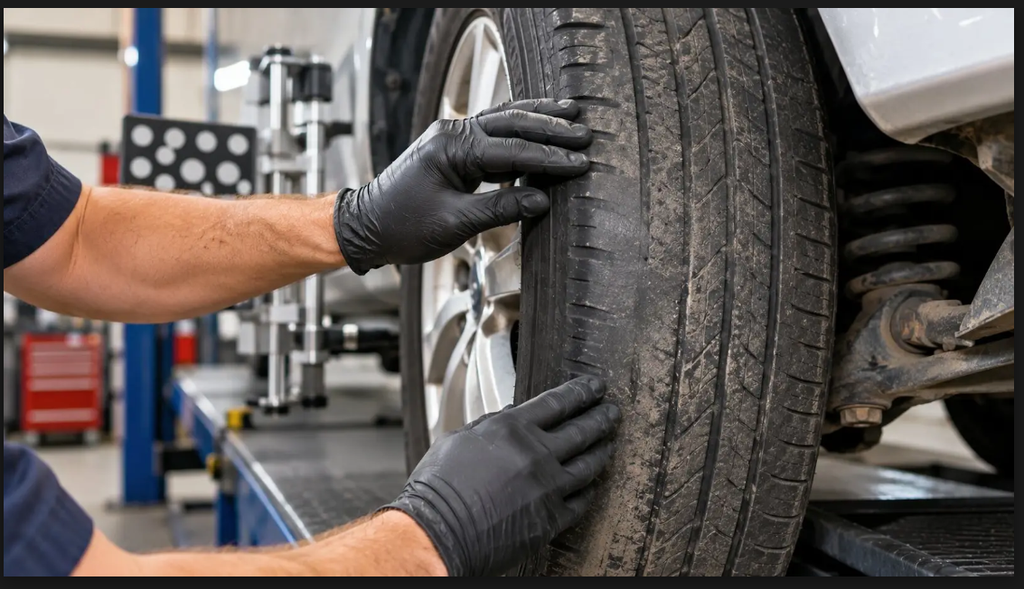
How Alignment Angles Wear Down Your Tires
Your car needs three main wheel settings to keep your tire tread resting flat on the ground. When these settings shift even a tiny bit, you get very clear wear patterns:
- Toe Angle Deviations: Toe is whether the front ends of your tires point inward toward each other or outward apart. Bad toe makes the tire drag sideways, creating sharp, jagged edges on the tread blocks.
- Camber Angle Drift: Camber is the inward or outward tilt of the wheel when looking at the front bumper. Leaning in too far wears down the inside edge, while leaning out destroys the outside edge.
- Caster Imbalance: Caster controls steering stability and helps the wheel straighten out after turns. When the caster is unequal between sides, your car drifts, wearing down the front tires unevenly.
Why Worn Suspension Parts Ruin New Tires
An alignment setting will not hold if the metal and rubber parts holding the wheels are loose or worn out. Parts like tie rods, ball joints, and rubber bushings hold the whole setup firm. When these parts get loose, your wheels shift out of place while you drive.
A car can show okay numbers on our alignment rack while parked in the bay. But when you drive on the road and step on the brakes, soft bushings stretch under the weight, pushing your tires crooked while moving. Installing fresh tires over bad joints causes deep cupping marks and ruined rubber in a short time.
How Local Minnesota Driving Causes Alignment Drift
Driving around Spring Park, Minnetonka, and Hennepin County puts hard stress on steering parts all year long. Salt and slush work into rubber mounts and steel joints, causing rust and making them stiff. When these parts lose their flex, they cannot absorb road bumps smoothly.
Also, hitting a hidden frost bump or ice ridge on Shoreline Drive puts sudden force on your steering bars. These sharp hits bend steel parts or knock adjustment bolts out of line. Once a part moves out of place, tire friction gets worse with every single mile.
What Our Complete Suspension and Alignment Check Includes
Fixing bad tire wear takes a full check of the steering setup rather than just putting on new rubber. In our shop, we check your car using clear, practical steps:
- Checking Suspension Parts: We look at ball joints, tie rods, and rubber bushings for extra play, rust, or torn rubber covers.
- Measuring Tread Depth: We use digital tools to measure tread depth across the inside, middle, and outside grooves to map out wear patterns.
- Digital Alignment Measurement: We run digital laser checks on your toe, camber, and caster to match them against factory numbers.
- Road Testing the Car: We take the car out for a drive to make sure it goes straight, the steering wheel stays centered, and it turns back smoothly.
Protecting Your Vehicle with Simple Diagnostics
Driving on crooked wheels wastes money on ruined tires and makes it harder to stop safely in wet weather. At Certified Auto Repair, our team checks your steering setup and sets your alignment accurately to keep you safe on the road.
If you see patchy tread damage, an off-center steering wheel, or feel your car pulling, fix the real problem before buying new tires. Stop by our shop at 4700 Shoreline Drive, Spring Park, MN 55384, or set up an appointment with us to keep your car driving smooth.
Frequently Asked Questions
Can a wheel alignment fix tires that are already worn unevenly?
An alignment stops future patchy wear, but it cannot bring back rubber that has already worn off. If the wear is light, setting the alignment and rotating the tires can help them wear evenly from then on. However, badly worn tires may still make noise or vibrate even after an alignment.
How often should I check my vehicle’s wheel alignment?
Schedule an inspection every 12 months or 12,000 miles as a standard rule, plus every time you buy new tires. You should also bring your vehicle in immediately after striking a deep pothole, bouncing off a curb, or feeling the vehicle drift toward the ditch.
Do I need an alignment after replacing struts or control arms?
Yes, replacing major steering or suspension parts changes the position of your wheels. Getting an alignment right after installing new struts, tie rods, or control arms is necessary to keep your tires from wearing out fast.
Why does my car pull to the side if my tires look okay?
A pull can be caused by uneven wheel angles, small tire pressure differences, or hidden damage inside the tire structure. Dragging brakes can also pull your vehicle to one side, which needs a quick check to find the cause.