Driving around Shorewood and braving Minnesota’s freeze-thaw cycles takes a serious toll on a Jeep’s front end. When a Wrangler comes into the bay with loose steering, uneven tire wear, or alignment issues, the root cause usually points straight to the suspension. Catching worn bushings, ball joints, and track bar issues early isn’t about upselling; it’s about keeping steering tight and preventing cascaded damage to other front-end components.
How Preventive Suspension Maintenance Protects Your Jeep Investment
Suspension maintenance is not only about improving ride quality. Worn bushings, loose steering components, and alignment changes can create additional expenses by accelerating tire wear and placing extra stress on other front-end components. Identifying these issues early can help Jeep owners avoid replacing expensive tires prematurely or repairing multiple connected components later.
For example, replacing a worn control arm bushing during a routine inspection is typically a smaller repair than addressing uneven tire wear, steering looseness, or additional alignment problems after months of driving. Preventive suspension checks help Shorewood Jeep owners make repair decisions before minor wear becomes a larger expense.
Why Does Your Wrangler Wander on Smithtown Road
I am examining a lifted Jeep Wrangler JL on our alignment rack to diagnose why it wanders across the lane markers on Smithtown Road. During the inspection, we found that changes in front suspension geometry were affecting steering stability, including reduced caster caused by component wear and suspension settling over time. When bushings, control arms, or other front-end parts begin to wear, the Jeep may require more steering correction and can develop uneven tire wear.
Identifying these issues early allows owners to address smaller suspension concerns before they lead to larger alignment problems or premature tire replacement.
Measuring Track Bar Wear Before It Leads to Larger Steering Repairs
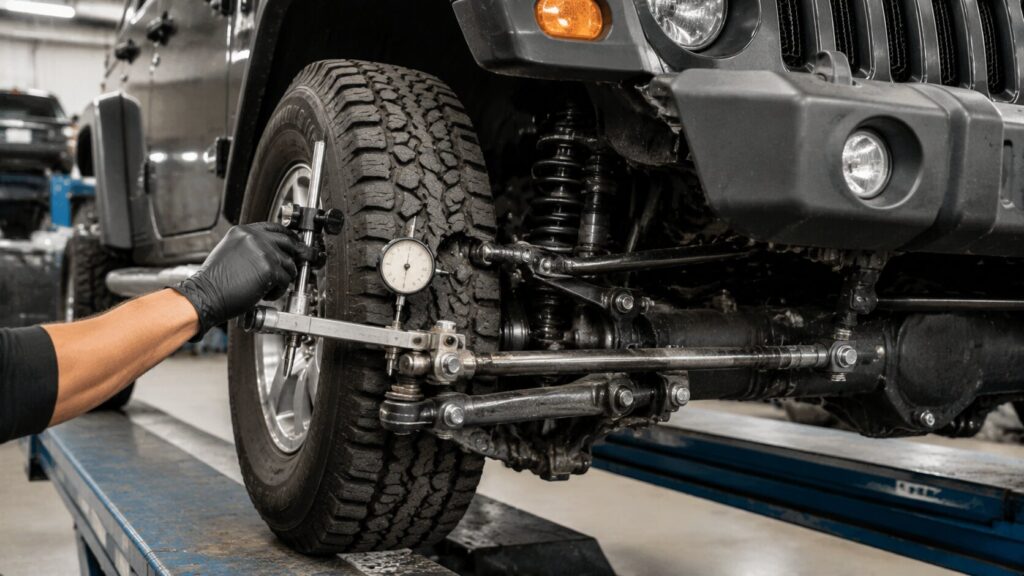
During a suspension inspection, I use a dial indicator at the front track bar mounting point to check for excessive movement that may indicate wear. Small amounts of looseness can allow unwanted axle movement, affecting steering stability and alignment control when the Jeep encounters potholes or rough Minnesota roads. Identifying this type of wear early gives owners the opportunity to replace a worn component before it contributes to uneven tire wear, steering concerns, or more extensive front-end repairs.
Destructive Bushing Corrosion from Seasonal Run Off
Front suspension teardowns consistently reveal that persistent steering wheel vibrations stem from serious mechanical degradation rather than a minor tire imbalance. Lingering winter road salt and liquid magnesium chloride treatments collect inside the recessed pockets of the lower control arm mounts. This corrosive chemical solution remains trapped for months, slowly attacking the vulcanized rubber compounds.
The chemical breakdown manifests as dry rot, deep surface cracking, and eventual structural delamination where the rubber material bonds to the internal steel sleeve. Once the elastomer separates, the control arm can move fore and aft under braking and acceleration. This structural play alters the dynamic toe alignment while the vehicle is in motion.
Even if a static alignment check looks acceptable on the machine, the suspension actively deflects outward under load, scrubbing the inner shoulders of the front tires and ruining an expensive set of mud terrains within a single summer season.
Tie Rod Wear and How It Accelerates Tire Damage
When steering components such as tie rod ends develop excessive play, the wheels may no longer maintain consistent alignment while driving. This movement can cause changing toe angles under load, creating uneven tire contact with the road surface and accelerating tread wear. For Jeep owners running larger tires or driving on rough Minnesota roads, correcting steering wear early can help protect expensive tires and maintain predictable handling.
I frequently inspect Jeeps that have received upgraded steering stabilizers after experiencing vibration or steering feedback. While a steering stabilizer can help reduce minor steering kickback, it does not correct worn tie rods, track bars, or other components with mechanical looseness. Identifying and repairing the source of the movement helps prevent continued tire scrubbing and avoids replacing parts that only mask the underlying issue.
Precision Jeep Suspension Inspection and Alignment Process
A proper suspension inspection starts by checking the condition of the front-end components under controlled conditions and verifying how the Jeep behaves under normal driving loads. We inspect steering and suspension joints, measure excessive movement, and evaluate alignment angles to determine whether wear, impact damage, or component looseness is affecting handling and tire wear.
After identifying worn parts, we verify that replacements are installed according to manufacturer specifications and that the vehicle’s alignment is restored correctly. This process helps prevent repeat repairs, uneven tire wear, and additional stress on connected steering components, allowing Jeep owners to address smaller suspension concerns before they become larger expenses.
Catch Suspension Wear Early Before It Leads to Bigger Repairs
Protect your Wrangler from premature tire wear and steering issues caused by rough Minnesota roads. Visit Certified Auto Repair at 4700 Shoreline Drive in Spring Park, MN 55384 for a professional suspension inspection and alignment evaluation. Our team can identify worn components early and help you make informed repair decisions before small issues become larger front-end problems.
Frequently Asked Questions
Can a worn steering stabilizer cause my vehicle to develop death wobble?
A worn steering stabilizer is usually not the root cause of Jeep death wobble. The stabilizer helps reduce steering feedback and vibration, but it cannot correct looseness in structural components like track bars, ball joints, or control arm bushings. Identifying the source of the movement early can help prevent larger steering and suspension repairs.
How often should front end alignment be checked on rough roads?
Jeep owners who regularly drive rough pavement, gravel roads, or trails should consider periodic alignment and suspension inspections. Checking these components helps identify worn bushings, steering looseness, or alignment changes before they accelerate tire wear and increase repair costs.
What are the first signs of front control arm bushing failure?
Common signs of worn control arm bushings may include popping noises during braking or acceleration, changes in steering feel, uneven tire wear, or the vehicle pulling to one side. A suspension inspection can confirm whether the issue is related to bushings or another front-end component.
Do my front tires show smooth wear on the inner edges?
Inner shoulder tire wear can indicate alignment concerns, suspension wear, or steering component movement affecting how the tires contact the road. Checking worn components early can help prevent replacing expensive tires before their expected service life.
Is it necessary to replace ball joints in pairs across the axle
Ball joints should be inspected together because both sides experience similar mileage, road conditions, and environmental exposure. If one side shows significant wear, the other side should be evaluated carefully to determine whether replacement is needed.