Minnesota winters, towing demands, and water exposure near Lake Minnetonka can place additional stress on Jeep differentials. Contaminated or aging gear oil may reduce lubrication protection and contribute to drivetrain wear over time. Regular differential inspections and fluid service help identify moisture, debris, and wear concerns before they lead to larger repairs.
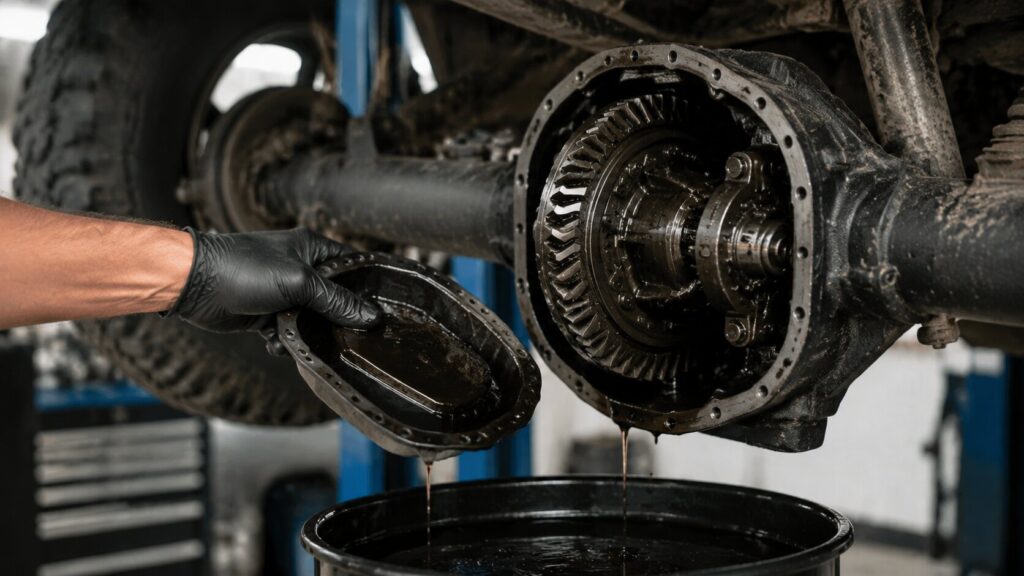
During a Dana 44 axle inspection, we evaluate fluid condition for signs of aging, contamination, or excessive wear. Jeep vehicles that experience Minnesota winters, towing demands, and frequent exposure to slush or moisture may place additional stress on differential components. Changes in fluid color, odor, or debris levels can provide valuable clues about drivetrain condition and service needs.
Common Signs of Jeep Differential Fluid Wear
A whining or humming noise during acceleration or deceleration can be a sign of differential concerns, although the source should be confirmed through inspection. During drivetrain inspections, I look at fluid condition, noise patterns, and wear indicators to determine whether the differential requires service.
How Differential Gear Wear Affects Jeep Drivetrain Noise
When gear oil loses its shear stability due to cold-start condensation, the resulting friction generates immense heat. As the steel ring gear absorbs this heat, it expands. Changes in lubrication quality and operating temperature can affect how differential components operate. Over time, inadequate lubrication may contribute to increased friction, noise, and accelerated wear. Once gear surfaces have experienced significant wear, repairs may require internal differential service or component replacement depending on the extent of the damage.
How Water Contamination Affects Jeep Differential Fluid
During a differential inspection, milky or cloudy fluid can indicate possible moisture contamination inside the housing. Jeep owners who regularly encounter deep water, heavy slush, or winter road conditions around Lake Minnetonka may increase the risk of moisture entering through seals or breather components. When water mixes with gear oil, it can reduce lubrication effectiveness and affect long-term drivetrain protection.
Identifying the Milky Emulsion from Breather Tube Vacuum
Damaged breather components or seals can allow moisture and contaminants to enter the differential housing, affecting fluid condition and lubrication quality. This moisture can reduce lubrication effectiveness and accelerate wear on internal differential components. Damaged seals or breather components can allow moisture contamination inside the differential housing. When water mixes with gear oil, it can reduce lubrication effectiveness and contribute to internal wear over time.
The Spring Park Boat Ramp Stress Test
Early May triggers a massive spike in differential stress as Jeeps begin navigating the high-torque demands of the Spring Park boat ramps. Boat towing places additional load on Jeep drivetrain components, especially during low-speed launches where torque demands are higher. This sudden torque load on low-speed towing loads places additional stress on differential components, especially when fluid condition is poor or lubrication protection has been reduced.
High-Torque Hauls and Trac-Lok Clutch Pack Failure
These systems rely on friction modifiers to keep the internal clutch packs from binding. The characteristic chatter I feel when a Jeep turns into a Shorewood retail lot is a direct signal that the gear oil can no longer protect the clutch packs. In Rubicon models with Tru-Lok electronic lockers, the situation is even more critical. I’ve opened housings where excessive debris or contaminated fluid can affect the operation of differential components, including limited-slip systems and electronic lockers.
Verifying Drivetrain Health and Analyzing Gear Wear Patterns
Inspecting the magnetic drain plug can provide valuable insight into differential conditions. Excessive metallic debris may indicate accelerated wear and the need for further evaluation. Technicians may use gear marking compound on the ring gear teeth to evaluate contact patterns and identify possible concerns with gear alignment, bearing condition, or setup.
When fluid condition has deteriorated significantly, changes in the gear contact pattern may help identify possible lubrication issues, bearing wear, or ring-and-pinion concerns. Following the recommended differential fluid service interval for your Jeep helps maintain proper lubrication and allows technicians to address contamination or wear concerns before they become more extensive drivetrain repairs.
Protect Your Jeep Drivetrain with a Professional Differential Inspection
If your Jeep has experienced Minnesota winters, towing demands, or water exposure, a differential inspection can help evaluate fluid condition and drivetrain health. Schedule your inspection with Certified Auto Repair at 4700 Shoreline Drive, Spring Park, MN 55384, and let our technicians assess your differential before wear concerns become more extensive repairs.
Frequently Asked Questions
How often should Jeep differential fluid be changed in Minnesota?
Differential service intervals depend on the Jeep model, axle type, towing frequency, and operating conditions. Owners who regularly tow, drive in winter conditions, or encounter water exposure should have fluid conditions checked more frequently.
What does a failing Jeep differential sound like?
A changing gear whine, humming, or growling noise may indicate possible concerns with differential bearings, lubrication, or gear condition and should be evaluated.
Can road salt damage my Jeep’s internal gears?
Yes. Road salt and moisture exposure can contribute to corrosion concerns if contaminants enter through damaged seals, breather components, or other openings. Water contamination can reduce gear oil effectiveness, affecting lubrication and increasing the risk of differential wear over time.
Why does my Jeep chatter when making sharp turns?
Chattering during tight turns usually indicates that the friction modifiers in your limited-slip differential have broken down. When friction modifiers are no longer effective, limited-slip clutch packs may create chatter during tight turns. Correct fluid specification and proper service help maintain smooth differential operation.
Is synthetic gear oil necessary for Jeep differentials?
The correct lubricant depends on the Jeep axle, differential design, and manufacturer specifications. Some Jeep differentials may require synthetic gear oil, while others depend on specific fluid requirements.