Spark plug service ensures reliable engine ignition by replacing worn electrodes and cleaning fouled components. Regular maintenance prevents misfires, stabilizes fuel economy, and reduces strain on the ignition coil and catalytic converter. In Minnesota’s climate, functional spark plugs are essential for consistent cold-weather starting and optimal combustion efficiency.
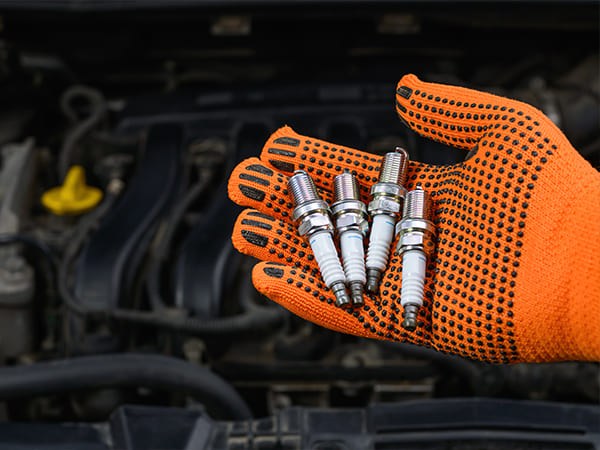
Why Spark Plug Health Matters for Your Engine
Spark plugs are the final step in the ignition circuit. They take high-voltage electricity and create a miniature lightning bolt across a small gap, igniting the compressed air-fuel mixture in the cylinder.
When this process is compromised, the engine’s timing and efficiency are immediately affected. Because spark plugs must fire thousands of times per minute under extreme heat and pressure, they are considered “wear items.” Ignoring their condition doesn’t just result in a rough-running car; it forces other expensive components, like the battery and starter, to work harder than necessary.
The Role of Spark Plug Service for Engines
Maintaining the ignition system is not just about keeping the car running; it is about protecting the internal combustion environment. Because the spark plug is the only component that sits inside the combustion chamber, its condition tells a complete story of your engine’s health.
Providing the Catalyst for Combustion
The primary role of spark plug service is to ensure that the air-fuel mixture ignites at the exact millisecond required by the engine’s computer. In a modern engine, timing is everything. If the spark is weak or delayed due to a worn electrode, the explosion in the cylinder is inefficient. This results in “unburned” fuel, which doesn’t provide power but does create carbon buildup on your intake valves and pistons.
Protecting the Ignition Coil and Electrical System
A secondary, often overlooked role of this service is electrical stabilization. When a spark plug gap becomes too wide due to age, the ignition coil must “push” harder to bridge that gap. This creates heat and electrical stress within the coil. By replacing plugs at the correct interval, you are effectively extending the life of your ignition coils—which are significantly more expensive to replace than the plugs themselves.
Ensuring Emissions Compliance
In Minnesota, maintaining a clean-burning engine is vital for reducing your environmental footprint. A well-maintained set of spark plugs ensures that the catalytic converter isn’t overwhelmed by raw fuel. Service keeps the exhaust chemistry within the parameters designed by the manufacturer, preventing the “rotten egg” smell and the glowing-red exhaust pipes associated with ignition failure.
How the Spark Process Works
The function of a spark plug is simple but demanding. An ignition coil sends a burst of electricity through the plug’s center electrode. This electricity must jump a gap to the ground electrode.
For a clean “burn,” the gap must be precise. Over time, the spark literally erodes the metal of the electrodes, making the gap wider. As the gap increases, the voltage required to jump it also increases. Eventually, the voltage requirement exceeds what the ignition system can provide, leading to a “misfire”—an incomplete or failed combustion cycle.
What Causes Spark Plug Failure?
Spark plugs rarely fail instantly; they degrade. The most common issues we see include:
- Electrode Erosion: The physical wearing down of the metal, which increases the gap and stresses the ignition coils.
- Carbon Fouling: Black, dry soot deposits caused by an over-rich fuel mixture or frequent short trips where the engine never reaches full operating temperature.
- Oil Fouling: If engine seals are leaking, oil can coat the plug, shorting it out and preventing a spark.
- Heat Damage: Overheating engines can melt the electrodes or crack the porcelain insulator.
Common Spark Plug Symptoms and Root Causes
Many drivers mistake spark plug issues for battery or fuel pump problems. It is important to distinguish the symptoms from the underlying cause:
- The Symptom: Rough idling or “shaking” at a red light.
- The Cause: One or more cylinders are misfiring because the spark is too weak to ignite the fuel consistently.
- The Symptom: Poor gas mileage.
- The Cause: Incomplete combustion means unburned fuel is pushed out the exhaust, wasting money and potentially overheating the catalytic converter.
- The Symptom: Difficulty starting on cold mornings.
- The Cause: A weak spark struggles to ignite cold, dense fuel vapors—a frequent issue during Spring Park winters.
Spark Plug Maintenance and Best Practices
Waiting for a “Check Engine” light to flash is a reactive approach that often leads to higher repair bills.
Modern iridium or platinum plugs are rated for long intervals (often 60,000 to 100,000 miles), but they should still be inspected periodically. If a plug becomes “seized” in the aluminum cylinder head because it sat for a decade without being moved, the cost of removal can skyrocket due to potential thread damage. Preventive replacement ensures the plugs come out cleanly and the engine maintains its factory-spec efficiency.
How Minnesota Weather Affects Your Spark Plugs
In Spring Park and the surrounding Twin Cities area, our engines face extreme temperature swings. Cold starts in sub-zero temperatures require a strong, crisp spark. Furthermore, the humidity and road salt environment can lead to terminal corrosion if the boots and wires aren’t properly maintained alongside the plugs. We often see “flashover,” where electricity travels down the outside of a dirty or damp plug rather than through it, causing a misfire that disappears once the engine warms up and dries out.
When to Seek Expert Consultation
If you notice a drop in performance or your maintenance schedule suggests it is time for an inspection, a technician at Certified Auto Repair can evaluate your ignition system. Proper diagnostics ensure that you are replacing the correct parts and addressing the root cause of any engine hesitation. You may schedule a comprehensive ignition inspection to ensure your system meets factory specifications.
Frequently Asked Questions
How do I know if my spark plugs are bad without a light on the dash?
You may notice a slight hesitation during acceleration, a rougher-than-normal idle, or a gradual decrease in your miles-per-gallon. If the car feels “sluggish” when merging onto the highway, the spark plugs are a primary suspect.
Can bad spark plugs damage my engine?
Yes. Unburned fuel from a misfiring plug travels into the exhaust system, where it can melt the internal structure of your catalytic converter. This turns a relatively inexpensive maintenance task into a multi-thousand-dollar exhaust repair.
Is it okay to replace just one spark plug?
It is generally not recommended. Spark plugs wear at a similar rate. If one has reached the end of its life, the others are likely close behind. Replacing them as a set ensures balanced engine performance.
Do “high-performance” plugs actually help?
For most daily-driven vehicles, the best plug is the one the manufacturer specified (OEM). Using a different heat range or material than what the engine was designed for can sometimes cause more harm than good.
Keep Your Vehicle Reliable and Efficient
Spark plug service is a fundamental aspect of vehicle longevity. By maintaining a clean, strong spark, you protect your engine from vibration, ensure reliable starts in harsh weather, and keep your fuel costs manageable. Prioritizing this simple service prevents the “domino effect” of ignition failure, keeping your vehicle efficient and dependable for years to come.