Jeep ZF transmissions operating along the West Metro MN-7 corridor experience frequent temperature changes caused by stop-and-go commuting, short trips, and repeated acceleration cycles. Over time, these conditions can affect transmission fluid condition and shift performance, which is why preventative service plays an important role in maintaining long-term reliability.
How MN-7 Driving Conditions Affect Jeep ZF Transmission Temperature
Jeeps traveling through the MN-7 corridor between Spring Park and the I-494 interchange encounter frequent acceleration, braking, and low-speed traffic conditions. Unlike steady highway driving, these conditions create more repeated transmission cycles and fewer opportunities for consistent cooling.
When we bring these late-model Grand Cherokees and Wranglers onto the lift at our Spring Park facility, live scan tool data routinely confirms the mechanical toll. During transmission evaluations at our Spring Park facility, we often inspect fluid conditions alongside scan data and driving symptoms. Changes in fluid color, odor, and performance characteristics can provide useful clues about how heat and mileage have affected transmission operation.
How Aging Transmission Fluid Can Affect Jeep Shift Quality
Jeep ZF transmissions rely on fluid performance to control hydraulic operation and deliver smooth gear changes. As fluid ages, heat exposure can affect its ability to maintain consistent lubrication and hydraulic control.
The resulting aerated, frothy oil cannot maintain the mandatory 30 PSI minimum hydraulic line pressure required for the mechatronic valve body to actuate shift clutches cleanly. Drivers experience this pressure drop as gear hunting, delayed engagement when launching from a stoplight at Christmas Lake Road, or a harsh, jarring clunk during low-speed rolling merges.
Why Do Stellantis Engineers Claim ZF Transmissions Have Lifetime Fluid
Many manufacturers describe certain transmission fluids as “lifetime” fluids under normal operating conditions. However, the driving environment, towing, climate, and frequent stop-and-go traffic can influence how transmission fluid ages over time.
When our technicians drop the transmission pan on a sealed Jeep at 60,000 miles, the magnets bottoming the sump are almost universally coated in a dense, metallic gray sludge. That abrasive silt represents the microscopic, pulverized remains of internal planetary brass bushings and clutch facing material circulating through the valve body.
Sonically Welded Composite Pans and Fluid Shear Mathematics
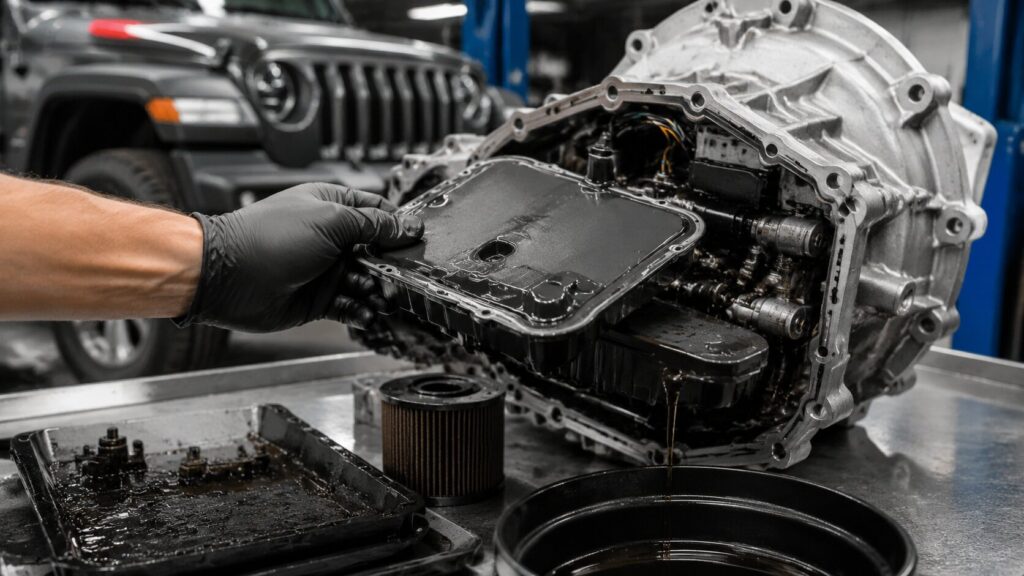
Modern Jeep ZF transmissions are designed differently from older transmission systems. Instead of using a separate replaceable filter, many late-model ZF units integrate the filtration system into the transmission pan assembly.
Because the filter is built into the pan, proper fluid service may require replacing the complete pan assembly rather than performing a simple fluid-only change. Understanding this design helps explain why modern Jeep transmission maintenance differs from older vehicles and why following the correct service procedure is important for protecting transmission operation.
How Preventative Service Helps Protect Internal Transmission Components
Transmission fluid contains additives designed to support lubrication, temperature control, and component protection. Maintaining proper fluid condition helps reduce unnecessary stress on internal components during demanding driving conditions.
| Service Approach | Estimated Investment | Mechanical Outcome | Shop Downtime |
| Preventative Pan & Fluid Service | $450 – $650 | Replaces aged fluid, restores proper fluid characteristics, and allows technicians to inspect transmission conditions before major concerns develop. | Same-Day Service |
| Full Remanufactured Rebuild | $6,800 – $7,800 | Addresses internal component wear or damage requiring transmission disassembly, replacement parts, and programming procedures. | 10 to 14 Business Days |
The economic reality of West Metro vehicle ownership is straightforward: fresh friction modifiers act as a sacrificial liquid shield. Routine transmission service can help reduce heat-related wear and protect expensive internal components, especially for vehicles exposed to frequent stop-and-go driving.
Can You Just Reset Adaptive Shift Memory Without Changing the Oil
Resetting adaptive shift values without addressing fluid conditions may temporarily change shift behavior, but it does not correct underlying fluid degradation or mechanical concerns. While resetting the Transmission Control Module (TCM) forces the solenoids to apply higher baseline pressure, forcing tired, sheared fluid to work harder only accelerates clutch pack scoring. True calibration requires pairing fresh Lifeguard 8 fluid with a verified WiTECH 2.0 clutch volume relearn procedure.
WiTECH 2.0 Telemetry and Real-Time Solenoid Lag Diagnostics
When we diagnose a Jeep complaining of erratic shifting, we bypass subjective road-test feelings and evaluate live mechatronic data. Utilizing factory WiTECH 2.0 telemetry allows technicians to monitor pulse-width modulated (PWM) solenoid response times down to the millisecond.
A recorded solenoid actuation lag exceeding 20 milliseconds during an MN-7 road test is the valuable diagnostic indicator—confirming that thick, oxidized fluid is physically retarding internal spool valve movement.
Jeep Grand Cherokee, Wrangler, and Cherokee owners commuting the MN-7 corridor can have their transmission condition evaluated, fluid service needs reviewed, and diagnostic data checked at Certified Auto Repair, 4700 Shoreline Drive, Spring Park, MN 55384.
Frequently Asked Questions
Is Jeep ZF transmission fluid actually meant to last the life of the vehicle?
No. Lifetime fluid ratings apply strictly to ideal, continuous highway driving. Severe-duty operating conditions including frequent stop-and-go commuting on MN-7 and extreme Minnesota temperature swings—accelerate fluid chemical shear. Many Jeep owners operating under severe-duty conditions may benefit from evaluating transmission fluid condition around the 60,000-mile range.
What are the early physical symptoms of a Jeep transmission overheating?
RPM flaring and gear hunting. Before a dashboard warning illuminates, you will typically feel the engine RPMs surge momentarily between shifts without a corresponding increase in vehicle speed. A faint, acrid smell radiating from the undercarriage after parking is also may indicate transmission fluid overheating and should be evaluated.
Why does my Jeep Wrangler shift much harder during hot summer afternoons?
Thermal fluid thinning. High ambient temperatures reduce the heat-transfer efficiency of the external oil cooler. When transmission temperatures become consistently elevated, the lubricant thins out and loses the hydraulic density required to synchronize gear changes smoothly, resulting in harsh engagements
Will a fluid change repair a Jeep transmission that is already slipping badly?
No. Fresh fluid is a preventative measure, not a mechanical rebuild in a bottle. If chronic overheating has already stripped the fibrous friction material off the internal clutch discs, new fluid cannot replace that missing material. Slipping transmissions require mechanical overhaul.