
Ever hit a slick patch on Shoreline Drive after a Spring Park rainstorm and felt your car slide just a little? That uneasy moment usually has one simple cause — worn-out tires. Many Minnesota drivers don’t realize their tread may already be too shallow to safely grip the road.
Knowing how to check tire tread depth can help prevent those close calls. It’s a quick habit that makes a big difference, especially around Spring Park, MN, where rain, snow, and lake-effect moisture can change driving conditions overnight.
Whether you’re getting ready for another winter or just cruising around Lake Minnetonka, a quick tread check could be the most important few minutes you spend on your car all month.
What Is Tire Tread Depth?
Tire tread depth is the vertical distance between the top of a tire’s tread and the bottom of its groove. Most new tires begin with 10/32″ to 11/32″ of tread. Over time, that depth decreases through normal driving and braking.
When the tread reaches 2/32″, it’s legally worn out in most U.S. states — including Minnesota. Beyond that point, stopping distance increases, hydroplaning risk rises, and traction on snow or ice nearly disappears.
(Source: NHTSA Tire Safety Guidelines)
Why Tread Depth Matters for Drivers in Spring Park, MN
Our local weather puts tires to the test.
- Winter: Ice and packed snow demand deep tread for grip.
- Spring: Melting snow creates puddles and slick roads.
- Summer: Heat and rough asphalt wear out the tread faster.
- Fall: Wet leaves act like ice on shallow tread.
Regularly checking your tires ensures your car stays steady through all four Minnesota seasons.
How Do You Check Tire Tread Depth at Home? A Quick Guide for Minnesota Drivers
You don’t need special tools or training to check tread depth. Here are simple ways you can do it in minutes.
1. Use a Penny to Measure Your Tire Tread
Position a penny head-first into the tread channel of your tire.
- If the tread doesn’t cover Lincoln’s head, it’s under 2/32″—you’ll need new tires soon.
- If part of his head is covered, you still have enough depth for daily driving.
2. Use the Quarter Test for Better Accuracy
Insert a quarter with Washington’s head down.
- If the tread reaches the top of his head, the tread depth is about 4/32″.
This is the minimum safe level for driving in rain or snow.
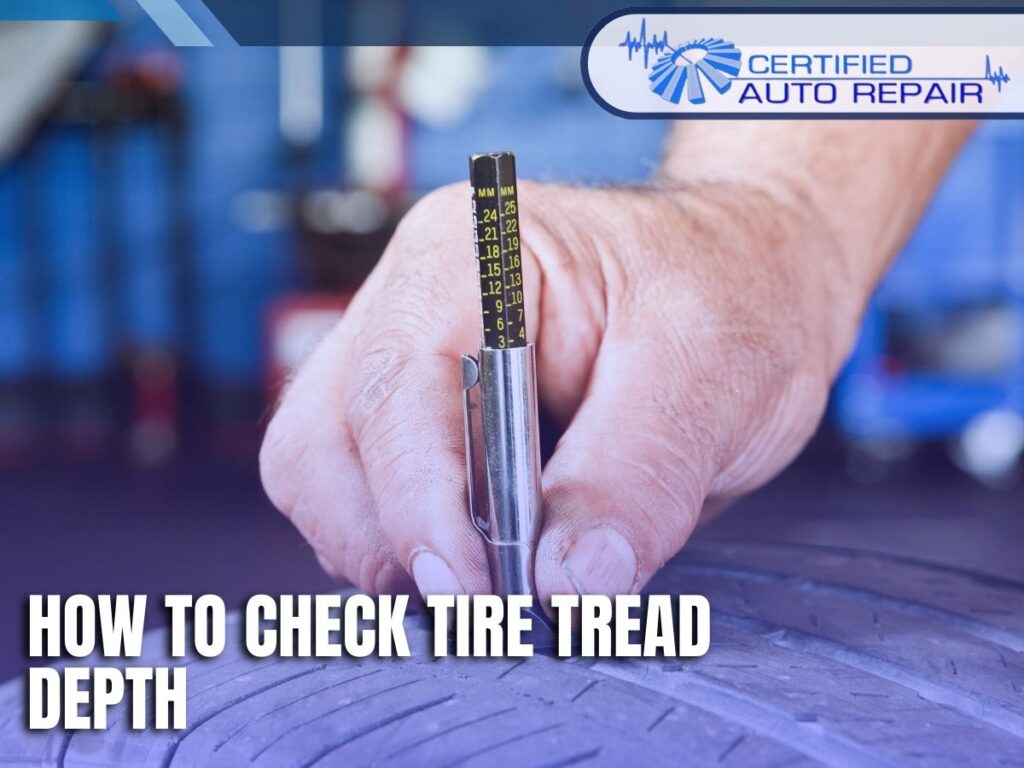
3. Measure with a Tread Depth Gauge
For precise results, use a digital or manual tread depth gauge. Press it into the groove and read the number. This tool costs less than a cup of coffee and provides reliable readings across all four tires.
4. Check Built-in Tread Wear Bars
Most modern tires include small raised bars inside the grooves. If those bars are flush with the tread, your tire has worn down to 2/32″. Replace them immediately.
How to Read and Record Tread Depth Results
Use these quick guidelines to interpret your findings:
- 6/32″ or more: Excellent traction; tires are in good shape.
- 4/32″: Caution; safe in dry weather, but start planning replacements soon.
- 2/32″ or less: Unsafe; replace tires immediately.
Tip: Record your tread depth during oil changes or brake inspections. Over time, this helps identify uneven wear — a sign of misalignment or suspension issues.
What Causes Uneven or Fast Tire Wear?
Even if you check tread depth regularly, certain habits and conditions can cause uneven wear.
Common Causes:
- Underinflation: Causes wear on tire edges.
- Overinflation: Wears down the center tread.
- Poor alignment: Creates uneven patterns across tires.
- Worn suspension: Allows excessive bouncing and inconsistent contact.
- Aggressive driving: Sharp turns and hard braking accelerate wear.
(Tip: Check tire pressure monthly — especially during Minnesota’s temperature swings.)
Local Road Conditions That Affect Tread Wear
Driving around Spring Park means dealing with a mix of scenic roads, lakeside moisture, and winter salt. Each plays a role in tread health.
- Lakeside humidity can cause rubber to age faster.
- Salted winter roads corrode wheels and eat at tire sidewalls.
- Gravel shoulders and potholes can damage tread and alignment.
Local drivers often notice more wear on the front tires — especially if they frequently brake downhill on Shoreline Drive.
Real-World Tire Tread Depth Example from Spring Park, MN
A customer came in recently after sliding through a wet intersection on a drizzle. His tires “looked fine,” but the tread measured only 2/32″. Once replaced, he immediately noticed better handling and shorter braking distances.
It’s a common story — one small check could have prevented a close call.
Professional Tire Tread Inspection vs. DIY Checks
DIY methods help you stay aware, but a professional inspection ensures accuracy. Certified technicians measure tread with calibrated tools and inspect:
- Sidewall condition
- Tire age and dry rot
- Alignment and balance issues
- Air pressure consistency
They can also rotate or realign your tires to promote even wear and extend tire life.
Why You Should Check Tire Tread Before Every Season
Each season brings different road risks in Minnesota. Checking your tread before seasonal transitions helps you prepare for the next few months of driving conditions.
| Season | Tread Depth Needed | Local Concern |
| Winter | 6/32″ or more | Ice, snow traction |
| Spring | 4/32″ or more | Hydroplaning |
| Summer | 3/32″ or more | Heat, expansion cracks |
| Fall | 4/32″ or more | Wet leaves, slick pavement |
Backed by Reliable Data and Safety Standards
- The NHTSA states that tires worn down to 2/32″ of tread depth are no longer considered safe and should be replaced.
- The Tire Industry Association recommends rotating your tires every 5,000–7,000 miles to promote even wear and extend tire life.
Additionally, regular inspections — such as checking tread depth monthly — can help identify unsafe wear patterns early and support better braking, handling, and efficiency on the road.
Keep Your Tires and Safety in Check
Knowing how to check tire tread depth helps you drive confidently on Spring Park roads year-round. Whether you commute on Highway 7 or cruise along Lake Minnetonka, proper tread means better control and shorter stopping distances.
At Certified Auto Repair in Spring Park, MN, our ASE-certified technicians use advanced factory tools and are trained to service nearly every make and model. From tire inspections to brake service, alignments, and seasonal maintenance, we help you stay safe and ready for whatever Minnesota roads bring.
Stop by or schedule an inspection today. A five-minute tread check could save you from a costly accident.
FAQs: Tire Tread Depth and Maintenance
Let’s answer a few quick, practical questions drivers often ask — think of it like a mini tire quiz!
How often should I check my tire tread depth?
Once a month is ideal. Add it to your routine when checking oil or tire pressure.
Can I use a tread gauge on any vehicle?
Yes. Whether you drive a sedan, SUV, or truck, tread gauges work the same way.
What’s the best tread depth for winter driving?
At least 6/32″ is recommended for snowy or icy roads in Minnesota.
Do front or rear tires wear out faster?
Front tires typically wear faster due to steering and braking forces. Rotate them regularly to even out wear.
What’s the easiest way to remember to check tread depth?
Try a “Tread Check Challenge.” Mark your calendar for the first Saturday of each month — or make it a family game to see who spots the lowest tread reading.
