High-mileage Jeep engines can develop timing chain wear over time due to mileage, operating conditions, maintenance history, and repeated temperature cycles. In Minnesota, frequent cold starts and short trips can challenge oil performance and hydraulic tensioner operation. Recognizing early warning signs helps identify timing concerns before they develop into more extensive engine repairs.
Why High-Mileage Jeep Engines Experience Timing Chain Wear
During a recent inspection of a 3.6L Pentastar engine, we evaluated a Jeep owner’s concern about a rhythmic metallic noise that became noticeable during low-speed driving near Shoreline Drive and Sunset Drive. Extended idling and repeated heat cycles can place additional demands on high-mileage timing components, especially when maintenance history or oil condition is unknown. Diagnosing these concerns early helps determine whether the noise is related to timing chain wear, tensioner operation, or another engine component.
How Timing Chain Stretch Affects Engine Synchronization
Timing chain wear is evaluated by measuring camshaft and crankshaft correlation, tensioner position, and manufacturer-specific diagnostic values. Excessive chain elongation can cause timing variation that affects engine performance and may trigger synchronization-related fault codes.
How Minnesota Driving Conditions Affect Jeep Timing Chain Tensioners
During a timing chain inspection, we may find signs that fuel dilution has affected oil condition in Jeeps exposed to frequent Minnesota cold starts and short trips. While factory maintenance intervals are designed for normal operating conditions, severe driving conditions around Lake Minnetonka may require closer attention to oil condition. Fuel dilution can reduce lubrication effectiveness and affect hydraulic tensioner operation, which may contribute to timing chain noise and wear.
Minnesota Cold Starts and Their Impact on Timing Chain Guide Wear
As seasonal ambient temperatures rise, the underlying issue of thinned, fuel-diluted oil is severely exacerbated. This thinning prevents the timing chain tensioner from maintaining stable oil pressure during overnight soaks. Reduced tensioner control can contribute to startup timing noise and increase stress on timing chain guides over time.
The constant thermal cycling between freezing external air and intense engine heat also makes the plastic guides brittle through crystallization. Reduced oil pressure can affect hydraulic tensioner and variable valve timing operation, which may contribute to timing noise and performance concerns. If oil pressure becomes inconsistent, the hydraulic tensioner and variable valve timing components may not operate as designed, which can contribute to timing noise and performance concerns.
Detecting Jeep Timing Chain Wear Before Warning Codes Appear
Waiting until a timing-related fault code appears may allow additional wear to develop, which is why early diagnosis can be valuable. Instead, the preferred diagnostic approach involves probing the timing cover with a digital stethoscope during a warm idle. A digital stethoscope can help isolate abnormal timing-related noises and distinguish them from normal injector operation, accessory noise, or other engine sounds. It is a signature sound that stands out clearly from the normal injector tick, giving a clear warning long before the computer registers a fault.
Using PicoScope Waveform Analysis to Diagnose Timing Chain Concerns
Using a PicoScope allows for the analysis of synchronization between crankshaft and camshaft sensors, looking for jitter that indicates timing chain slack. On this high-mileage Jeep, the waveform shows significant signal lag as the loosened chain oscillates during operation. This forensic data proves the timing is hunting because the tensioner can no longer stabilize the chain platform. If this camshaft drift exceeds software limits, the engine faces an immediate risk of the valves colliding with the pistons.
Protect Your Engine with a Professional Timing Assembly Inspection
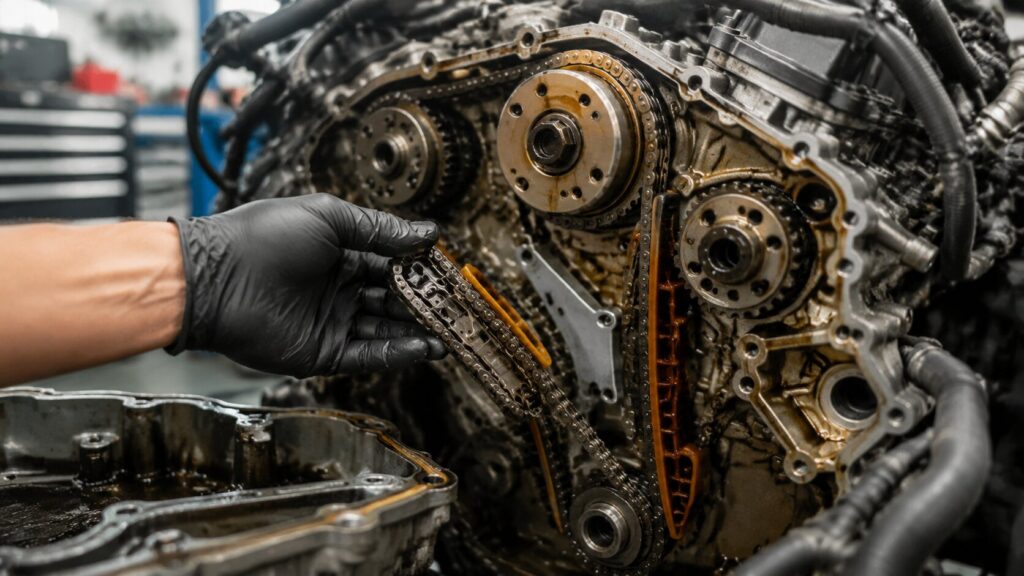
When electronic data is inconclusive, a physical teardown is required to check for chain deflection between the cam sprockets. Excessive chain movement between the cam sprockets can indicate worn guides, reduced tensioner control, or timing chain stretch that requires further evaluation. Excessive tensioner extension and abnormal camshaft-to-crankshaft correlation values can indicate that the timing chain system is no longer maintaining proper tension and synchronization. Fixing this safely requires a complete timing kit replacement, as swapping just the tensioner is a temporary patch that risks total engine failure.
If your engine is throwing timing codes or making a metallic slapping sound on startup, If your Jeep is showing timing-related symptoms or fault codes, professional diagnosis can help determine the cause before additional damage develops. Bring your vehicle to Certified Auto Repair at 4700 Shoreline Drive, Spring Park, MN 55384 for a precise digital stethoscope and waveform test to isolate the issue before it turns into a catastrophic breakdown.
Frequently Asked Questions
Does a Jeep Engine Rattle Always Mean a Timing Chain Problem?
No. But it is a primary suspect in engines over 100,000 miles. While a rattle could be an alternator bearing or a loose heat shield, a metallic slapping sound that occurs specifically during cold starts or at hot idle often indicates a failing timing chain tensioner.
What Should I Do If My Jeep Shows a P0008 Timing Code?
A P0008 code should be diagnosed promptly because it indicates the engine computer has detected a timing correlation concern. Continued driving may increase the risk of additional damage depending on the underlying cause.
How Does Oil Maintenance Affect Jeep Timing Chain Life?
You should change your oil every 5,000 miles in Minnesota conditions. Frequent cold starts and high humidity lead to fuel dilution which thins the oil. The preservation of high oil viscosity is essential for the hydraulic tensioner to keep the timing chain tight and prevent guide wear.
How Much Does Jeep Timing Chain Replacement Cost?
Jeep timing chain replacement costs vary by engine design, vehicle model, labor requirements, and the condition of related components like guides and tensioners. Because the timing assembly is located inside the engine, repairs can be labor-intensive. Early diagnosis can help identify wear before additional engine damage occurs.
Does a stretched timing chain affect gas mileage?
Yes. A stretched chain alters the engine valve timing, leading to poor combustion efficiency. You may notice a decrease in fuel economy and a loss of engine power long before a check engine light appears because the variable valve timing system is struggling to compensate for the lag.