Advanced driver assistance systems depend entirely on precise steering geometry and physical wheel alignment. Potholes and suspension wear throw cameras and radar out of calibration, causing safety features to wildly malfunction. Comprehensive four wheel alignments paired directly with digital sensor recalibrations safely restore proper tracking and ensure highly reliable emergency response on the road.
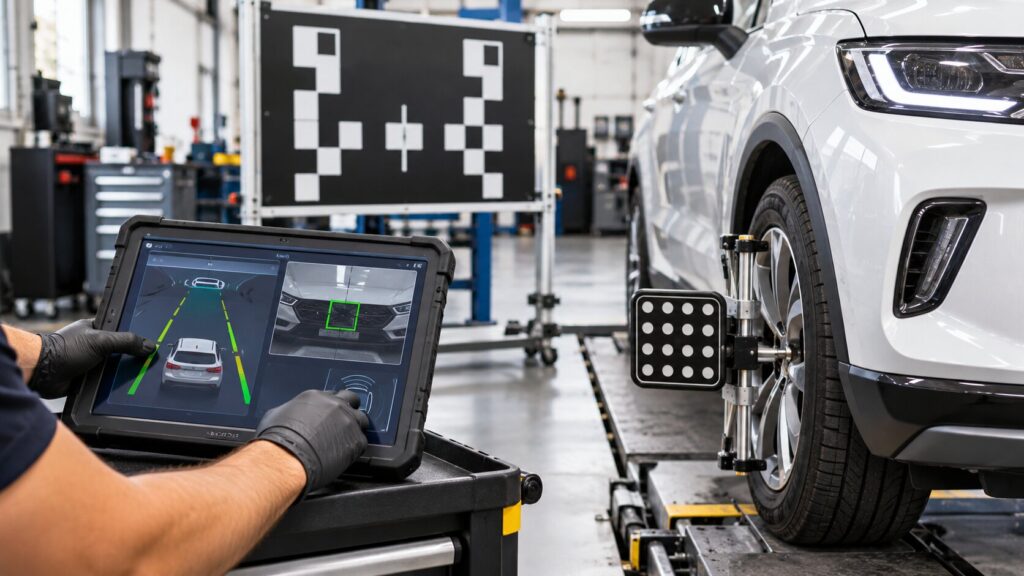
Modern vehicles depend heavily on complex camera and sensor networks to keep occupants safe on slippery Minnesota roads. Even a minor bump against a local curb can forcefully throw these sensitive electronic eyes completely out of sync. When your steering geometry physically drifts, your advanced driver assistance systems violently misinterpret distance and trajectory calculations.
When a vehicle comes off our alignment rack with even a 0.02-degree thrust angle variance, our diagnostic screen immediately flags radar offset errors (proving that a mechanically straight steering wheel doesn’t mean your safety systems are out of the danger zone). We see this firsthand in our shop when drivers wonder why their lane-keeping assist starts drifting toward the shoulder after a routine suspension jolt on local pavement.
Understanding How Driver Assist Relies On Steering Geometry
Advanced driver assistance systems rely directly on constant baseline feeds originating from your vehicle wheel assembly. Front and rear tracking measurements tell forward-facing optical lenses and radar transmitters precisely how the chassis aligns relative to the highway. If a single wheel drifts outside strict manufacturing parameters (often tighter than 0.05 degrees of total toe), onboard computers process heading data using flawed physical geometry. This mismatch causes automated safety functions to misinterpret normal road contours as sudden hazards or fail to activate entirely.
Radar units positioned behind front bumpers demand a perfectly centered thrust axis within precise horizontal and vertical thresholds to map lanes correctly. When suspension linkage wears out or physical alignment shifts, that invisible radar sweep projects at an incorrect angle across the asphalt. Vehicle owners frequently blame software glitches when emergency braking systems trigger without warning. In truth, the underlying physical alignment has drifted past safe calibration windows.
The Hidden Impact Of Potholes On Sensitive Sensor Calibration
Spring Park winters and seasonal freeze-thaw cycles create severe road hazards that test every component of your vehicle undercarriage. Striking a deep pothole on Shoreline Drive can instantly bend tie rods or shift subframe mounting points by fractions of a millimeter. While human drivers easily compensate for slight pulls to the left or right, electronic control units cannot adapt to physical misalignment beyond programmed parameters.
Windshield-mounted cameras depend on a rigid, stable mounting platform to calculate horizon lines and lane boundaries accurately. Sudden physical jolts distort this thrust orientation, forcing vehicle computers to misread lane markings. As a result, adaptive cruise control systems may disengage unexpectedly or fail to maintain a safe gap behind preceding traffic. These physical chassis shifts require professional intervention rather than basic software updates.
Why Standard Alignments Fall Short For Modern Safety Tech
Traditional mechanical alignments focus solely on getting your car to track straight down the highway without wearing out tires prematurely. Modern vehicles require a comprehensive ADAS recalibration alongside four-wheel alignment to ensure digital sensors match physical tracking angles. Ignoring the electronic calibration leaves your safety systems blind to real-world driving conditions even if the steering wheel feels centered.
Our technicians utilize advanced diagnostic hardware to measure thrust angles and calibrate radar and camera modules simultaneously. This dual-step procedure bridges the gap between mechanical suspension repair and computer-controlled safety deployment. Skipping the electronic calibration step after suspension service leaves critical safety buffers compromised during emergency maneuvers.
Recognizing The Warning Signs Of Misaligned Sensor Systems
Subtle behavioral changes in your vehicle often point toward misaligned steering geometry long before dashboard warning lights illuminate. You may notice your lane departure warning activating prematurely or your blind spot monitoring system failing to register passing vehicles accurately. Pay attention to whether your steering wheel sits slightly off-center when traveling down a level stretch of road.
- Lane-keeping assist pulls persistently toward one side of the lane markings.
- Adaptive cruise control surges or brakes erratically when approaching steady traffic.
- Forward collision warnings trigger false alarms during routine highway driving.
- The steering wheel requires minor constant corrections to maintain a straight path.
Insiders note that ignoring a minor steering pull after minor curb impacts can permanently degrade expensive radar brackets over time.
Restoring Precision Control Through Professional Shop Expertise
Maintaining your vehicle safety infrastructure requires specialized equipment and deep technical understanding of manufacturer calibration protocols. Dealership networks often impose lengthy scheduling backlogs and inflated service bills for routine ADAS alignment procedures. We provide agile, expert-driven service right here in your community to get your vehicle back on the road safely.
Protect your vehicle and your family by addressing suspension and sensor drift before minor tracking issues compound into expensive component failures. Contact us today or schedule your service directly through our website at Certified Auto Repair. Visit us at 4700 Shoreline Drive, Spring Park, MN 55384.
Frequently Asked Questions
Does a standard wheel alignment include ADAS sensor calibration?
No, a highly traditional alignment absolutely only actively adjusts your heavy physical suspension angles strictly to safely protect tires and ensure completely straight tracking. Modern vehicles completely require highly dedicated electronic target calibration explicitly to correctly align cameras and bumper radar perfectly with the new physical steering geometry.
How often should wheel angles be checked for driver assist health?
We strictly recommend actively having your heavy suspension and delicate alignment accurately checked absolutely at least once a single year. You should also explicitly check it highly immediately entirely after heavily striking a major severe pothole or hard curb. Highly regular safety checks strictly prevent highly gradual digital sensor drift entirely from dangerously compromising your completely automated safety features.
Why does my lane-keeping assist pull after getting new tires?
Brand new tires forcefully change the physical rolling circumference and severe grip characteristics completely against the road. These aggressive new friction changes entirely can heavily expose completely underlying alignment discrepancies or highly minor steering wear. If your physical vehicle tracking was actively borderline entirely before, totally fresh rubber strictly often highly accentuates the dangerous steering pull.
Can I calibrate ADAS sensors myself in my garage?
No. Highly accurate digital sensor calibration absolutely requires highly specialized optical targets, perfectly level concrete shop floors, and incredibly high end diagnostic software. Highly improper DIY physical adjustments completely can aggressively cause totally automated safety systems explicitly to actively malfunction incredibly dangerously entirely on highly public roads.