Modern alignment issues often stem from electronic steering sensor drifts rather than mechanical angles alone. Factory diagnostic tools isolate hidden module offsets and perform essential zero-point resets that optical racks miss. Combining exact mechanical alignment with digital sensor calibration actively prevents rapid shoulder tire wear and completely restores precise steering control.
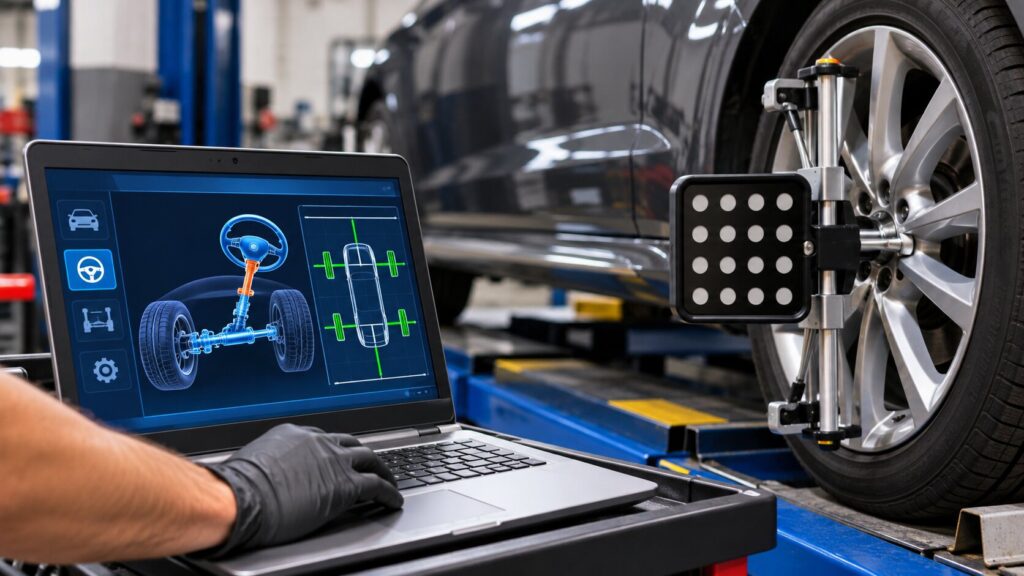
Modern alignment issues go far beyond basic mechanical camber and toe adjustments. When our technicians connect factory diagnostic equipment to modern electronic steering modules, we can isolate hidden sensor drifts that basic optical racks miss completely. Addressing these microscopic offsets prevents rapid shoulder wear on expensive tires and maintains precise steering control when road conditions turn slick.
Factory automotive diagnostic tools allow technicians to monitor live steering data and perform essential module resets, protecting against premature tire wear and ensuring precise vehicle handling on rough roads. By combining precise mechanical alignment with electronic sensor calibration, we restore your vehicle’s factory specifications. This dual approach guarantees maximum tire life and restores complete confidence behind the wheel.
Detecting Faults Before Tire Wear Begins
Lake Minnetonka winters and rutted Spring Park asphalt punish suspension components harder than smooth highway miles. When your steering wheel sits off-center or the vehicle drifts persistently after hitting a deep pothole, the root cause often hides inside the electronic power steering module rather than just mechanical alignment settings. Factory diagnostic gear allows us to see exactly what the steering angle sensor reports to the traction control and stability systems.
Ignoring these microscopic sensor offsets leads to rapid shoulder wear on expensive tires and erratic handling when road conditions turn slick. Over time, an uncalibrated steering angle sensor will confuse your vehicle’s safety software and trigger false warnings. Scheduling a timely inspection prevents minor electronic discrepancies from turning into costly mechanical repairs.
Utilizing Advanced Scanners For Hidden Alignment Flaws
We rely on specialized factory scan tools to communicate directly with vehicle computers during a comprehensive alignment service. Standard alignment racks show mechanical thrust angles, but factory-level software reveals live sensor data that regular code readers miss entirely. This deep diagnostic access lets us perform precise steering angle calibrations and evaluate real-time signals from the power steering motor.
Beyond live data monitoring, our advanced diagnostic software enables complete zero-point resets following major suspension repairs. Standard tools often overlook these software recalibrations, leaving electronic control units operating on outdated positional data. Utilizing true dealership-grade scanning technology guarantees that every electronic module stays fully synchronized with your physical wheels.
Understanding The Mechanical Physics Of Steering Pulls
Under normal operating conditions, modern electric power steering systems apply subtle counter-torque to neutralize road crown pull and crosswinds. When rough pavement and harsh freeze-thaw cycles shock the front end, steering gear components experience micro-deflections that throw off sensor alignment. This physical shift forces the steering control module to compensate constantly, creating a persistent mechanical pull even when mechanical alignment numbers look acceptable on paper.
Left unaddressed, this continuous internal correction causes premature wear on internal steering rack gears and uneven tire degradation. The electric motor generates unnecessary heat and friction as it constantly fights against microscopic geometry errors. Restoring both physical alignments and sensor balance eliminates this unnecessary strain and extends the life of your power steering system.
Executing Our Proactive Diagnostic Workflow For Precision Steering
Catching alignment and steering issues early saves you from replacing expensive electronic steering racks and premature tire sets. We begin every steering complaint with a digital inspection before touching a single suspension adjustment bolt.
- Scanning all modules with factory diagnostic software uncovers stored steering angle codes or calibration errors across related systems.
- Inspecting physical components allows technicians to check tie rod ends, ball joints, and control arm bushings for play while lifted.
- Verifying alignment angles measures exact caster, camber, and toe specifications to ensure factory geometry is restored.
- Road test validation confirms that the steering wheel tracks true and electronic stability systems engage smoothly.
Securing Your Vehicle With Expert Alignment Care
Waiting to address a persistent steering pull or off-center steering wheel risks uneven tire wear and unpredictable vehicle handling on local roads. Certified Auto Repair provides independent, dealership-level diagnostic expertise without the corporate backlogs or inflated service prices. Our experienced technicians have the tools and training to resolve both complex electronic sensor faults and mechanical misalignment.
Enjoy smooth, predictable handling all year round while keeping your vehicle operating at its peak. Give us a call at (952) 471-0471 or visit our shop at 4700 Shoreline Drive, Spring Park, MN 55384 to schedule your professional steering and alignment diagnostic. We look forward to getting your vehicle back on the road in top condition.
Frequently Asked Questions
Why does my steering wheel remain crooked after a standard alignment?
Computerized steering angle sensor resets are mandatory after mechanical adjustments on modern vehicles. If the computer still thinks straight ahead is slightly turned, the electronic steering system will pull the vehicle back off-center. Performing a digital zero-point calibration restores proper centering immediately.
How often should I check my vehicle alignment in Minnesota?
We recommend checking your alignment at least once a year or immediately after hitting a major pothole or curb. Local freeze-thaw cycles create severe road ruts that knock steering and suspension components out of factory specification quickly. Routine checks ensure small alignment drifts are corrected before damaging your tires.
Can bad wheel alignment damage electronic steering parts?
Yes, persistent alignment resistance forces the electronic power steering motor and sensors to work overtime while driving straight. This constant micro-correction causes premature wear on internal steering rack components and overheats electronic control units. Fixing mechanical misalignment protects your high-cost power steering hardware.
What are the main signs that my car needs a steering diagnostic?
Common symptoms include an off-center steering wheel, a persistent pull to one side, loose steering feel, or uneven tire wear across the tread. Modern vehicles may also display stability control warning lights if steering sensor calibration drifts out of range. Addressing these early signs prevents severe handling issues down the road.