Digital vehicle service records track alignment changes by logging camber, caster, and toe angles across multiple visits. Comparing historical measurements reveals whether chassis shifts stem from sudden impacts or gradual component wear. Routine digital monitoring prevents uneven tire wear, protects suspension parts, and ensures long-term driving safety.
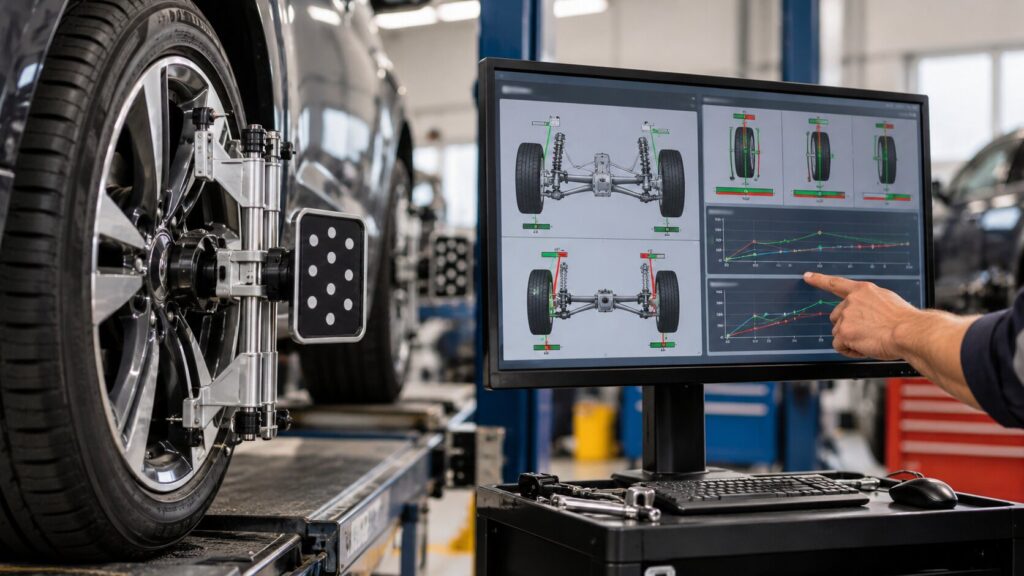
Spring thaw on County Road 15 in Spring Park subjects suspension control arms and tie rods to relentless impact cycles that quietly knock wheels out of alignment. Archiving exact alignment angles across every visit gives our technicians an exact historical map of your vehicle’s mechanical baseline.
Why Stored Alignment Measurements Matter for Your Car
Wheel alignment is not a one-time adjustment, but an ongoing record of how your suspension ages under daily driving stress. When we measure your vehicle’s geometry using systems like the Hunter Hawkeye Elite, our software logs camber, caster, and toe angles down to hundredths of a degree (0.01 degrees). Storing these precise figures creates a reference point that helps us monitor gradual mechanical shifts over time, ensuring every alignment adjustment accounts for previous wear patterns.
Comparing current alignment readings against past data reveals whether an angle shifted suddenly from an impact or drifted slowly from worn bushings. A sudden shift usually points to a bent component from a severe pothole along Shoreline Drive, whereas gradual drift signals natural rubber degradation. Having this digital history prevents unnecessary parts replacement by highlighting the exact component that changed, providing long-term diagnostic clarity that keeps your vehicle driving straight.
How Suspension Geometry Gradually Shifts Over Time
Suspension components naturally loosen, flex, and wear down as miles accumulate on Minnesota roads. Rubber control arm bushings compress under constant weight, causing camber angles to lean inward and wear out the inner tire shoulders. Ball joints and tie rod ends develop subtle play that alters toe settings, making the steering wheel feel loose or off center.
Seasonal temperature swings in Spring Park accelerate this mechanical degradation by hardening rubber isolators, while winter salt exposure freezes critical adjustment cams. Repeated impacts from frost heaves and curb strikes compound these gradual geometry changes by moving adjustment eccentric bolts just a fraction of a millimeter. Over thousands of miles, these seemingly harmless micro shifts drastically alter tire contact patches and go completely unnoticed until your tires show irreversible damage.
Tracking Camber Caster and Toe Across Multiple Visits
Camber describes how far the top-dead-center of the wheel leans toward or away from the body Camber describes how far the top dead center of the wheel leans toward or away from the body chassis line. When our digital records show camber progressively drifting negative beyond the standard tolerance over three consecutive visits, we know lower control arm bushings are sagging. Identifying this trend early allows us to replace inexpensive rubber parts before major tire damage occurs, while comparing historical caster readings helps us isolate hidden structural shifts like bent struts or shifted subframes.
Toe settings determine whether the leading edges of the tread point toward one another or spread apart relative to the vehicle’s centerline. Even a microscopic change of 0.05 degrees in toe causes your tires to scrub sideways across the pavement at highway speeds. By reviewing past toe adjustments in your digital vehicle service records, we can accurately determine if tie rods are slipping or if steering rack mounts are actively failing before visual damage appears.
Diagnostic Verdict: When we see toe angles drift by more than 0.15 degrees between consecutive 6-month checks without visible tire damage, it is almost never an adjustment nut backing off—it’s inner tie rod socket play or subframe bushing compression from daily impacts on County Road 15.
Catching Hidden Frame and Chassis Stress Early
Chassis stress does not always happen in a major collision because it builds up quietly through years of rough road conditions and uneven pavement. Constant twisting forces can cause subtle flex in subframe mounting points and unibody seams, which digital alignment tracking reveals through recurring angle shifts. When a vehicle returns for routine service, our technicians overlay the new alignment printout against previous digital records to check for these hidden structural changes.
If camber or caster refuses to hold its specified baseline between visits, we deeply inspect the underlying heavy structural points for fatigue or rust damage. This proactive historical monitoring stops minor frame distortion from turning into an expensive safety liability and distinguishes normal aging from hidden collision damage. Ultimately, if a second hand vehicle shows asymmetrical caster angles that never match factory specs, the historical record provides an accurate assessment of prior structural stress.
The Financial Benefits of Digital Alignment History
Maintaining accurate digital vehicle service records saves you money by preventing premature failures in connected steering and suspension systems. Driving with uncorrected geometry places severe lateral stress on wheel bearings, power steering racks, and strut mounts. Catching minor shifts during routine checks keeps these costly auxiliary systems working efficiently over time.
Proactive alignment monitoring also helps maintain optimal fuel efficiency by minimizing tire rolling resistance on the highway. When all four wheels track true along the vehicle centerline, the engine expends less energy overcoming tire drag across the asphalt. This reduced friction ultimately saves you gas money and extends the total lifespan of your expensive tires.
Protect Your Vehicle Geometry
Regular alignment checks backed by digital record keeping keep your car performing safely and efficiently through every harsh Minnesota season. We heavily rely on advanced diagnostic tools and comprehensive data logs to track your vehicle’s geometry changes across every stage of its life. This proactive tracking ensures that small physical shifts never have the chance to develop into major steering failures.
If you notice your steering wheel leaning off center, your car drifting on straight roads, or uneven tread wear on your tires, our team is ready to help. Contact Certified Auto Repair located at 4700 Shoreline Drive, Spring Park, MN 55384 today to schedule your next digital alignment evaluation. Our ASE Master Certified technicians will leverage these precise digital records to fully protect your vehicle’s suspension health.
Frequently Asked Questions
How often should my vehicle’s digital alignment record be updated?
Every 12,000 miles or 12 months is the recommended baseline interval for updating your vehicle’s digital alignment record. Regular checks help catch minor geometry shifts caused by seasonal road hazards before they ruin your tires.
Can digital service records help diagnose persistent vehicle pulling?
Yes. Historical data highlights whether a steering pull is caused by a sudden alignment change from a recent impact or ongoing subframe misalignment from prior ownership.
Will changing my tires alter my vehicle’s stored alignment geometry?
No. New tires do not directly change your wheel alignment angles, but installing them is the ideal time to check your alignment baseline. Updating your digital service record with new tires ensures your fresh tread is protected against existing suspension wear patterns.
How do digital alignment records differ from traditional paper printouts?
Digital alignment records store historical multi-visit vector data, whereas traditional paper printouts provide only a single static snapshot in time. Archived digital data allows us to overlay and compare alignment angles across multiple years to catch long-term wear trends.