Dropping suspension height shifts lower control arm angles upward, forcing camber and toe settings out of factory specification. Sagging springs and worn struts compromise steering geometry, causing rapid inner tire wear. Restoring correct ride height through proper suspension repairs is required before aligning wheels to permanently protect tire lifespan.
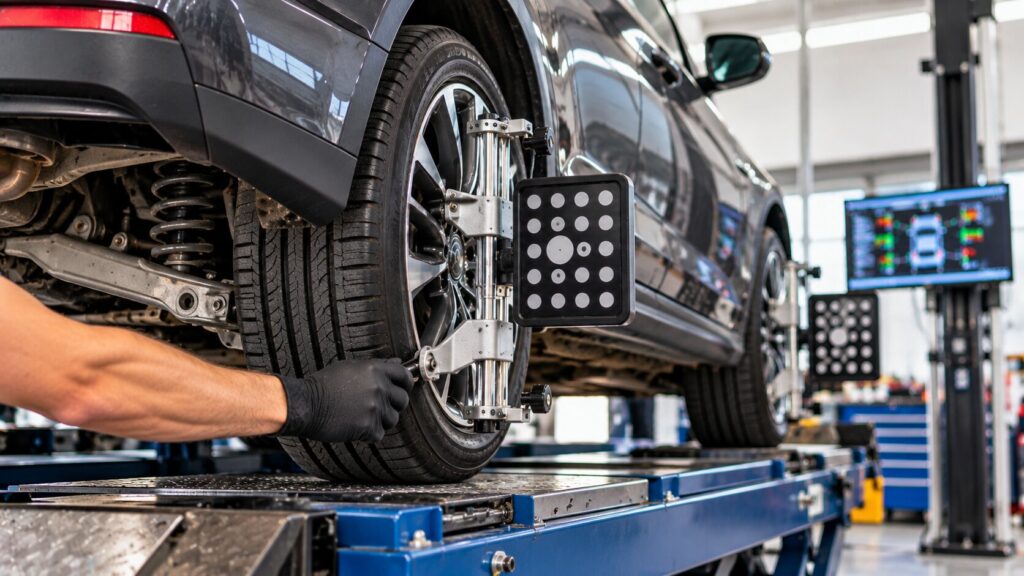
When sagging coil springs and worn strut assemblies drop your car by as little as half an inch on winter-potholed routes along Shoreline Drive, lower control arms pivot out of their factory plane. On our digital alignment rack, we regularly see this half-inch drop push tire angles out of position by up to 1.2 degrees. That subtle slant forces rubber to drag sideways across the road, prematurely stripping the inside tread during daily Lake Minnetonka commutes.
Ride Height Changes Shift Lower Control Arm Angles
Your vehicle suspension relies on a precise setup designed by factory engineers. When metal springs weaken or shock absorbers leak hydraulic fluid, the vehicle body sits lower to the road surface. We observe that this drop forces lower control arms to angle upward toward the subframe instead of remaining flat.
Think of your lower control arm like a heavy door hinge. When that arm tilts upward, it alters the distance between the inner frame mount and the outer ball joint. That movement pulls the top of your tire inward toward the engine, creating aggressive negative camber. At the same time, steering tie rods pull the wheels off center, twisting the tires sideways out of alignment.
A drop of just half an inch in spring height can push your tires so far out of alignment that the inside tread wears down to the steel cords before your next oil change.
Mechanical Physics Behind Ride Height and Alignment Drift
Weakened suspension components alter wheel geometry through a predictable mechanical sequence. Understanding how these parts degrade helps clarify why simple alignment adjustment cannot permanently fix a vehicle with sagging springs:
- Spring Fatigue: Metal coils lose their free length, and worn struts leak oil dampeners, lowering the static ride height.
- Arm Articulation: Lower control arms pivot upward past their design plane, shortening the horizontal distance between the subframe and the wheel hub.
- Camber Shift: The ball joint pulls the bottom of the steering knuckle outward, tipping the top of the tire inward toward the engine bay.
- Toe Drag: Steering tie rods drag front tires down the road at a slight angle rather than allowing them to roll straight ahead.
- Tread Destruction: This angled drag creates constant lateral friction against the pavement, rapidly scrubbing away rubber along the inner shoulder.
How Suspension Stressors Force Alignment Failure
Cold Midwest winters and salt-corroded roads cause suspension parts to settle much faster in our region. When your vehicle hits deep potholes or frozen road depressions, compressed springs fail to bounce back to their original height.
Fatigued metal coils lose their springiness and remain permanently compressed over time. Adjusting wheel alignment angles on weak springs only offers a temporary band-aid. As soon as your vehicle hits the next heavy bump on Shoreline Drive, the suspension squashes right back down and ruins your alignment settings again.
Shop Floor Diagnostic Verdict: Last week, a customer brought in a car with wire showing on the inside tire tread after only 8,000 miles. On our alignment rack, Master Tech Mark Pfleghaar found the driver’s side sitting over half an inch too low, tipping the tire inward twice as far as factory rules allow. Installing fresh springs raised the car back to normal height and instantly fixed the geometric angles without needing any aftermarket alignment cams.
Systematic Inspection and Alignment Testing Steps
Our diagnostic process spots weak suspension parts before we adjust wheel angles on the alignment rack. We follow Motorist Assurance Program (MAP) Uniform Inspection Guidelines to isolate the root cause:
| Diagnostic Target | Inspection Protocol | Actionable Indicator |
| Static Ride Height | Compare frame-to-ground clearance measurements against factory specifications. | Measurements falling below a half-inch of factory baseline confirm spring sag. |
| Spring Coils | Visual and physical inspection of the metal coil structure. | Cracked paint, flaking rust, or touching coils signal severe metal fatigue. |
| Strut Assemblies | Examine hydraulic dampeners and gas seals. | Leaking oil, torn rubber dust boots, or zero rebound resistance. |
| Bushing Wear | Load control arm rubber bushings with a pry bar. | Tears, fluid leaks, or excessive flex under mechanical load. |
Schedule Your Spring Park Suspension Assessment
Aligning a car with tired springs or leaking shocks only covers up the real mechanical problem. Replacing weak parts returns your vehicle to its original stance, locking in correct alignment angles and saving your tires from premature wear.
Our team uses precision alignment equipment to catch ride height problems on vehicles across the Spring Park region. Schedule your comprehensive suspension and alignment assessment with our team at 4700 Shoreline Drive, Spring Park, MN 55384 today, and keep your vehicle driving true.
Frequently Asked Questions
Can worn shocks cause a vehicle to lose alignment?
Yes, worn shocks and struts allow springs to squash down and stay lower than factory standards. We find this loss in height directly tilts your suspension arms and pushes your wheel alignment out of specification.
How do we know if springs are causing alignment problems?
We measure frame-to-ground clearance against factory specifications to confirm if weak springs are altering your alignment angles. Visible leaning, bottoming out over bumps, and rapid inner tire wear also indicate lost ride height.
Should an alignment be performed after replacing suspension parts?
Yes, replacing struts, springs, or suspension arms changes the physical alignment of your wheels. We perform a four-wheel alignment after suspension repairs to lock your wheels back into factory position.
Will new tires fix an alignment issue caused by lower ride height?
No, new tires will not fix alignment problems caused by low ride height. When sagging suspension parts are left unaddressed, bad alignment angles will quickly shred your new set of tires as well.