Computerized wheel alignment systems use optical sensors and camera targets to project a 3D spatial map of chassis geometry. Measuring camber, toe, caster, and thrust angle down to hundredths of a degree detects microscopic deviations caused by pothole impacts and seasonal thermal expansion, preventing uneven tire wear and steering instability.
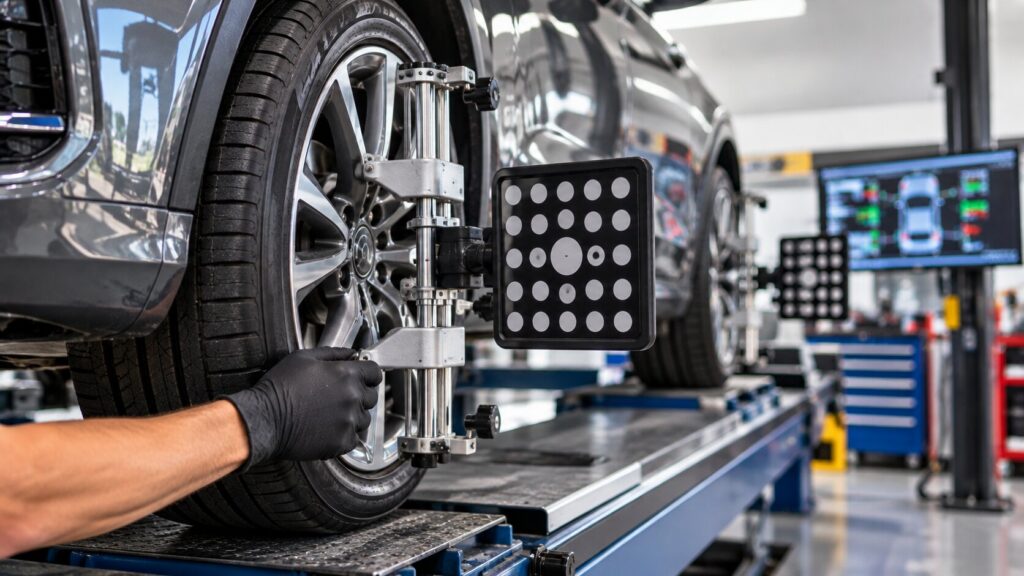
Modern computer alignment systems use high-definition optical sensors and digital camera targets attached to each wheel to capture raw spatial data. These systems measure exact angles relative to the vehicle centerline, preventing premature tire scrub and handling drift caused by Spring Park’s rough spring thaw cycles and freeze-damaged pavement along Shoreline Drive.
Modern Alignment Technology Replaces Visual Guesses
Visual inspections and manual string lines cannot detect microscopic geometric deviations across modern multi-link suspension systems. Computerized wheel alignment systems use precise digital cameras mounted on a solid beam to track target plates clamped onto all four wheels. As the vehicle rolls back and forth, our machinery projects a three-dimensional spatial map of your chassis layout.
As the vehicle rolls back and forth, our machinery projects a three-dimensional spatial map of your chassis layout. Our central diagnostic software calculates exact angular relationships down to 0.01 degrees, instantly highlighting shifted geometry that the human eye misses and allowing our ASE-certified team to make pinpoint mechanical adjustments.
Geometric Alignment Angles Defined
Each angle serves a distinct physical function in keeping your tread contact patch flat against the pavement. When Lake Minnetonka’s seasonal temperature extremes and brutal frost-heave potholes knock these out of factory tolerance, tires scrub against the pavement, building up friction heat and exponentially shortening tread life.
| Alignment Angle | Geometric Function | Diagnostic Impact |
| Camber | The vertical tilt of the wheel (inward or outward) when viewed from the front bumper. | Severe pothole impacts flex suspension components, pushing camber out of spec and forcing the tire to ride heavily on its inside or outside shoulder. |
| Toe | The inward or outward angle of the leading edges of the wheels when viewed from above. | Incorrect toe creates a constant sideways scrubbing motion across the tread surface, rapidly shaving off rubber during normal driving. |
| Caster | The front-to-back tilt of the steering pivot line when viewed from the side profile. | Positive caster helps the vehicle track straight at highway speeds. Unequal caster causes a persistent pull toward the side with less angle. |
| Thrust Angle | The calculation of the rear axle alignment against the vehicle centerline. | Ensures the rear wheels track perfectly in line with the front wheels, preventing the vehicle from “dog-tracking” sideways down the road. |
Digital Optical Measurement Protocols
To pull precise measurements, we mount lightweight target units onto the wheel rims using soft-touch clamps. High-resolution camera arrays capture the spatial positioning of the targets relative to one another in real time.
We drive the vehicle onto our level alignment rack, secure camera targets to all four wheels, and perform a brief roll-back compensation sweep to account for rim runout. Sweeping the front wheels left and right allows our system to calculate caster and kingpin inclination, comparing live spatial coordinates against manufacturer tolerances on screen. We then adjust tie rods, eccentric cams, and strut mounts until live digital meters turn green within factory specifications.
Precision Service Protects Your Mobility
Leaving geometric alignment uncorrected accelerates wear on wheel bearings, ball joints, and steering racks as they absorb uneven road impact loads. Bringing your vehicle to us at the first sign of uneven tread wear or handling drift prevents compounding steering system failures caused by Minnesota pavement shifts.
Schedule your computerized alignment inspection today with Certified Auto Repair at 4700 Shoreline Drive, Spring Park, MN 55384 to keep your steering precise.
Frequently Asked Questions
How does computerized alignment differ from manual methods?
Computerized equipment uses high-definition camera arrays and digital targets to measure angles down to 0.01 degrees in 3D space. Manual methods rely on physical gauges or string lines, which cannot calculate rear thrust angle discrepancies or subframe shifts.
How often should my alignment be measured on computer equipment?
We recommend checking vehicle alignment once a year or every 12,000 miles. Severe impacts with curbs or deep frost-heave potholes around Spring Park require immediate digital testing.
What are the main signs that my alignment geometry is out of spec?
Common symptoms include an off-center steering wheel during straight-line tracking, vehicle pulling toward one side, or rapid feathering along tire edges. Squealing tires during low-speed turns also indicates severe toe misalignment.
Can bad alignment damage other vehicle parts over time?
Yes. Running out-of-spec alignment accelerates wear on ball joints, strut mounts, and steering linkages due to constant lateral pressure. Addressing alignment early prevents premature failure across expensive chassis components.