Automated trade-in algorithms instantly downgrade a Jeep’s valuation if maintenance history is missing from national databases. For drivers near Lake Minnetonka, logging digital service records especially for harsh winter brine neutralization and specialized differential care is essential. Real-time digital logging ensures maximum resale equity before an appraiser ever inspects the vehicle.
Preserving Resale Value Through Automated Database Synchronization
Digital history synchronization feeds maintenance data directly to national databases to preserve long-term vehicle resale value. Integrated API transfers push verified maintenance milestones to consumer indexes, removing history gaps. This continuous documentation maintains pristine condition tiers within automated trade-in algorithms, preventing sudden depreciative drops and protecting long-term equity.
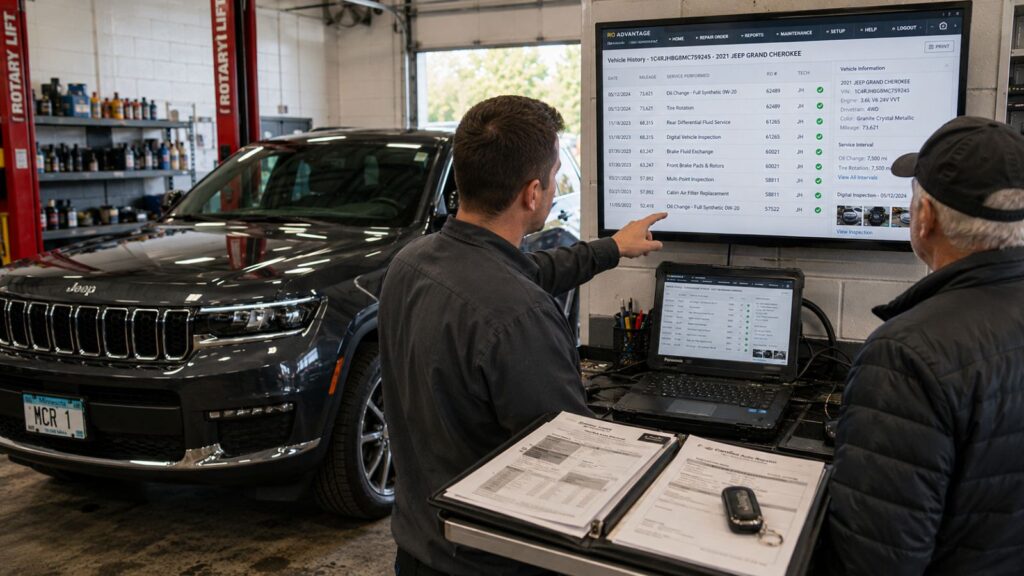
As a technician, I pull live maintenance milestones directly from the service bay and push them to national history indexes via automated API transfers to close any documentation gaps. Logging the exact digital timestamps for specialized differential maintenance and structural brine-neutralization washes prevents algorithmic appraisal tools from slashing trade-in equity. This consistent digital tracking establishes an unalterable proof of value, ensuring peak market trade-in equity when selling a vehicle.
Algorithmic Appraisal Risks Near County Road 15
Dealership valuation software looks for specific manufacturer codes in a Jeep’s history file to confirm that required factory services actually took place. Any missing or delayed entry past the database processing window causes the software to instantly flag a historical gap and downgrade the vehicle. This structural reporting failure drops the vehicle into a lower condition tier, directly stripping thousands of dollars in equity from a trade-in value before an appraiser ever looks at the vehicle.
A late-model Jeep Grand Cherokee on the hoist may be mechanically sound, but a history report missing the critical entries required for top-tier valuation hurts its bottom line. This drop in value happens because modern trade-in networks rely on automated shop software APIs, which flag a permanent gap in the vehicle’s history if major services aren’t logged and synced within 30 days of the repair date. This digital reporting gap causes appraisal software to automatically drop the vehicle condition rating from Excellent to Good, reducing the automated trade-in valuation by 3 to 5 percent before a human appraiser ever touches the sheet metal.
Twin Cities Road Brine Protection and Chassis Longevity
From what I see on the hoist, preserving your vehicle’s lifespan in the western suburbs comes down to how effectively the chassis is protected against aggressive winter road chemicals. During freezing months, the heavy road salt and liquid magnesium chloride sprayed across local routes atomize into a fine, clinging mist that coats vehicle undercarriages. This aggressive chemical solution settles inside frame rails and directly coats vulnerable electronic components like the front sway bar disconnect assembly.
Without a digital record proving regular chemical neutralization and structural inspections, future buyers will assume the undercarriage has suffered severe atmospheric oxidation. Standing underneath a Wrangler on the hoist, the corrosive impact of winter road maintenance along Shoreline Drive near Lake Minnetonka is immediately visible.
To counter this atmospheric oxidation, the digital history profile must be audited for verified entries of annual structural rust-proofing and underbody chemical neutralization washes that prove the chassis is protected. Furthermore, uploading the exact digital timestamp of specialized fluid exchanges using Mopar MS-10216 friction modifier provides the precise data trail required to prove the internal differential clutch packs remain free from wear.
Short Summer Trips to Lord Fletcher’s Alter Fluid Schedules
I frequently remind drivers that short trips prevent the engine from staying hot long enough for the oil to purge internal condensation and raw fuel buildup. This results in fuel dilution and a watery sludge that degrades the vital fluids protecting variable valve timing and transfer cases. To prove a vehicle hasn’t suffered from this specific type of wear, a digital history needs to show accelerated, time-based service intervals instead of just waiting for the odometer mileage to roll over.
General factory Jeep manuals rarely align with real driving habits around Lake Minnetonka, where short trips to Lord Fletcher’s or the Spring Park Swim Beach prevent engines from reaching the temperatures needed to burn off oil contaminants. This issue is compounded by prolonged idling from local construction on Highway 7, which accelerates fluid breakdown without adding odometer mileage. By logging these services under the severe-duty digital classification, powertrain warranties remain protected and long-term trade-in value is maximized.
Hardening Vehicle History Profiles Against Pre-Purchase Scrutiny
Maximizing equity requires transforming standard shop receipts into a permanently verified, unalterable digital asset. My diagnostic process links the physical mechanical state directly to national valuation reporting networks the moment service concludes. This real-time reporting ensures consumer valuation platforms instantly recognize specific module calibrations and targeted fluid changes. Hardening a history file this way eliminates the documentation variables that buyers typically use to negotiate lower purchase offers.
During a vehicle history audit and mechanical inspection, I focus on protecting the owner’s equity by plugging a diagnostic platform directly into the Jeep OBD-II port to build an unalterable digital asset. This allows me to read live trouble codes, check module calibrations, and verify Selec-Terrain actuator amperage.
When a transfer case is freshly serviced, its smooth, quiet engagement aligns perfectly with the clean digital records on my shop terminal, proving the vehicle is in peak mechanical shape. Uploading precise service codes and digital inspection sheets directly to the integrated vehicle history network hardens the resale profile against future scrutiny.
Core Advantages of Digital Maintenance Logs
- Algorithmic Protection: Prevents automated software from dropping vehicle condition ratings by 3 to 5 percent.
- Corrosion Tracking: Provides unalterable proof of annual underbody chemical neutralization washes against local road brine.
- Severe-Duty Verification: Documents accelerated fluid changes required by frequent short trips and heavy local idling.
- Seamless API Transfers: Eliminates human error by pushing service bay timestamps directly to national valuation indexes.
To secure maximum trade-in equity, ensure your digital history profile is accurate and up to date. If you need assistance verifying your Jeep’s digital service records or updating your maintenance logs, reach out to the team at Certified Auto Repair at 4700 Shoreline Drive, Spring Park, MN 55384.
Frequently Asked Questions
Can a missing digital service record directly lower my Jeep trade-in value?
Yes. Automated appraisal algorithms used by modern vehicle purchasing platforms automatically downgrade a vehicle condition tier if they detect a historical gap in maintenance logs. Failing to sync a service entry within 30 days can cause the calculated trade-in valuation to drop by 3 to 5 percent.
Does the factory recommended mileage interval account for Minnesota driving conditions?
No. Factory manuals base normal intervals on long-distance highway driving. Frequent short drives near Lake Minnetonka and extended idling during summer roadwork cause internal condensation and oil dilution, which means switching to a time-based severe duty maintenance routine.
Why is digital tracking critical for specialized Jeep four-wheel-drive systems?
Advanced traction systems like the Quadra-Drive II differential rely on specific fluid modifiers to prevent premature wear. Digital history profiles offer verifiable proof to the next owner that exact maintenance steps were followed, protecting the car from major wear and a lower trade-in appraisal.
Will paper receipts protect my resale value as effectively as digital records?
No. Paper receipts prove you did the work, but they are completely invisible to automated dealership appraisal software and national history networks during online trade-in evaluations. Digital records populate consumer reports automatically, ensuring the vehicle retains its maximum automated condition score.
Does road salt exposure affect my Jeep electronic history profile?
Yes. Road brine from local winter driving can cause corrosion on external chassis components and electronic wiring harnesses. When you digitally log yearly underbody inspections and cleanings, you show buyers the vehicle was actively shielded from elements that cause structural rust and decay.