Jeep fleet cooling systems face extreme thermal stress during low-velocity operation on Shoreline Drive. Extended idling causes heat soaking in the 3.6L Pentastar, leading to thermostat fatigue and oil cooler warping. These stop-go driving cycles also accelerate OAT coolant degradation, turning the fluid acidic long before the factory 100,000-mile interval.
Pentastar Thermostat Failures During Extended Idling
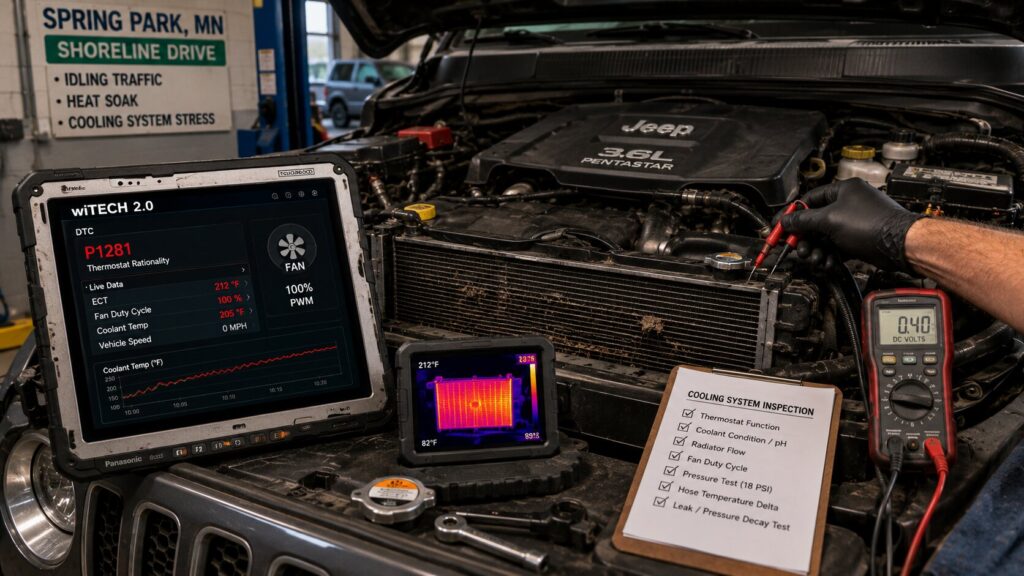
A P1281 code appears on the scanner because the engine is struggling to reach operating temperature. In many cases, the thermostat bypass spring has lost tension and allows coolant to circulate too early.
During Minnesota’s cool spring temperatures, this failure prevents the engine from entering closed-loop fueling efficiently. I pull the housing and often find the plastic has become brittle caused by years of heat cycling.
P1281 Codes and Thermostat Spring Fatigue
Weak spring tension allows constant coolant flow through the system. Over time, this contributes to carbon buildup on the intake valves as the PCM enriches the fuel mixture to warm the engine.
I torque the new housing bolts to exactly 8Nm. One extra turn cracks these plastic flanges against the aluminum block every single time.
Coolant Degradation and Acidic OAT Systems
Humidity rolling off Lake Minnetonka accelerates the degradation of Organic Additive Technology coolant used in many Jeep fleet vehicles.
Testing at the radiator neck revealed 0.4V DC in the coolant, a strong indicator that the corrosion inhibitors have failed. Once coolant becomes conductive, it begins damaging heater cores, radiator passages, and aluminum cooling components internally.
Testing Coolant pH and Voltage in Jeep Cooling Systems
For delivery Jeeps operating near Tonka Bay Marina, the factory 100,000-mile coolant interval is unrealistic. High idle times and repeated heat cycles shorten coolant life significantly.
Pressure testing at 18 PSI showed a slow decay pattern. No visible leak was present yet, but the acidic coolant had already started compromising gasket integrity and internal cooling passages.
Extended Idling Increases Cooling Fan Load
The cooling fan operates continuously during prolonged traffic delays near County Road 19 and Shoreline Drive. Without natural airflow through the radiator, the fan must handle nearly all heat dissipation.
Under these conditions, fan motors frequently reach their thermal limits after extended idle periods.
Restricted Airflow and Radiator Cooling Problems
Inspection of the radiator fins showed heavy buildup from cottonwood seeds and spring debris common throughout Spring Park. This material restricts airflow and reduces cooling efficiency.
Thermal imaging also revealed a cold section near the center of the radiator core, suggesting sediment restriction inside the unit. Heat transfer across the radiator surface was inconsistent, indicating reduced coolant circulation through part of the core.
Cooling Fan Controller Problems During Heat Soak Conditions
Oscilloscope testing showed instability in the cooling fan control signal during extended heat-soak conditions.
Temperature readings between the upper and lower radiator hoses showed only a 15-degree difference. A healthy cooling system typically produces a wider temperature spread, usually between 20 and 30 degrees, indicating more effective heat rejection.
Pressure Testing for Hidden Coolant Leaks
The sweet odor of vaporized coolant often points to small cracks developing in aging plastic radiator tanks.
Physical inspection showed heat-damaged plastic beginning to lose flexibility along the radiator side tank. The original material had become brittle after years of thermal cycling and stop-and-go fleet use.
The radiator was replaced with a fleet-spec unit featuring higher fin density to improve cooling performance during low-speed traffic conditions.
Common Warning Signs of Jeep Cooling System Failure
- Loud cooling fan operation during idling
- Sweet glycol smell near the engine bay
- P1281 thermostat fault codes
- Weak cabin heater performance
- Rising engine temperatures in traffic
- Cooling fan running constantly at high speed
Don’t wait for a “Stop Engine” warning to leave your delivery Jeep stranded near Spring Park Pharmacy. If your Jeep is showing signs of cooling system stress during traffic delays or prolonged idling, contact the team at Certified Auto Repair or visit us at 4700 Shoreline Drive Spring Park, MN 55384.
Frequently Asked Questions
Is it normal for my Jeep fan to run loudly while idling?
Yes. During heavy traffic on Shoreline Drive, the electric fan works harder to compensate for reduced airflow through the radiator. Fan operation at maximum speed for long periods may indicate restricted airflow or thermostat problems.
Why is my Jeep check engine light on with code P1281?
This code means the engine is not reaching operating temperature quickly enough. In most cases, a weakened thermostat spring allows coolant to circulate prematurely.In Spring Park’s cooler climate, this can reduce efficiency and increase long-term engine wear.
How often should I change the coolant in my delivery Jeep?
Fleet vehicles with high idle times should not rely solely on the factory 100,000-mile interval. Coolant pH and voltage testing every 30,000 miles helps identify early corrosion before internal damage develops.
Can road debris cause my engine to overheat?
Yes. Cottonwood seeds, pollen, and organic debris can block airflow through radiator fins and quickly increase operating temperatures during stop-and-go traffic.