You swapped in a new car battery — everything looked good at first. But now, a few days later, your dashboard light pops on, the headlights dim, or your car won’t start. Sound familiar?
If so, you might be dealing with alternator failure after battery change, a surprisingly common issue for Spring Park, MN drivers. Let’s break down why it happens, how to spot it early, and when it’s time to visit a trusted local mechanic.
What “Alternator Failure After Battery Change” Actually Means
Your car’s alternator is a generator. It powers everything electrical in your car once the engine is running — lights, radio, AC, even your phone charger — and it recharges your battery as you drive.
When you install a new battery, the alternator suddenly faces a stronger electrical load. If the alternator’s internal parts (like diodes or the voltage regulator) are already weak, this new demand can expose the problem — and the alternator fails soon after.
Mechanic’s insight: “A new battery doesn’t cause alternator failure — it just reveals one that was already close to failing.”
Why Spring Park, MN Drivers See This More Often
Living in Minnesota means your car deals with big seasonal swings — below-zero winters and humid summers. Both stress your charging system.
Here’s why alternator failure after battery change is more common around here:
- Cold starts demand a higher current from both the battery and alternator.
- Short trips around Spring Park or Shoreline Drive don’t allow full recharging.
- Road salt and moisture corrode electrical connections and grounding points.
- Older alternators already weakened by age struggle to adjust to a new, full-strength battery.
All these local factors mean that even if your car seems fine after a new battery, the alternator could soon show its age.
Signs of Alternator Trouble After a Battery Swap
If your alternator is struggling, your car will usually tell you — you just have to know what to look for.
| Symptom | What It Means | Next Step |
| Dashboard battery light stays on | Alternator not maintaining proper voltage | Get the charging system tested |
| Headlights dim or flicker | Alternator output dropping at idle | Check voltage (should be 13.8–14.4 V) |
| Power windows or the radio act weirdly | Inconsistent electrical flow | Inspect belt tension and wiring |
| New battery dies quickly | Alternator is not recharging it | Test alternator load output |
| Whining or grinding noises | Bearing or internal wear | Seek professional inspection |
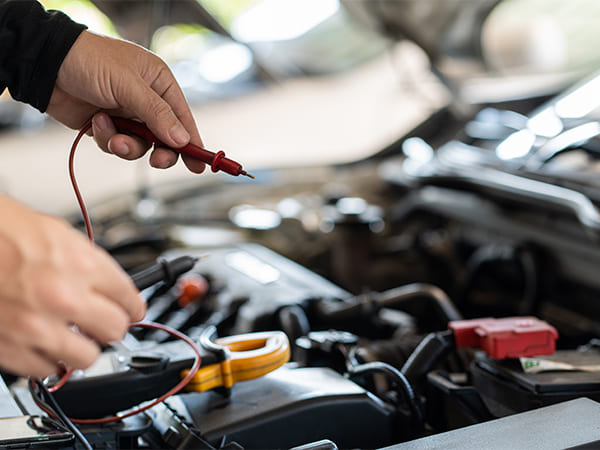
Pro tip: You can test alternator voltage at home with a multimeter. With the engine running, you should see 13.8 to 14.4 volts at the battery terminals. Anything lower or higher signals a problem.
How an Alternator Fails After a Battery Change
Here’s a simple breakdown of what actually happens inside your car’s electrical system when an alternator starts failing after a new battery is installed:
- You install a new battery.
It has low resistance and high storage capacity. - The alternator starts recharging.
If it’s worn out, the regulator or diodes can’t control voltage properly. - Voltage imbalance occurs.
That triggers the warning light or causes fluctuating power. - The alternator overheats or fails.
Now you’re left with a good battery — and no charging source.
Mechanic’s quote: “It’s like hooking a new phone up to a bad charger — the phone’s fine, but the charger can’t keep up.”
Common Misconceptions
Let’s clear up a few myths drivers often hear in Spring Park auto shops:
- “My new battery killed my alternator.”
Nope — it just revealed an existing weakness. - “A new alternator automatically fixes everything.”
Not always. You still need good wiring, grounds, and belts. - “If the lights work, the alternator’s fine.”
Not true. Modern cars can run off the battery alone for a short time before shutting down.
Why Ignoring the Problem Costs More Later
An alternator failure doesn’t just mean a dead battery — it affects the entire vehicle system.
- Battery drain: Even a new one can go flat overnight.
- Electronic failure: Sensitive modules and sensors rely on a stable voltage.
- Stranding risk: A dead alternator means your car won’t restart, even if jumped.
According to the AAA, electrical problems like these are one of the top three causes of roadside breakdowns in the U.S.
Replacing a bad alternator early costs less than replacing both it and a battery damaged by improper charging.
How to Prevent Alternator Problems After a Battery Change
Here’s what you can do right here in Spring Park:
1. Always test both battery and alternator
When replacing a battery, ask your technician to run a full charging system test. Most shops offer this free or for a small fee.
2. Keep terminals clean
Corrosion from road salt can build up quickly. Use a mixture of baking soda and water to neutralize the acid residue.
3. Check drive belts
A slipping belt can cause low alternator output even when the unit itself is fine.
4. Avoid short, low-speed trips
Once a week, take a longer drive (20-30 minutes) to allow full recharge cycles.
5. Get a winter inspection
Before temps drop, have your charging system tested — cold cranking amps and voltage regulator output are key.
Real-Life Example: Alternator Failure After Battery Change
Last winter in Spring Park, a local driver decided to replace their car battery at home. A few days later, the dashboard battery light came on — and soon after, the car refused to start.
Here’s what happened next:
- The alternator was producing only 12.3 volts under load, far below the normal range.
- The new battery temporarily masked the weak alternator output.
- Corrosion on the ground straps worsened the charging imbalance.
- After replacing the alternator and cleaning the connections, the system stabilized immediately.
This real-life case shows how alternator failure after battery change can appear suddenly — even when you think your electrical system is in good shape.
Key Points About Alternator Issues
- A new battery can reveal a weak alternator.
- Healthy output: 13.8–14.4 V while running.
- Cold weather strains the charging system.
- Dim lights or warning icons mean check it soon.
- Always test the system after replacing the battery.
Ready to Fix Your Alternator Problem Today?
If your car struggles to start or your dashboard lights act up after a new battery, it’s time to check for alternator failure after a battery change.
At Certified Auto Repair, our ASE-certified technicians use advanced diagnostic tools to test your alternator, battery, and full charging system. We service nearly all makes and models and explain our findings clearly before doing any repairs.
Visit us in Spring Park, MN — we’ll help you stay charged, stay mobile, and stay safe on the road.
Check out our next blog, “Replacing an Alternator Without Removing the Engine,” where we share simple, time-saving tips for DIYers and local drivers alike.
Frequently Asked Questions
Why does my car battery keep dying even after replacement?
Because the alternator isn’t recharging it. A new battery can only run your car for a few drives before draining.
Can a bad ground cause alternator failure after replacing the battery?
Yes. Poor grounding causes voltage drops and overheating. Cleaning and tightening ground straps often fixes recurring alternator issues.
How do I know if my alternator is charging correctly?
Use a multimeter. The voltage should read around 13.8–14.4 V with the engine running. Anything lower means weak output.
Is it safe to drive with a weak alternator?
Not for long. Once the battery drains, power steering, ignition, and fuel systems will stop working.
Can a mechanic in Spring Park test my alternator quickly?
Yes. Most local repair shops in Spring Park can test alternator voltage and regulator function in under 10 minutes.