Most Spring Park drivers notice little changes first — extra bouncing over potholes on Shoreline Drive, a clunk over railroad tracks, or the feeling that the car just doesn’t “plant” on curves like it used to. That’s your suspension trying to tell you something. A solid Toyota shock absorber replacement guide can help you spot those warning signs early and keep your ride safe and comfortable.
In this post, we’ll break down how long shocks usually last, what affects their lifespan in Spring Park, MN, and when it’s time to schedule a professional inspection before those small annoyances turn into big repair bills or safety issues.
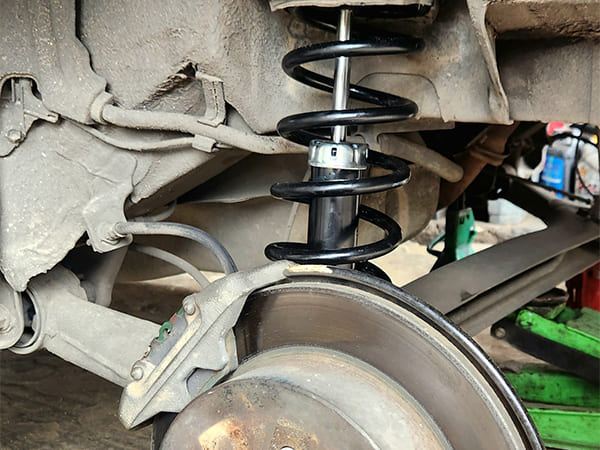
What Exactly Do Your Toyota Shocks Do?
Shocks control how your Toyota bounces and handles. They don’t hold the car up (that’s the springs’ job), but they control the motion every time you hit a bump, brake, or turn. Good shocks:
- Keep your tires firmly on the road
- Reduce nose-diving when braking
- Help your car stay stable in curves
- Cut down on body roll and bounce
In any good Toyota shock absorber replacement guide, you’ll see the same core idea: worn shocks = less control. That affects not just comfort, but also stopping distance and steering response.
How Long Do Toyota Shocks Usually Last?
For most Toyota models, shocks typically last around:
| Driving Style / Conditions | Typical Shock Life (Miles) | What You’ll Start to Notice |
| Mostly highway, gentle driving | 80,000 – 100,000+ | Gradual loss of comfort, more float on long curves |
| Mix of city and highway (typical Spring Park) | 60,000 – 80,000 | Extra bouncing, rougher ride over Shoreline & Interlachen bumps |
| Rough roads, lots of potholes & heavy loads | 40,000 – 60,000 | Clunks, sway in turns, nose-dive when braking |
These are general ranges, not a hard rule. We’ve seen some Toyota shocks in decent shape past 100,000 miles, and others worn out closer to 50,000 because of rough roads and towing.
Clear Signs Your Toyota Shocks Are Wearing Out
Here are practical signs you can actually feel and see on your own Toyota:
Excessive bouncing
- Push down firmly on one corner of the car and let go.
- If it bounces more than 1–2 times, the shock in that corner may be weak.
Nose-diving when braking
- When stopping at the light by the lake, does the front end dip hard?
- That’s a classic worn-shock behavior.
Body roll in turns
- On curves leaving Spring Park toward Mound, does the car lean more than it used to?
- Shocks help control that rolling motion.
Uneven or cupped tire wear
- Tires that look scalloped or patchy on the tread can mean your shocks aren’t keeping them planted.
Clunking or rattling noises
- Especially when going over speed bumps or driveway entrances.
- Could be shocks, mounts, or other suspension parts.
What Happens During a Shock Replacement on a Toyota?
Here’s a simple step-by-step breakdown of how a typical Toyota shock replacement goes in a shop:
- Initial road test
- Mechanic check for noises, bounce, pull, and brake dive.
- Mechanic check for noises, bounce, pull, and brake dive.
- Visual inspection on the lift
- Look for leaking fluid on the shocks
- Check rust on mounts and bolts
- Inspect springs, control arms, bushings, and tires
- Remove old shocks/struts
- Wheels come off
- Old shocks or strut assemblies are unbolted and removed
- Install new shocks/struts
- Correct parts matched to your Toyota model and year
- Torque bolts to manufacturer specs
- Replace mounts or hardware if needed
- Alignment check (especially with front struts)
- After front suspension work, an alignment helps your Toyota track straight and protect tire life.
- After front suspension work, an alignment helps your Toyota track straight and protect tire life.
- Final road test
- Confirm a smoother ride, better control, and no unusual noises.
A good Toyota shock absorber replacement guide always stresses safety:
Replacing shocks isn’t just about comfort — it’s about keeping braking, steering, and stability where they should be.
How Often Should Spring Park Drivers Check Their Shocks?
Here’s a simple schedule you can follow:
| Odometer Reading | Recommended Action |
| 0 – 40,000 miles | Basic inspection during regular service |
| 40,000 – 60,000 miles | Ask specifically for a suspension and shock check |
| 60,000 – 80,000 miles | Consider replacement if you notice ride changes |
| 80,000+ miles | Strongly consider replacement even if “feels okay” |
Mechanic’s insight:
By the time many drivers “really feel” worn shocks, their car has already been stopping longer and leaning more in turns for thousands of miles. Trust the mileage plus symptoms, not just comfort.
Why Good Shocks Matter for Safety and Comfort
Up-to-date shocks are not just a luxury — they affect:
- Stopping distance: Worn shocks can increase stopping distance because the tires don’t stay as firmly on the road during hard braking.
- Stability in emergencies: Strong shocks help your Toyota stay more level during quick swerves or lane changes.
- Tire life: When shocks are weak, tires bounce and wear in uneven patterns.
- Comfort on Spring Park roads: Between frost heaves, patched asphalt, and lake-area dips, good shocks make daily driving less tiring.
Think of your shocks as part of your safety system, right alongside the brakes and tires.
Case Study: A Toyota Shock Absorber Fix in Spring Park
Mark, a Spring Park driver, stopped in after noticing his Toyota felt “floaty” driving along Shoreline Drive. Every bump made the front end dip, and turning toward Mound felt less controlled. Classic signs you’ll see in any solid Toyota shock absorber replacement guide.
Once the shocks were replaced and the alignment was dialed in, Mark said the ride felt “like the Toyota I remember”—steady, smooth, and confident on our local roads.
Ready to Get Your Toyota’s Ride Checked in Spring Park, MN?
To wrap it up:
- Toyota shocks generally last 60,000–80,000 miles in typical Spring Park driving, sometimes more with gentle use and sometimes less with harsh roads.
- A good Toyota shock absorber replacement guide focuses on symptoms, mileage, and local conditions — not just one magic number.
- Watching for extra bounce, nose-dive, body roll, and weird tire wear can help you catch issues early.
Feeling a rough, floaty, or just plain “off” ride in your Toyota around Spring Park, MN? Certified Auto Repair can take a closer look with a full suspension inspection, shock replacement, or alignment. Our team walks you through what they find, shows you the parts firsthand, and helps you understand what needs attention now versus what can wait.
Be sure to check out related posts on suspension, brakes, and tire wear so your Toyota stays confident and comfortable on the road year-round. Schedule your visit today and get your ride feeling right again.
FAQs
How do I check my Toyota shocks at home?
Just bounce each corner of your car and see how fast it settles. If it keeps bouncing or feels loose, it’s a good idea to have a mechanic take a closer look.
Do I need to replace all four shocks at the same time?
Most mechanics recommend replacing shocks in pairs so your Toyota handles evenly. If your mileage is high, doing all four can keep the ride balanced and predictable.
Can worn shocks cause strange tire noises?
Absolutely — weak shocks let the tires bounce, which can create humming, thumping, or uneven wear. If the noise and tread look off, the shocks might be part of the problem.
Is it safe to drive with worn shocks for a while?
You usually can keep driving, but your braking, comfort, and control won’t be as good. Waiting too long can also cause extra strain on tires and other suspension parts.
How long does a typical Toyota shock replacement take in a shop?
Most shops can replace shocks or struts and complete an alignment in a single day. Plan to leave your Toyota for a few hours so the tech can test, replace, and double-check everything properly.