
Every bump, dip, or vibration you feel on the road tells a story about your car’s suspension. Understanding your suspension system isn’t just for mechanics—it’s for every driver who values safety and comfort.
If you drive around Spring Park, MN, you’ve likely noticed rough roads after a long winter. Those small jolts you feel? That’s your suspension working—or struggling—to keep you stable. Let’s get your suspension system explained clearly, step by step.
What Is a Car Suspension System? (Core Function and Purpose)
A vehicle’s suspension system connects the body of the car to its wheels. It absorbs shock from the road and maintains tire contact with the surface.
Without suspension, every bump would transfer directly to the frame. Your tires would lose traction, steering would become unpredictable, and your ride would feel unstable.
The main goal: keep the tires pressed evenly to the ground for maximum control and comfort.
Main Components of a Suspension System
Your suspension system includes several key parts that work together:
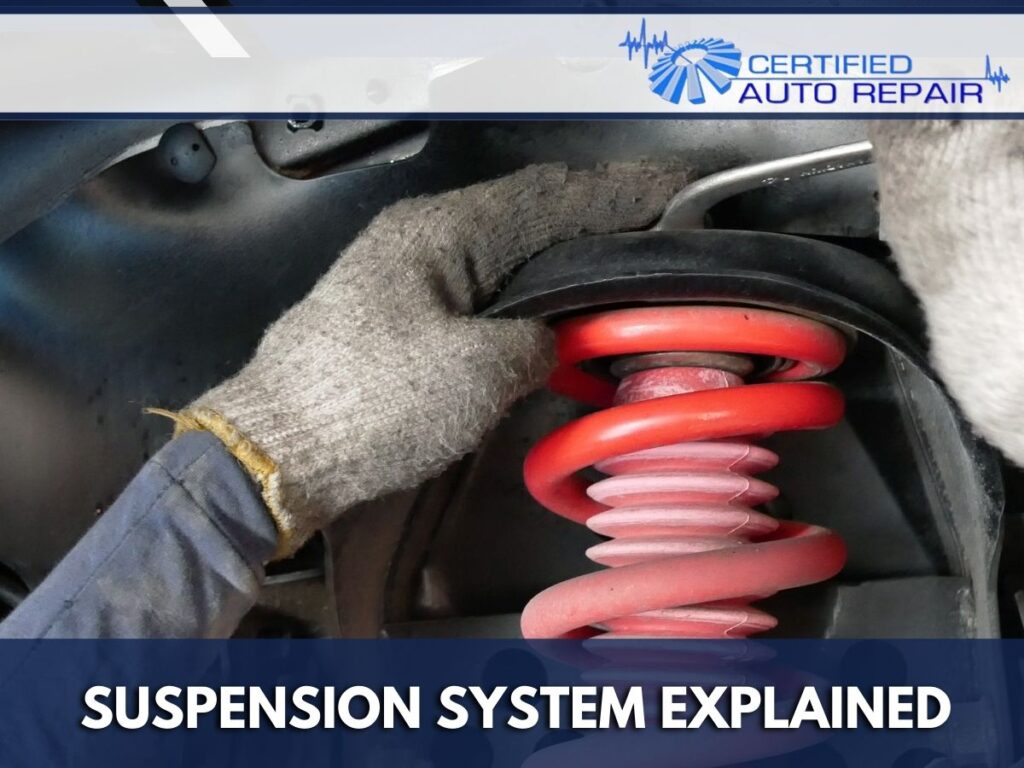
- Springs – absorb vertical movement when your car hits a bump.
- Shock absorbers (shocks) – control how quickly the springs compress and rebound.
- Struts – combine shocks and springs in one unit (common in front suspensions).
- Control arms – connect the wheels to the frame and allow controlled motion.
- Stabilizer bars (sway bars) – reduce body roll when turning or cornering.
Each part contributes to how your vehicle handles corners, braking, and bumps. When one fails, the others take extra stress.
Why Suspension Matters for Spring Park, MN Drivers
Spring Park drivers face unique road conditions. Potholes form after freeze-thaw cycles, and salted roads corrode suspension parts.
Local roads like Shoreline Drive or County Road 15 often have uneven pavement. That unevenness puts extra pressure on your shocks and struts.
If you feel every crack in the road, your suspension is likely worn. A failing system also affects your alignment and braking distance.
Routine inspections help catch issues early—especially before winter or after heavy snowfall.
Local Example: A Spring Park SUV Owner
A local driver noticed their SUV “floated” after hitting bumps. They assumed it was normal aging. During inspection, the technician found both front struts leaking. Replacing them restored control and stopped uneven tire wear.
The difference was immediate. Steering felt tighter, and braking distance improved. This is the suspension system explained in real life: one system keeping your car balanced and predictable.
How a Suspension System Works (Step-by-Step Overview)
Every time your tire hits an obstacle, energy transfers upward. The suspension system absorbs this force before it reaches the cabin.
Here’s what happens:
- The spring compresses as the tire moves upward.
- The shock absorber slows that compression, turning motion into heat energy.
- The control arms keep the tire aligned as it moves vertically.
- The stabilizer bar minimizes tilt, keeping your vehicle level during turns.
This process happens hundreds of times each minute as you drive. When the suspension is tuned correctly, your car feels stable even on rough pavement.
Signs Your Suspension Needs Service
Ignoring suspension issues can lead to costly repairs later. Watch for these clear signs:
- Vehicle bounces repeatedly after bumps
- Uneven tire wear patterns
- Clunking or squeaking noises
- Steering feels loose or drifts
- Car sits lower on one side
- Longer stopping distances
If you notice any of these, have a technician check your suspension system before it worsens.
Quick Test You Can Try!
Park your car and press down on the front bumper. Release it quickly.
If it bounces twice or more, your shocks or struts may be worn.
This simple “bounce test” gives you a quick clue before heading to a shop.
Benefits of a Well-Maintained Suspension System
A healthy suspension system improves more than comfort—it affects performance, tire life, and safety.
- Better Handling: Keeps all four tires firmly on the ground.
- Safer Braking: Reduces body dive when you hit the brakes.
- Longer Tire Life: Even contact prevents premature wear.
- Reduced Fatigue: Less vibration means less driver strain on long trips.
Supporting Data from Industry Experts
Most automotive experts recommend having your suspension system inspected every 50,000 to 60,000 miles, depending on driving conditions and vehicle type.
In Minnesota, harsh winters, road salt, and frequent potholes can accelerate wear on shocks, struts, and control arm bushings.
Regular inspections and timely replacements help prevent alignment issues, uneven tire wear, and reduced traction, keeping your vehicle safe and stable on Spring Park roads.
Seasonal Maintenance Tips for Spring Park Drivers
- After Winter: Inspect shocks and struts for rust or leaks caused by road salt.
- Before Summer: Check alignment, especially if you’ve hit potholes during spring thaw.
- During Fall: Ensure your suspension bushings and mounts are tight before icy roads return.
- Year-Round: Rotate tires and perform regular suspension checks during oil changes.
Following these steps helps your suspension perform consistently across Minnesota’s unpredictable weather.
Common Suspension Myths (And the Facts)
- Myth 1: “If my ride feels fine, my suspension must be fine.”
- Fact: Gradual wear can go unnoticed. By the time symptoms appear, other parts may already be worn.
- Myth 2: “Suspension work is only for luxury cars.”
- Fact: Every vehicle benefits from proper suspension maintenance—trucks, sedans, and SUVs alike.
- Myth 3: “New tires fix ride comfort.”
- Fact: Tires can’t compensate for weak shocks or worn struts. Both must work together.
Professional Insight: Proven Suspension Facts
Poor suspension or misalignment can increase rolling resistance, forcing your engine to work harder to maintain speed.
According to research compiled by the Tire Industry Association, even a 10% rise in rolling resistance can reduce fuel efficiency by 1–2%.
Over time, that means more frequent fill-ups and uneven tire wear. Keeping your suspension and alignment in good condition helps your vehicle roll smoothly, improving fuel economy and extending tire life.
Your Suspension Experts in Spring Park, MN
When you need your suspension system explained and serviced the right way, trust Certified Auto Repair in Spring Park, MN. We use advanced factory tools and precision diagnostics for every inspection.
Our shop provides quality service and repair at a fair price, from suspension tuning to wheel alignment and brake checks.
A strong suspension system isn’t about comfort—it’s about control, safety, and peace of mind. Schedule your next inspection with our trusted local team and drive confidently on Minnesota roads.
FAQs About Your Suspension System
Got questions? Here’s a quick, friendly Q&A from our local techs.
How often should I check my suspension system?
Have it inspected every 12 months or 12,000 miles, especially before or after harsh weather seasons.
What does a failing suspension feel like?
You’ll feel bouncing, nose-diving when braking, or drifting during turns. If it feels “floaty,” get it checked.
Can I drive with bad shocks?
Yes, but it’s unsafe. Poor shocks increase stopping distance and reduce traction, especially on icy Spring Park roads.
Do I need an alignment after replacing struts?
Yes. Strut replacement changes suspension geometry, so alignment ensures even tire wear and stable steering.
What’s the best way to extend suspension life?
Avoid hitting curbs, slow down for bumps, and wash off salt buildup in winter. Regular checks prevent major wear.
