
Drivers in Spring Park, MN know how quickly the weather changes — a week of freezing temps followed by an unseasonably warm spell. That same temperature whiplash stresses your vehicle’s cooling system, often leading to overheating or leaks.
Ignoring the radiator until it fails can result in costly repairs and unexpected breakdowns. That’s why following trusted radiator maintenance tips is one of the simplest ways to protect your engine and keep your vehicle running smoothly.
Consistent upkeep helps you avoid emergencies and ensures your car stays ready for every season Minnesota throws your way.
What Radiator Maintenance Means
Radiator maintenance involves inspecting, cleaning, and servicing the system that circulates coolant through your engine. Proper upkeep keeps your engine temperature steady and extends component life.
Regular maintenance helps prevent:
- Coolant leaks
- Corrosion buildup
- Overheating and blown gaskets
- Poor fuel efficiency
When done correctly, radiator care supports engine performance and long-term reliability.
Why Radiator Maintenance Matters in Spring Park, MN
Minnesota’s weather creates sudden temperature swings. In winter, coolant thickens and slows circulation. In summer, high humidity increases heat load. Salt and debris from local roads like Highway 7 and Shoreline Drive corrode metal parts over time.
Following the right radiator maintenance tips reduces these weather-related risks. It also prevents common breakdowns that occur during seasonal transitions.
Radiator Maintenance Tips: A Step-by-Step Guide
If you want to keep your engine cool and prevent overheating, here are the tips every Spring Park driver should follow for simple, effective radiator care.
1. Check Coolant Levels Regularly
Always check coolant when the engine is cool. The fluid level should sit between the “MIN” and “MAX” lines on the reservoir.
- If it’s low, top up with the correct mix.
- If you refill often, inspect for leaks.
Consistent coolant levels keep the system balanced and efficient.
2. Inspect Hoses and Clamps
Hoses carry coolant between the radiator and engine. Check for cracks, bulges, or loose fittings.
- Replace worn hoses before they burst.
- Tighten clamps to prevent leaks.
Spring Park’s temperature shifts can weaken rubber parts faster than expected, so inspect them at least twice a year.
3. Flush the Radiator System
A coolant flush removes rust, scale, and debris that build up over time.
- Most vehicles need flushing every 30,000 miles or two years.
- Use manufacturer-recommended coolant to prevent chemical reactions.
A clean radiator ensures steady coolant flow and consistent engine temperatures.
4. Clean the Radiator Fins
The fins at the front of the radiator release heat into the air. When blocked, they restrict airflow.
- Use a soft brush or garden hose with gentle pressure.
- Avoid high-pressure washers that can bend the fins.
Spring Park drivers often face debris like cottonwood fluff, which easily clogs fins during summer.
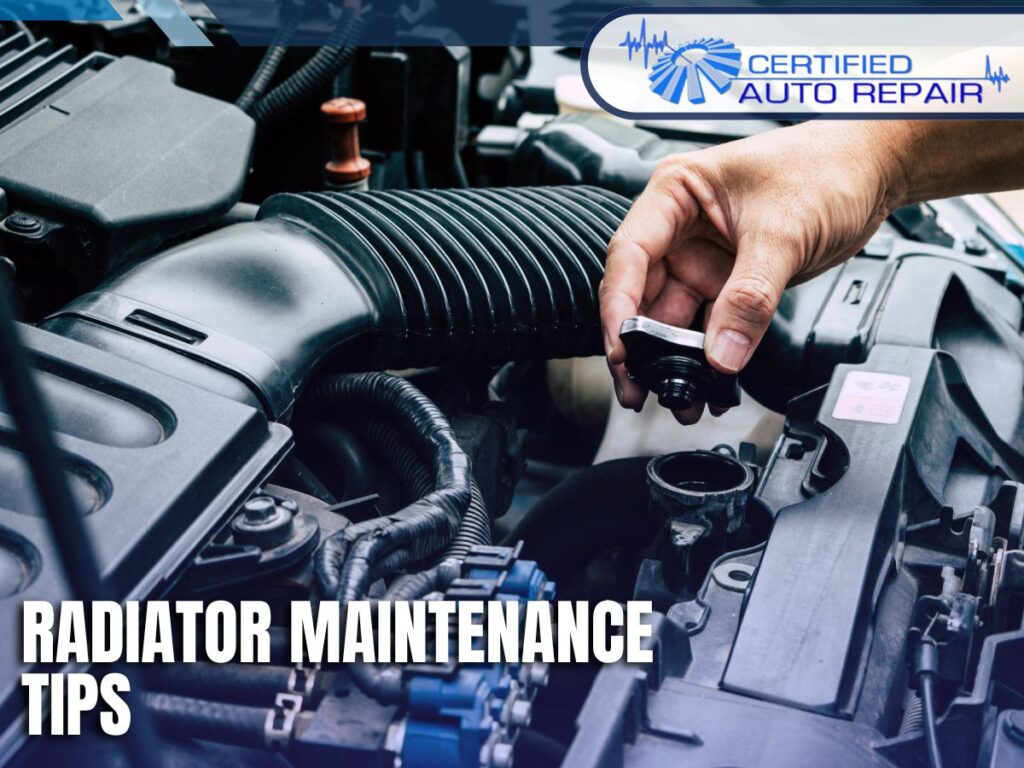
5. Test the Radiator Cap
The radiator cap maintains pressure within the cooling system.
- Replace it if it’s cracked, corroded, or doesn’t seal tightly.
- A faulty cap can cause boiling coolant and pressure loss.
Small parts like the cap often cause big problems when neglected.
6. Monitor the Temperature Gauge
Watch your dashboard gauge during every drive.
- Rising temperatures mean restricted coolant flow or a failing thermostat.
- Pull over safely if the gauge enters the red zone.
Quick action prevents engine damage and costly repairs.
Recognizing Early Signs of Radiator Trouble
- Coolant puddles: Look for colored fluid under your car.
- Steam or smoke: Indicates overheating or pressure loss.
- Sweet smell: Burning coolant has a distinct odor.
- Temperature spikes: Rapid changes in the gauge suggest restricted flow.
- Low heater output: A cooling issue often affects cabin heat.
Benefits of Following Radiator Maintenance Tips
Routine radiator care offers clear advantages:
- Prevents overheating: Keeps engine temperature stable.
- Extends vehicle life: Reduces wear on seals and gaskets.
- Saves money: Avoids emergency repairs and towing.
- Improves performance: Maintains consistent engine power.
The Car Care Council reports that cooling system failure causes most roadside breakdowns. Simple upkeep prevents nearly all of them.
Real-Life Example: Radiator Maintenance in Spring Park, MN
A local Spring Park driver noticed their car overheating during short drives near Lake Minnetonka. They brought it in for inspection before serious damage occurred.
Problem: Clogged Radiator Fins
The radiator fins were packed with cottonwood fluff and dust, blocking airflow and causing the engine to overheat.
Solution: Quick Cleaning and Coolant Flush
After cleaning the fins and flushing the coolant, the vehicle maintained normal temperature — proving how simple radiator maintenance tips can prevent major issues.
The Importance of Coolant Quality
Use the Right Type for Your Vehicle
Mixing incompatible coolants (like OAT and HOAT) causes sludge and corrosion. Always follow manufacturer recommendations.
Maintain the Right Ratio
A 50/50 blend of antifreeze and distilled water is ideal for Spring Park’s climate. It provides both freeze protection in winter and heat resistance in summer.
Never use tap water — minerals in it can cause internal corrosion.
Radiator Maintenance Schedule
- Weekly: Monitor the temperature gauge while driving.
- Monthly: Check coolant level and look for visible leaks.
- Every 6 Months: Inspect hoses, clamps, and radiator cap.
- Annually: Schedule a full system flush and pressure test.
This checklist helps you stay ahead of seasonal challenges in Minnesota.
Expert Insights on Radiator and Cooling System Care
- The National Institute for Automotive Service Excellence (ASE) lists “inspect and test radiator, heater core, pressure cap, and coolant recovery system” in its test specifications.
- The U.S. Department of Energy notes that improper engine cooling and heavy A/C use in hot weather significantly reduce fuel economy.
Together, these sources show that regular cooling-system care matters for both reliability and efficiency.
When to Visit a Professional Mechanic
DIY checks cover basic maintenance, but some issues require diagnostic tools. Visit a certified shop if you notice:
- Rust or sludge in coolant
- Recurring leaks or low levels
- Temperature spikes after flushing
Professional mechanics use pressure tests and thermal imaging to locate hidden leaks and internal blockages.
Keep Your Car Cool and Reliable
Consistent radiator maintenance prevents overheating, reduces costly repairs, and keeps your car performing well in Spring Park, MN. Simple habits like checking coolant, cleaning fins, and flushing the system go a long way toward protecting your engine.
For complete cooling-system service, Certified Auto Repair offers radiator flushes, leak detection, hose replacement, and pressure testing — all done with factory-grade tools and trusted expertise.
Stay cool this season. Book a quick radiator check today, or explore our next blog on essential tools for DIY car repair
FAQs: Radiator Care Made Simple
Here are common questions drivers ask about radiator maintenance in Spring Park.
How often should I flush my radiator?
Every two years or every 30,000 miles. If you drive frequently in traffic or extreme temperatures, consider yearly flushing.
Can I use plain water in an emergency?
Only short-term. Replace it with the proper coolant mix as soon as possible to prevent corrosion and freezing.
What causes most radiator leaks?
Age, vibration, and corrosion from road salt are common. Regular inspections help prevent damage before leaks start.
How can I tell if my radiator cap is bad?
If coolant boils early or overflows, the cap isn’t holding pressure. Replace it immediately.
Does running the air conditioner affect radiator performance?
Yes. The A/C condenser adds heat in front of the radiator. Clean fins often to maintain strong airflow.
