Picture this: you’re cruising down Shoreline Drive in Spring Park, MN. The sun’s dipping behind Lake Minnetonka, your favorite playlist is on, and then — your battery light flickers.
You think, “Can I keep driving?” or “Is this just a weak battery?”
Here’s the truth — you can drive with a bad alternator for a short distance, but not safely for long. Let’s break down what’s really happening, how to spot it early, and what to do next so you don’t end up stranded by the lake in the cold.
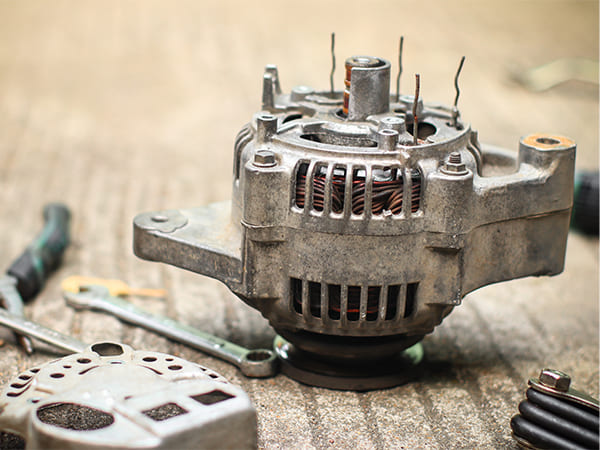
What It Actually Means When Your Alternator Starts to Fail
Your alternator keeps everything running and your battery charged. It’s basically your car’s built-in power generator.
When it works, your battery stays full. When it fails, your battery becomes the only power source — and it drains quickly. Without the alternator, even the best battery will only keep your vehicle running for a short time.
Here’s what you’ll usually notice first:
- Headlights dim or flicker at idle
- The dashboard battery light turns on
- Electrical accessories slow down or cut out
- The engine cranks slowly when starting
- A whining or grinding sound near the engine
Pro Tip:
“If your dashboard light looks like a tiny battery, don’t ignore it. That’s the alternator’s early warning system,” says Joe, a certified tech from Spring Park.
Why Alternator Failure Is a Bigger Deal in Spring Park, MN
Living in Minnesota means your car deals with extreme temperature swings. Cold mornings drain battery capacity, and hot summers strain electrical systems.
Here in Spring Park, short commutes around town — to the marina, grocery store, or Back Channel Brewing — mean your alternator doesn’t always get a chance to recharge the battery fully. That’s why alternator and battery issues are common here, especially when fall turns to winter.
Another factor: moisture and corrosion.
Salt from winter roads can get into the alternator housing and shorten its life. Keeping your vehicle maintained isn’t just good advice — it’s a necessity around Lake Minnetonka.
What Actually Happens When You Keep Driving with a Bad Alternator
If you keep driving with a failing alternator, here’s what’s going on step-by-step:
1. The Alternator Output Drops
Voltage starts fluctuating. Your electrical systems — lights, blower motor, radio — all start pulling straight from the battery.
2. The Battery Supplies All Power
Your car can still run for a bit because modern batteries hold a decent charge. But every minute, the battery’s power drops.
3. Voltage Gets Too Low
At around 10–11 volts, the car’s control modules can’t function correctly. That’s when the engine may sputter, stall, or lose power steering.
4. The Car Shuts Down
Once the voltage drops below 9 volts, your engine cuts off completely — no warning, no restart. You’re stuck.
So technically, yes, you can drive with a bad alternator, but only for a short distance — and it’s not worth the risk.
How Far Can You Drive with a Bad Alternator?
It depends on your vehicle and battery health. On average:
- With a fully charged battery: 30–60 minutes of drive time
- With accessories on (lights, A/C, radio): 10–20 minutes
- In cold weather: Possibly less than 10 minutes
What to Do If You Suspect an Alternator Problem
Notice your lights flickering or your battery light on? That’s your car telling you something’s wrong — don’t wait to check it out.
- Turn off non-essential systems.
Switch off the radio, heater, and seat warmers to save battery life. - Head straight for home or a repair shop.
Don’t make extra stops. Each restart drains more power. - Avoid night driving.
Headlights drain the battery faster and cause the voltage to drop quickly. - Don’t shut off the engine until you reach safety.
Once off, it might not restart.
Mechanic’s Quote:
“Once your lights dim and your steering feels heavier, you’ve got minutes — not miles — before it dies,” explains Mike, a local ASE-certified mechanic.
Why Fixing a Bad Alternator Right Away Saves You Money
A bad alternator can cause a domino effect. When it fails:
- The battery overworks itself trying to supply power.
- The starter can burn out from repeated weak starts.
- The electrical control modules can misfire due to low voltage.
- The fuel pump may stop working, stalling the engine.
Replacing an alternator usually costs $400–$900, depending on your vehicle. But ignoring it could double that if you also fry the battery or starter.
How to Prevent Alternator Failure Before It Happens
Here’s how to avoid that same scenario:
- Get your charging system tested annually, especially before winter.
- Listen for noise — squealing belts or grinding bearings signal alternator wear.
- Keep terminals clean from corrosion and road salt.
- Replace drive belts as recommended by your manufacturer.
- Avoid overloading your system with aftermarket accessories or high-output audio setups.
Pro Tip:
“A quick voltage test can catch 90% of alternator issues early,” says Jason, an electrical specialist.
Real-World Example: What Happens When You Drive with a Bad Alternator
Last winter, a customer named Ryan tried to drive home from work after noticing his headlights dimming. He made it halfway across the Narrows Bridge before the engine died. When we tested it, the alternator wasn’t producing voltage at all, and its battery had dropped below 9 volts.
Had he come in after the warning light appeared, we could’ve replaced just the alternator. Instead, it turned into a battery + tow + alternator job — over $800 more.
Trusted Sources Confirm the Risks
- AAA confirms alternators typically last 7–10 years or 100,000–150,000 miles.
- NHTSA lists electrical system failures as one of the top reasons for roadside breakdowns.
- Haynes notes that moisture, dirt, and heat are leading causes of alternator failure.
This isn’t just mechanical theory — it’s data-driven evidence that confirms acting early keeps your car and wallet safe.
Don’t Risk Driving with a Bad Alternator — Get It Checked
So, can you drive with a bad alternator in Spring Park, MN? Technically, yes, but you shouldn’t. It’s one of those “just because you can doesn’t mean you should” situations.
If you’re seeing flickering lights or that little battery icon on your dashboard, have your car tested right away.
At Certified Auto Repair, our ASE-certified technicians use the latest factory-grade tools to diagnose alternator and charging system problems accurately. We’re among the few Minnesota shops trained to reprogram vehicle modules using manufacturer-specific software — eliminating electrical issues other shops can’t find.
If your vehicle’s showing signs of alternator trouble, visit us in Spring Park, MN. We’ll run a full charging system test, explain the results clearly, and get you safely back on the road.
Frequently Asked Questions
Can a bad alternator cause my car to stall suddenly?
Yes. Once the voltage drops too low, your car’s computer shuts down essential systems like fuel injection and ignition.
Will jump-starting fix an alternator issue?
No. Jump-starting only gives the battery temporary power. The alternator still won’t charge it afterward.
How often should I test my alternator?
At least once a year, or every time you replace your battery. Most shops will check it for free.
Can cold weather make alternator issues worse?
Definitely. Cold thickens engine oil and stresses the battery, making weak alternators more noticeable.
Can I replace the alternator myself?
It depends on your skill level. Many vehicles require specialized tools and computer resets. A shop can do it faster and more safely.