It’s a chilly morning in Spring Park, MN, and your car hesitates to start as you head toward Shoreline Drive. Later, your headlights dim at a stoplight — classic signs your charging system may be struggling.
Instead of guessing whether it’s the battery or something worse, try a quick alternator test with a multimeter check. This easy test can confirm if your alternator is keeping up with Minnesota’s demanding driving conditions before a small issue becomes a breakdown.
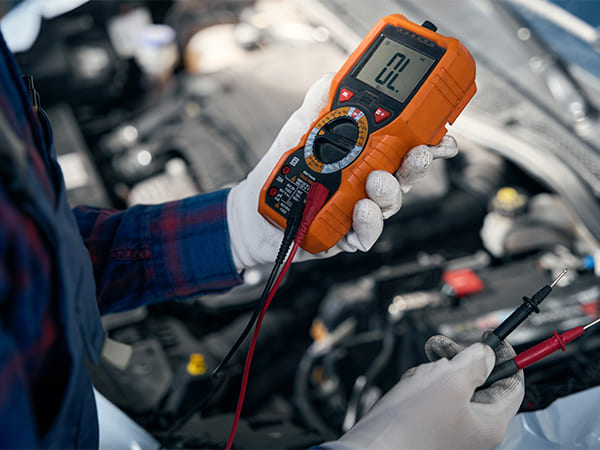
What is Alternator Testing With a Multimeter?
Alternator testing with a multimeter means using a digital multimeter to measure the voltage output of the alternator while the engine is running. It verifies whether the alternator is providing sufficient charge to the battery and electrical system.
Why the Alternator Matters in Spring Park, MN
The alternator turns mechanical energy into electrical energy while the engine runs. If the alternator fails or underperforms, you may see dimming lights, a drained battery, or a vehicle that won’t start. Rain, snow, lake-driveway salt, and frequent short trips around Spring Park increase wear on the electrical system.
Workshop Pro Tip
“Always verify the battery is fully charged and the engine belts are tight before judging alternator output numbers.”
– Technician at Spring Park, MN
When Should You Test Your Alternator?
- After the battery warning lamp turns on.
- If the headlights flicker when idling near Minnetonka.
- Before a winter trip when full charging is critical.
- After intense use of accessories (A/C, sound system) around the lake.
How to Perform Alternator Testing with a Multimeter (Step-by-Step)
Here’s a mechanic-approved way to test your alternator right at home:
1. Set up for battery rest-voltage
Park the vehicle on level ground and shut the engine off. Set your multimeter to DC volts (20 V range). Place the red lead on the battery’s positive terminal and the black on the negative. A fully charged 12-volt lead-acid battery should read about 12.6 V.
2. Start the engine and measure again
Start the vehicle (without heavy loads). With the same multimeter leads in place, the voltage should rise to between 13.8 V and 14.4 V if the alternator is charging correctly.
3. Enable the electrical load and observe
Turn on accessories: headlights, heater blower, rear defroster. The voltage should remain above 13.0 V and not drop significantly. A drop below 13 V under load suggests weak alternator output or wiring loss.
4. Rev the engine slightly
Increase engine speed to about 2000 rpm while still measuring. The voltage should stay stable or rise modestly. Major fluctuations or erratic voltage suggest possible internal regulator or brush failure.
5. Inspect belts, wiring, and terminals
While testing, inspect the drive belt (cracks, looseness), alternator mounting, and wiring terminals (corrosion or looseness). Even a good alternator can misbehave if the belt is slipping or the terminal connection is poor.
Common Causes of Alternator Failure
- Worn brushes or a voltage regulator inside the alternator.
- Loose or slipping belt.
- Corroded battery/alternator cables.
- High accessory load beyond alternator capacity.
- Thermal fatigue of internal diodes (note: one recall covered this).
Why Does This Test Matters to You?
Performing alternator testing with a multimeter gives you a clear data point: “Is my alternator charging properly or not?” It prevents guessing, helps you avoid breakdowns along Shoreline Drive, and can extend the life of your battery and electrical accessories. According to a vehicle-warranty data summary, alternators ranked among the most common faults in cars with about 100,000 miles.
Real-World Alternator Testing Example in Spring Park, MN
Many Spring Park drivers face charging problems during temperature swings near Lake Minnetonka. Here’s a real local example of alternator testing with a multimeter in action:
- Driver situation: Headlights began dimming after a cold morning start and a short city drive.
- Initial reading: Battery showed 12.3 V with the engine off.
- Running test: With the engine running, voltage measured only 12.8 V — below the healthy charging range.
- Load test: Turning on the lights and heater dropped the reading to 12.1 V, confirming under-charging.
- Solution: After replacing the alternator and retesting, output stabilized at 14.1 V even under full load.
Takeaway: A five-minute test using a multimeter can reveal the cause of dim lights or slow starts — and prevent a roadside breakdown along Shoreline Drive in Spring Park, MN.
Industry-Approved Methods for Accurate Alternator Testing
According to the National Highway Traffic Safety Administration (NHTSA) and ASE, alternator testing should always include voltage checks under load and inspection of all electrical connections before replacing any parts. Proper testing confirms whether the alternator is actually failing or if a weak battery or loose belt is to blame.
Following these industry-approved alternator testing methods helps ensure accurate results and fewer unnecessary repairs. For drivers in Spring Park, MN, this reliability matters — especially during cold starts and short city drives that strain charging systems the most.
What to Do if Your Alternator Fails the Test
- If the voltage under load stays under ~13 V, consider the alternator or the wiring.
- Ensure battery terminals are clean and the battery is fully charged before re-testing.
- If the belt is slipping or worn, replace it — don’t blame the alternator yet.
- If the alternator output is erratic, internal failure is likely. Schedule a professional inspection.
Keep Your Charging System Healthy
Regular alternator testing with a multimeter helps you spot charging issues early and avoid sudden battery failures on Spring Park roads.
At Certified Auto Repair, our ASE-certified technicians provide expert alternator diagnostics, battery checks, and complete electrical repairs with dealership-level precision.
If your readings look low or inconsistent, stop by for a quick inspection — and don’t miss our next post: “Alternator Repair Costs Explained in Spring Park, MN.
Frequently Asked Questions
Here are more practical questions and answers:
What happens if I skip alternator testing and keep driving?
Skipping alternator testing can lead to a dead battery, stalled driving, or damage to accessories. Identifying charging issues early prevents those risks.
Can my alternator test okay and still fail later under stress?
Yes — an alternator might show normal voltage at a glance but fail under specific loads or long drives. Periodic testing is wise.
Will a multimeter show a failing alternator if the warning light is off?
Yes — even if the battery light is off, the multimeter test can reveal under-charging or irregular output before warning lights appear.
Does alternator size (amps) matter for regular passenger cars?
Yes — using an oversized accessory load (high-power audio, lighting, aftermarket add-ons) may exceed the alternator’s capacity and accelerate wear. Standard vehicles are usually fine.
Should I test the alternator after a jump start or a dead battery?
Yes — if you jump-started, you still need to test the alternator to ensure it is properly charging the battery. Otherwise, you’ll likely face repeated failures.