You’re running late for work in Spring Park, MN. You hop in the car, turn the key, and instead of a smooth start, you hear a loud squeal. A few minutes later, your headlights dim, and the dashboard battery light flickers on. Most drivers assume their battery is dying — but that sound could mean something else: a failing alternator pulley.
Getting alternator pulley problems explained in simple terms can help you spot issues early and prevent a costly breakdown. This small component is critical to keeping your alternator spinning smoothly — and in Minnesota’s cold winters, it works harder than most people realize.
In this guide, we’ll walk through how alternator pulleys work, why they fail, what to watch for, and how Spring Park’s unique climate affects them.
Quick Reference: Common Alternator Pulley Symptoms
| Symptom | Possible Cause | What It Means |
| Squealing at startup | Pulley bearing wear | Pulley is slipping under load |
| Flickering headlights | Pulley clutch not engaging | Alternator not charging consistently |
| Belt jumping or fraying | Misaligned or seized pulley | Increased belt tension and heat |
| Grinding noise near the alternator | Internal clutch failure | Bearings or the clutch mechanism are damaged |
| Battery warning light on dash | Pulley or alternator malfunction | Charging system operating below capacity |
Understanding Alternator Pulley Problems
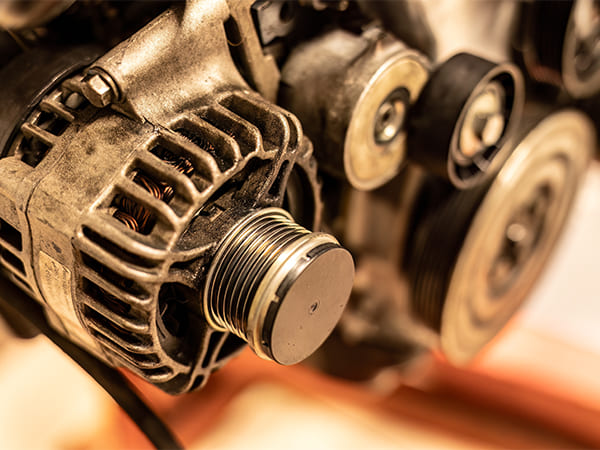
An alternator pulley transfers power from the engine’s serpentine belt to the alternator, letting it charge your car’s battery and power accessories like headlights, defrosters, and wipers.
Most modern vehicles use a one-way clutch pulley, known as an Overrunning Alternator Pulley (OAP). It allows the alternator to “coast” when the engine slows down, reducing belt stress.
When that clutch fails, the alternator can’t spin freely, leading to belt squeal, battery drain, or even complete alternator failure.
Mechanic Tip: “If your belt squeals at startup and quiets down after warming up, the alternator pulley might be seizing. Don’t ignore that early sound.”
Why Alternator Pulley Issues Are Common in Spring Park, MN
Spring Park’s climate puts extra stress on alternator pulleys and belts. Here’s why problems show up more often here:
- Freezing winters cause belts to stiffen and pulleys to contract, leading to slippage on cold starts.
- Lake humidity and road salt accelerate corrosion on pulley bearings and clutch mechanisms.
- Rapid temperature swings weaken the internal clutch spring inside modern pulleys.
- Short local trips (like to the marina or grocery store) limit charging time, forcing the alternator and pulley to work harder.
- Moisture buildup near the engine bay can create rust and grime that affect pulley alignment and performance.
Pro Insight: According to roadside-assistance and vehicle-maintenance data, battery and alternator failures are among the most common causes of breakdowns, and these electrical issues often lead to the vehicle stalling or becoming inoperative.
How to Identify Alternator Pulley Problems
Below is a simple guide to help diagnose pulley issues before they escalate:
Listen for Unusual Sounds
Squealing or chirping noises when starting or accelerating are early red flags. They often mean the pulley bearings are dry or the clutch is slipping.
Check Belt Condition
If your belt looks shiny, cracked, or frayed, inspect the pulley next. A misaligned pulley can wear down even a new belt quickly.
Watch for Electrical Symptoms
Dim headlights or a slow cranking engine often mean your alternator isn’t charging effectively. A failing pulley reduces alternator RPMs, which limits battery charge.
Observe for Wobble or Misalignment
While idling, open your hood and watch the pulley. If it wobbles, vibrates, or seems to spin unevenly, it’s likely wearing out.
Use a Professional Diagnostic
Local shops with ASE-certified technicians have tools to test pulley clutch performance. They can spin-test it manually or use oscilloscopes to measure alternator output changes.
Mechanic Quote: “We test alternator pulleys the same way we check bearings — by feel and resistance. If it doesn’t spin one way and lock the other, it’s due for replacement.”
How Alternator Pulleys Work (and Fail)
Modern pulleys come in two main designs:
| Type | Function | Failure Result |
| Solid Pulley | Directly connects the alternator to the belt | Belt noise and vibration under deceleration |
| OAP (Overrunning Alternator Pulley) | Allows free-spinning on deceleration | Clutch seizure or slip, leading to undercharging |
| OAD (Overrunning Alternator Decoupler) | Adds an internal spring for smoother operation | Spring breakage is causing rattling and power loss |
When the internal clutch mechanism jams, the alternator resists engine speed changes. That increases belt stress and may cause premature bearing wear in nearby pulleys or tensioners.
Case Study: How One Spring Park Resident Solved Alternator Pulley Problems
When Mark from Spring Park, MN, heard squealing and saw his battery light flicker, he assumed the alternator was bad. The shop found the real issue — a seized alternator pulley clutch.
- Symptoms: Squealing noise, dim headlights, battery warning light
- Fix: Pulley replacement for about $250 instead of full alternator repair
- Result: Quiet starts and steady charging
A quick inspection and clear understanding of alternator pulley problems explained saved Mark time, stress, and several hundred dollars.
Supporting Data and Trusted Industry Standards on Alternator Pulley Problems
- A ResearchGate study found that mechanical faults like pulley wear and bearing failure are often detectable before full alternator breakdown, reinforcing the value of early inspection.
- AUTODOC experts explain that a seized or slipping pulley can reduce power transfer efficiency and lead to undercharging issues.
- Another engineering test report showed that modern overrunning pulleys significantly reduce belt vibration and stress, extending alternator life.
These findings confirm why timely maintenance and diagnostics are essential — especially for Spring Park drivers facing cold, salty, and rough seasonal conditions.
Interactive Self-Check Checklist
Does your car show these signs? Check below:
Squealing or chirping noise at cold start
Flickering headlights or dim interior lights
Belt jumping, wobbling, or excessive wear
Battery warning light comes on during acceleration
Grinding noise from the alternator area
If you checked two or more boxes, schedule an alternator inspection soon. In Spring Park’s climate, small pulley problems worsen quickly due to cold and corrosion.
Ready for Alternator Pulley Repair in Spring Park?
Understanding alternator pulley problems helps Spring Park drivers save money and prevent electrical failures. A noisy or slipping pulley is more than an annoyance — it’s your car warning you of a deeper charging issue.
If you suspect an alternator pulley issue, visit Certified Auto Repair in Spring Park, MN. Our ASE-certified technicians use advanced diagnostic tools and training to service nearly every make and model. We’ll test, repair, or replace your alternator components to keep your vehicle reliable in any weather.
For more car care insights — including battery maintenance, belt tension checks, and winter prep — explore our related posts or schedule a diagnostic consultation today.
Frequently Asked Questions
Can a loose alternator pulley cause engine stalling?
Yes. A slipping pulley can reduce alternator output, cutting power to ignition systems during acceleration or idling.
Why does my car squeal only in cold weather?
Cold air stiffens belts and contracts metal. That can expose pulley misalignment or weak bearings that are quieter when warm.
Do hybrid or EV vehicles have alternator pulleys?
Most full EVs don’t, but hybrid systems with gasoline engines still use alternator-like generators that rely on similar pulleys.
Can cleaning the pulley fix the issue?
Not usually. Dirt buildup can worsen slippage, but the underlying cause is mechanical — worn bearings or a seized clutch.
How often should I replace the alternator pulley?
Inspect it yearly. Replace if you notice noise, wobble, or slippage, especially after 60,000–80,000 miles in cold-weather regions.