Engine fuel system service involves cleaning critical components like fuel injectors, intake valves, and throttle bodies to remove carbon deposits. Proper maintenance keeps your fuel injectors spraying correctly and protects your engine’s power. By staying ahead of carbon buildup, you preserve your fuel economy and avoid the high cost of replacing ruined exhaust components or repairing internal engine damage caused by a poor air-to-fuel ratio.
Why Fuel System Service is Vital for Your Engine
The fuel system is the circulatory system of your engine. For a vehicle to run efficiently, it needs a precise mixture of fuel and air. Over time, the quality of gasoline and the high-heat environment of the engine lead to the buildup of carbon and varnish.
When these deposits accumulate, they act like a sponge, soaking up fuel or disrupting the spray patterns necessary for clean combustion. For drivers in Spring Park, where seasonal temperature shifts are dramatic, a compromised fuel system often manifests as sluggish performance during cold starts or decreased efficiency during summer commutes. Addressing these deposits isn’t just about performance; it’s about protecting the longevity of the entire powertrain.
Understanding Your Vehicle’s Fuel Injection System
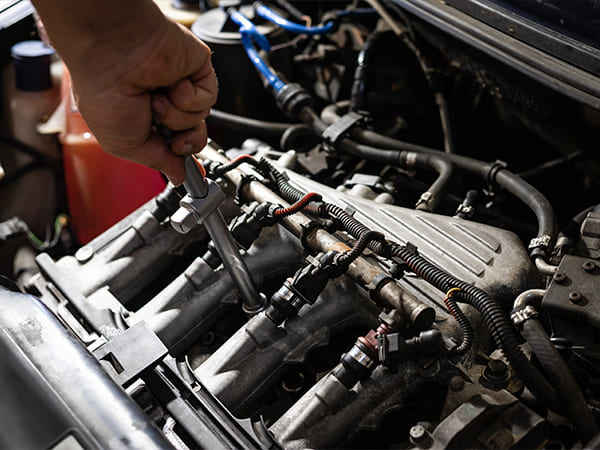
A modern fuel system is a high-pressure environment. It begins at the fuel tank, where the pump sends gasoline through a filter to the fuel rail. From there, fuel injectors—which are essentially sophisticated gatekeepers—spray a fine mist of fuel into the cylinders.
In newer Gasoline Direct Injection (GDI) engines, this process happens at incredibly high pressures directly into the combustion chamber. This precision allows for better power and fewer emissions, but it also means the system is far less tolerant of dirt or chemical buildup. Even a microscopic blockage in an injector nozzle can disrupt the entire combustion cycle.
Common Fuel System Failures and Engine Risks
The most frequent issue we encounter isn’t a mechanical “breakage” but rather a gradual degradation of the components due to carbon fouling.
- Injector Clogging: The tiny nozzles on injectors can become partially blocked, leading to a “lean” condition where the engine receives too much air and not enough fuel.
- Intake Valve Deposits: In GDI engines, fuel no longer washes over the intake valves. This leads to carbon baking onto the valves, which eventually restricts airflow and can cause the engine to “stumble.”
- Throttle Body Varnish: Sticky residue can build up around the throttle plate, causing a rough idle or even stalling when you come to a stop.
Fuel System Symptoms vs. Root Engine Causes
Drivers often mistake fuel system issues for spark plug or transmission problems. It is important to distinguish between the symptom and the actual cause:
- Symptom: A “stutter” or hesitation when pulling out into traffic.
- Root Cause: Often a disrupted spray pattern from a dirty injector that cannot provide the instantaneous fuel surge required for acceleration.
- Symptom: Noticeably lower MPG over a few months.
- Root Cause: The Engine Control Unit (ECU) is compensating for poor combustion by dumping more fuel into the system to maintain power.
- Symptom: A rough or “shaky” idle at red lights.
- Root Cause: Carbon buildup on the throttle body prevents the correct amount of air from entering the engine at rest.
Risks of Neglecting Fuel System Maintenance
If fuel system maintenance is neglected, the consequences move from “annoying” to “expensive.” When an engine runs poorly due to fuel issues, it often sends unburned fuel into the exhaust system. This excess fuel enters the catalytic converter, where it burns at extremely high temperatures, eventually melting the internal substrate. Replacing a catalytic converter is significantly more costly than a preventative cleaning service.
Furthermore, persistent “knocking” or “pinging” caused by carbon deposits can lead to physical damage to pistons and connecting rods over time.
Spring Park Winter Weather and Fuel Performance
In Spring Park and the surrounding Twin Cities area, our vehicles deal with significant environmental stressors. During our sub-zero winters, engines run “richer” (using more fuel) to stay running while cold. This increased fuel usage can accelerate the formation of deposits if the engine doesn’t frequently reach full operating temperature during short trips.
Additionally, the transition between seasonal fuel blends can occasionally lead to moisture accumulation in the tank, making a clean filtration and injection system even more vital.
Professional Fuel Cleaning vs. Store-Bought Additives
Many people ask if a $10 bottle of fuel additive from a gas station is sufficient. While these “pour-in” cleaners can help maintain a clean system, they are rarely strong enough to fix a system that is already showing symptoms.
Professional fuel system service involves a multi-step chemical cleaning that is introduced directly into the fuel rail or the intake vacuum line. This allows the detergents to hit the problem areas—like the back of the intake valves—at a concentration level that retail products cannot safely match. It is a controlled process that ensures the carbon is broken down and safely exited through the exhaust.
Expert Guidance for Your Fuel System Maintenance
If you have noticed a decline in your vehicle’s responsiveness or fuel efficiency, a professional evaluation of the fuel system can provide clarity. The team at Certified Auto Repair can perform a diagnostic check to determine if a specialized cleaning is necessary to restore your engine’s factory performance levels. For those seeking to preserve engine longevity, scheduling a preventative maintenance check is an effective next step.
Frequently Asked Questions
How often should a fuel system service be performed?
For most vehicles, a professional cleaning is recommended every 30,000 to 45,000 miles. However, if you primarily drive short distances in cold weather, you may benefit from more frequent intervals.
Will a fuel system cleaning fix a Check Engine light?
It depends on the code. If the light is on for “Lean Condition” (P0171/P0174) or “Engine Misfire,” a fuel system service often resolves the issue if the cause is carbon buildup.
Is fuel system service the same as a fuel filter change?
No. A filter change is a mechanical replacement of a part that catches dirt. A fuel system service is a chemical cleaning of the injectors, valves, and combustion chambers.
Can I just use “Premium” gas to keep the system clean?
While premium fuels contain more detergents, they are often not enough to prevent carbon buildup in Direct Injection engines. Professional service is still necessary to reach areas where fuel does not naturally flow.
Final Takeaways on Engine Fuel System Care
A clean fuel system is essential for the efficiency, power, and longevity of any modern vehicle. By understanding the difference between a minor symptom and a potential mechanical failure, you can make informed decisions about maintenance. Taking a proactive approach to engine deposits ensures that your vehicle remains reliable, regardless of the season or the mileage on the odometer.